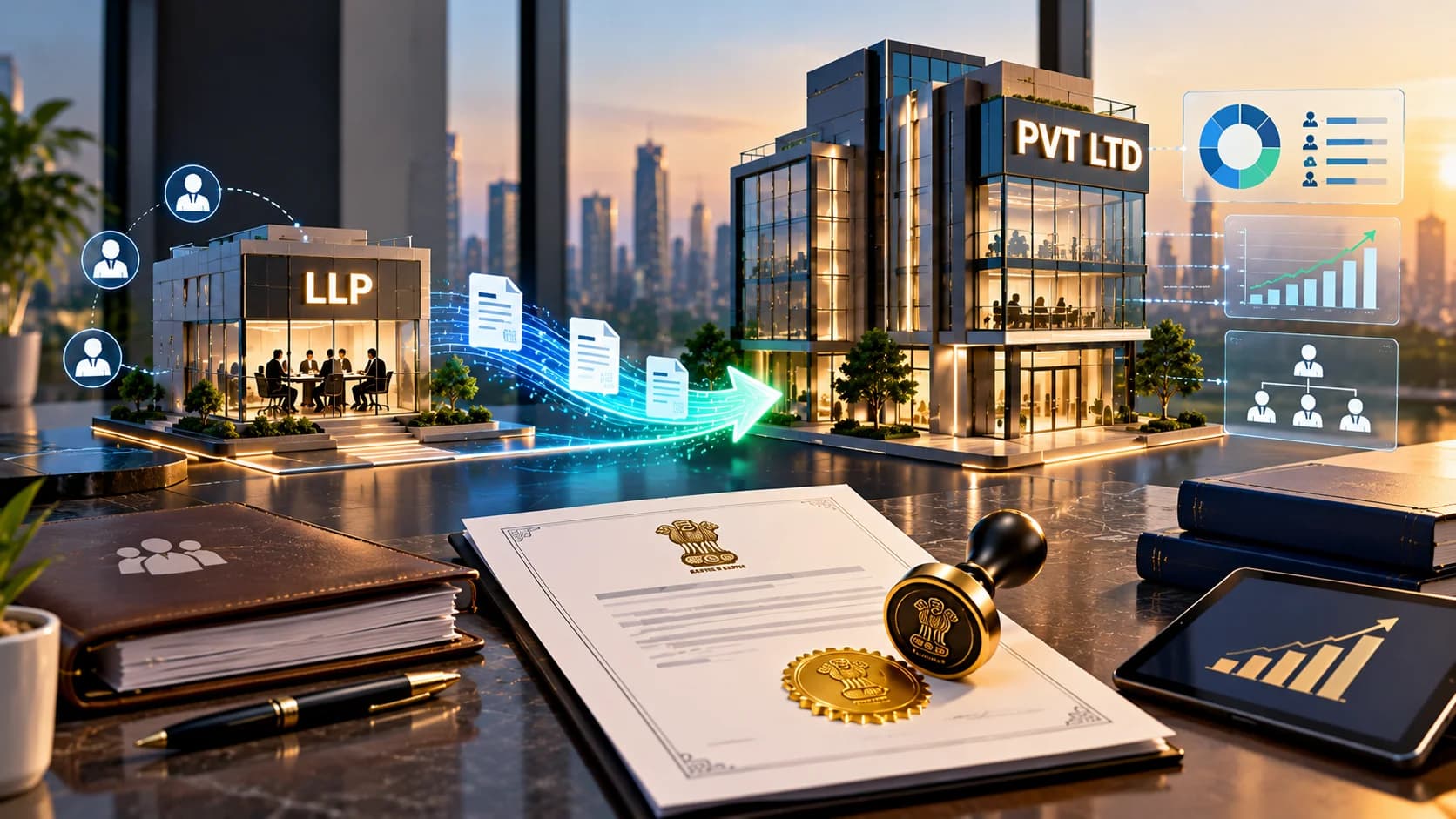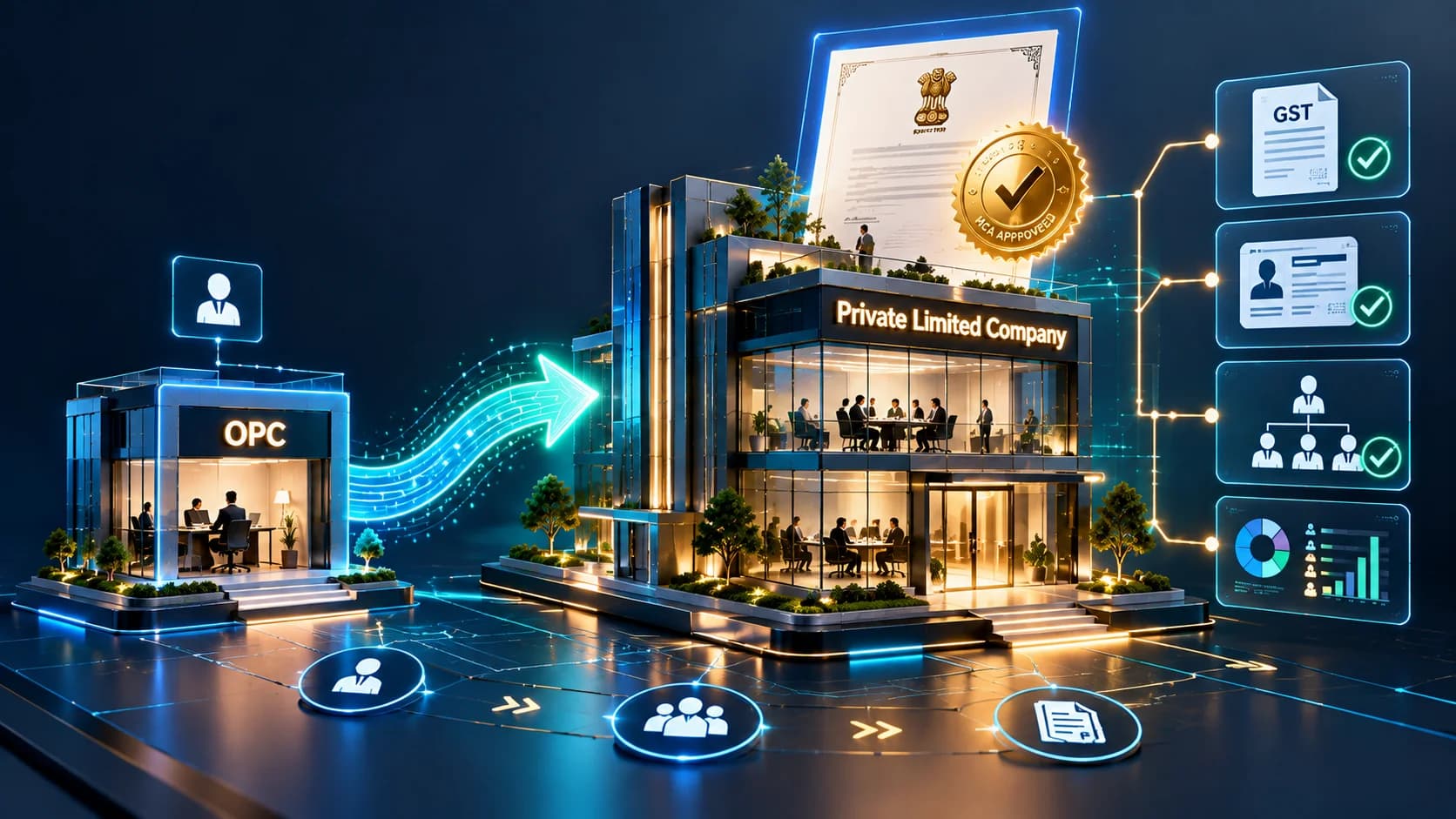
Many businesses in India start as a sole proprietorship for its simplicity, then reach a point where unlimited personal liability, or the need for a more credible, structured entity to work with banks, investors, or larger clients, makes converting to a private limited company the sensible next step. Livida helps India-based founders through this transition, extending the incorporation expertise we already apply to fresh company formations to founders formalizing an existing proprietorship business.
When This Conversion Makes Sense
The point at which a proprietorship outgrows its structure varies by business, but common triggers include the business taking on enough contracts or liabilities that unlimited personal exposure feels risky, a bank or investor requiring a company structure before extending credit or funding, or the founder wanting to bring on co-owners through a formal shareholding structure. If none of these pressures apply yet, staying a proprietorship a while longer is often the more practical choice, since conversion involves real cost and effort that's worth timing to an actual business need.
What the Conversion Actually Involves
Unlike converting a partnership into an LLP, moving from a sole proprietorship to a private limited company isn't a single continuous legal conversion, it involves incorporating a new private limited company and then transferring the proprietorship's business, assets, contracts, and where possible, licenses and registrations, into that new entity. This means the incorporation itself follows the standard process: name reservation, drafting the Memorandum and Articles of Association, and filing with the Registrar of Companies, followed by a structured transfer of the existing business into the new company.
Reviewing What Needs to Move
Because the proprietorship and the new company are legally distinct, several categories of items generally need to be reviewed one by one to determine whether they can be assigned to the new company or need to be reapplied for:
- Vendor and client contracts
- Business licenses and registrations, such as GST or Shops and Establishment
- Bank accounts and payment gateway agreements
- Leases and rental agreements tied to the proprietor's name
This is often the part of the conversion that takes the most coordination, and it's easy to overlook something, a vendor contract, a specific license, that causes friction later if it isn't addressed during the transition. Transferring assets can also carry capital gains tax consequences; the Income Tax Department publishes guidance on how such transfers are treated.
Livida's Process
We start by reviewing the existing proprietorship's contracts, licenses, assets, and banking relationships to map out exactly what needs to transfer, then handle the private limited company incorporation, name reservation, Memorandum and Articles of Association, and MCA filing. From there, we coordinate the transfer of business assets and support reassigning or reapplying for licenses and registrations under the new company. Once the conversion is complete, Livida's existing bookkeeping, GST, and TDS filing services continue supporting the business under its new structure.
Why This Transition Benefits From Careful Planning
A rushed conversion risks gaps, a contract that doesn't get reassigned, a license that lapses, or a tax structuring choice that creates an avoidable liability. Taking the time to map out what needs to move, and in what order, keeps the transition smooth for the business's ongoing operations and relationships. Newly converted companies that qualify may also want to look into Startup India registration for the tax and compliance benefits it can unlock. If your proprietorship has reached the point where a private limited company makes sense, Livida's team can plan and manage the conversion end to end.
Sole Proprietorship to Private Limited Conversion in 5 Steps
Because sole proprietorship to private limited conversion is an incorporation followed by a transfer, the work runs in two connected stages:
- Review the proprietorship's contracts, licences, assets and banking relationships to map what must move.
- Reserve the company name and draft the Memorandum and Articles of Association.
- File the incorporation with the Registrar of Companies and collect the Certificate of Incorporation.
- Transfer the business, assets and contracts into the new company, structured with tax advice in mind.
- Reassign or reapply for licences and registrations, then move bookkeeping, GST and TDS under the company.
For the wider picture, read our guide to private limited company registration in India, and see how the structure compares in private limited vs LLP vs OPC in India. Once the company is running, it will also need the yearly filings in our annual ROC compliance guide, plus GST registration under the new entity where applicable.
Sole Proprietorship to Private Limited Conversion at a Glance
| Item | Detail |
|---|---|
| Who it suits | Proprietors facing unlimited liability or needing a company for banks, investors or clients |
| What we handle | Incorporation, asset and contract transfer planning, licence reassignment |
| Typical documents | Proprietor and director identity and address proofs, existing licences, contracts, bank details |
| What happens next | New company operates; GST, TDS and bookkeeping move to it |
What We See in Practice
In the filings we handle, the most common delay is a licence or contract still sitting in the proprietor's personal name after the company is incorporated. Our team builds the list of items to move before the incorporation is filed, keeping every contract and licence organised so nothing is discovered halfway through. For any sole proprietorship to private limited conversion, we recommend raising the tax treatment of the asset transfer with your accountant early, since the way the transfer is structured affects the outcome.
Key Takeaways
- Sole proprietorship to private limited conversion is a fresh incorporation followed by a transfer of the business, not a single legal conversion.
- The company is a separate legal entity, so contracts, licences and bank accounts need individual review.
- Asset transfers can have tax implications, so plan the structure before you move anything.
- Leases, vendor contracts and payment gateway agreements are the items most easily missed.
- Livida can handle the incorporation, the transfer planning and the compliance that follows, including bookkeeping, GST and TDS.
Conclusion
Sole proprietorship to private limited conversion is worth the effort when liability, credibility or investor readiness becomes a real business need. A mapped-out transfer plan, a clean incorporation and a careful follow-up on licences and contracts keep operations running smoothly through the change.
References
- Companies Act, 2013 on India Code
- Ministry of Corporate Affairs: company forms download
- Income Tax Department of India
This page is general information, not professional advice, and company and tax rules change, so confirm current requirements before you act.
Talk to Livida
To plan your conversion, visit our contact page, email info@livida.in or call +91 94860 33194.