
AI bookkeeping software has moved from a novelty into a genuine feature of everyday accounting, promising to categorize transactions, reconcile bank feeds, and flag anomalies with far less manual data entry than traditional methods. For growing businesses trying to keep their books accurate while controlling costs, the appeal is obvious. The harder question is whether that software is a replacement for professional bookkeeping or simply a faster engine underneath it, and that distinction matters a great deal once tax filings, lenders, and investors start relying on the numbers.

| Dimension | AI bookkeeping software | Managed bookkeeping |
|---|---|---|
| Speed on routine transactions | Very fast, high volume | Faster with software, but paced by review |
| Handling of unusual transactions | Weak, prone to misclassification | Reviewed and judged by a qualified person |
| Compliance accountability | None, vendor terms limit liability | A named team is accountable for the output |
| Best fit | Simple, low-volume, single-owner businesses | Businesses with employees, inventory, or cross-border activity |
Key Takeaways
- AI bookkeeping software is a fast first pass at categorization, not a replacement for professional review.
- Edge cases such as owner draws, transfers and one-off adjustments are where automated categorization most often goes wrong.
- Managed bookkeeping adds reconciliation, reporting and a named team accountable for the numbers.
- Most growing businesses do best with automation for volume and a professional reviewing the output.
- Watch for the four warning signs below that a business has outgrown software-only bookkeeping.
What Is AI Bookkeeping Software, Really?
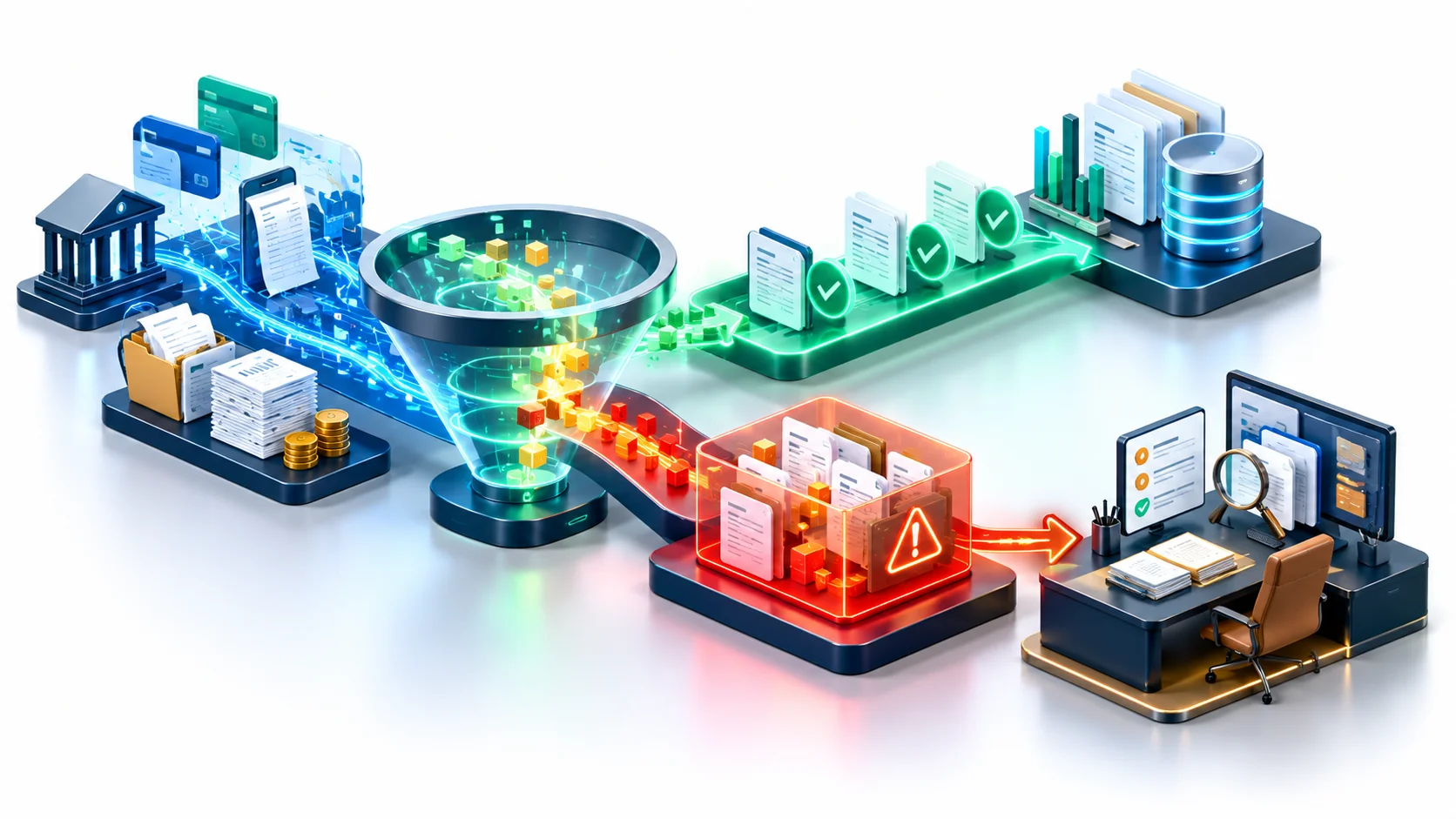
At its core, AI bookkeeping software uses machine learning models trained on large volumes of transaction data to predict how a given expense or deposit should be categorized. It watches patterns over time: a recurring payment to the same vendor, a consistent monthly amount, a familiar merchant category code, and it learns to apply the correct general ledger account automatically. Most modern cloud accounting software includes some version of this, pulling in bank and credit card feeds daily and suggesting categorizations before a human ever looks at the transaction.
The more advanced platforms go further, using natural language processing to read invoice line items, or computer vision to extract data from scanned receipts. This is genuinely useful automation, and it has meaningfully reduced the manual keystrokes required to keep a set of books current. But categorization is a prediction, not a certainty, and the model's confidence is not the same thing as correctness.
Common Features in Today's Platforms
Most cloud accounting software marketed as AI bookkeeping software shares a similar feature set: automatic bank feed imports, rule-based and machine-learning categorization that improves as it sees more of your data, duplicate transaction detection, and dashboards that summarize income and expenses in near real time. Some platforms also offer basic anomaly flags, surfacing a transaction that looks unusually large or falls outside a normal pattern for that vendor. These features are helpful precisely because they are visible and easy to check, unlike the categorization itself, which happens quietly in the background and is easy to trust more than it deserves.
It is worth noting that none of these features are new in concept. Rule-based categorization has existed in accounting software for well over a decade. What has changed is the sophistication of the pattern recognition and the speed at which it adapts, which is a real improvement, but an incremental one rather than a wholesale reinvention of how bookkeeping works.
How Automated Bookkeeping Tools Work in Practice
Pattern Matching, Not Understanding
Automated bookkeeping tools work by pattern matching against historical data, which means they perform well on repetitive, well-labeled transactions and poorly on anything genuinely new. A first-time capital purchase, an unusual reimbursement, or a transaction that spans two accounting periods can easily be miscategorized because the software has no real understanding of your business, only a statistical guess based on similar-looking transactions it has seen before.
Where the Automation Adds Real Value
Where this technology shines is in volume reduction. A business processing hundreds of transactions a month benefits enormously from software that gets eighty or ninety percent of categorizations right on the first pass, leaving a smaller, more manageable set of exceptions for a human to review. That shift, from doing all the data entry manually to reviewing a shorter exception list, is the real productivity gain, and it is one reason cloud accounting software has become close to universal among growing businesses.
Where AI Bookkeeping Software Falls Short
The gap between "mostly right" and "audit ready" is where most of the risk lives. A model that is ninety-five percent accurate still leaves a meaningful number of errors in a full year of transactions, and those errors do not announce themselves. They sit quietly in the ledger until a tax authority, a lender, or a year-end review surfaces them, often at the least convenient moment.
Software also cannot make judgment calls about substance over form, a concept at the heart of proper accounting. Whether a payment should be treated as a loan, a capital contribution, or an expense often depends on intent and documentation that a machine cannot infer from a bank description alone. Nor can software take responsibility if the categorization is wrong. When a mistake reaches a filed return or a statutory account, someone needs to be accountable for catching it beforehand, and that someone is a qualified professional, not an algorithm.
There is also a compliance dimension that pure automation tends to underweight. Tax rules change, reporting thresholds shift, and what counted as a deductible expense last year may not this year. Keeping automated bookkeeping tools current with every jurisdiction's latest rule changes is a maintenance burden that software vendors handle unevenly, and a business relying solely on the tool can fall behind without realizing it.
The Real Cost of Getting Bookkeeping Wrong
It is tempting to think of a miscategorized transaction as a minor issue that nets out over the year, but that is not usually how it plays out. A misclassified expense can overstate or understate taxable income, which either costs the business money directly or creates an underpayment that draws attention later. A pattern of small errors across many transactions can also distort the financial statements a lender or investor is reviewing, making a business look healthier or weaker than it actually is, and either version of that mistake has consequences.
There is also a time cost that is easy to underestimate. Unwinding a year of miscategorized transactions during tax season, or right before a statutory filing deadline, takes far longer than catching each one as it happens. Businesses that rely purely on automated bookkeeping tools without a review layer often discover this the hard way, usually at the exact moment they can least afford the delay. The cost of prevention, in the form of ongoing professional review, is almost always lower than the cost of a late-stage cleanup.
Data Security, Access, and Vendor Lock-In
A less discussed but genuinely practical concern with automated bookkeeping tools is what happens to your financial data if you want to switch platforms or the vendor changes its pricing or terms. Cloud accounting software stores years of transaction history, and migrating that history cleanly to a new system is rarely as simple as exporting a spreadsheet. Businesses that build their entire financial process around a single software vendor can find themselves with limited leverage if that vendor raises prices or changes functionality in ways that no longer fit.
A managed bookkeeping relationship tends to be more portable, because the professional relationship, not the software license, is the foundation of the service. The software underneath can change, and a competent bookkeeping team adapts the workflow without disrupting the underlying reporting the business depends on. This is a subtle advantage, but it becomes important over a multi-year relationship with a growing company.
What Managed Bookkeeping Services Add on Top
Human Review of Every Exception
Managed bookkeeping services are built around exactly the gap described above. Rather than treating the software's output as final, a managed bookkeeping engagement uses the automation as a starting point and applies human review to the exceptions, the unusual transactions, and the judgment calls that the model cannot resolve confidently. This is the layer that catches misclassified owner draws before they distort a profit and loss statement, or flags an unusual deposit that needs clarification from the client before it gets booked.
Reconciliation, Reporting, and Accountability
Beyond categorization, managed bookkeeping services also handle bank and credit card reconciliation, monthly or bi-monthly close processes, cash management reporting, and the preparation of the financial statements a business actually needs to run itself and satisfy external parties. Livida's general accounting and bookkeeping services follow this model directly: monthly, bi-monthly, or annual bookkeeping built around accounting system reviews, so that the books are not just automated but verified.
Budgeting and Forward-Looking Work
Software is largely backward-looking, describing what already happened. A managed service also supports budgeting and cash flow planning, translating historical data into a forward view that helps ownership make decisions about hiring, spending, and growth. That forward-looking layer is difficult to automate meaningfully because it depends on context about the business that lives with the people running it, not in the transaction history alone.
Finding the Right Mix of AI Bookkeeping Software and Review
The realistic answer for most growing businesses is not a binary choice but a layered approach. Small business bookkeeping automation handles the repetitive categorization and data capture, freeing up time that would otherwise go to manual entry. A managed bookkeeping service then applies the review, reconciliation, and reporting discipline on top, treating the software as an efficiency tool inside a professionally run process rather than a stand-alone system of record.
This combination tends to outperform either extreme. Pure AI bookkeeping software without oversight accumulates small errors that compound over a year and become expensive to unwind later. Pure manual bookkeeping without any automation is slower and more expensive than it needs to be, and that cost gets passed on somewhere. The middle path, automation for volume with a professional reviewing the output, captures the speed benefit while keeping the accountability that tax authorities, lenders, and auditors actually expect to see.
What This Looks Like Month to Month
In practice, a well-run managed bookkeeping engagement that uses AI bookkeeping software pulls bank feeds automatically, lets the software suggest categorizations, and has a bookkeeper review the full ledger before it is closed for the period. Statutory accounts and annual financial statements are then prepared from books that have already been checked, not from raw automated output. This is the same principle behind audit preparation done properly: the smoother the underlying bookkeeping, the less friction there is when an external auditor or regulator asks questions.
How This Plays Out Across Different Business Types
The balance between automation and professional oversight shifts depending on where a business operates and what it needs from its books. A business in India relying on accurate bookkeeping to support GST filing and TDS filing needs categorization that is not just fast but defensible under a specific regulatory framework, which is exactly the kind of nuance automated tools handle inconsistently. A company in Singapore preparing for audit compilation or annual financial report preparation needs books that will hold up to external scrutiny, not just numbers that look plausible on a dashboard.
In the UAE, where Livida's services are focused specifically on bookkeeping, the same principle applies in a narrower but no less important way: accurate books are the foundation that everything else, including VAT compliance handled by other advisors, ultimately rests on. In the United States, where sales tax filing and payroll tax obligations depend on correctly categorized transactions across multiple states, and in Canada, where notice to reader engagements and year-end accounting depend on a clean set of books, the same underlying truth holds. Software accelerates the process, but it does not remove the need for someone qualified to stand behind the final numbers.

Choosing the Right Approach for Your Business
The right choice depends on transaction volume, complexity, and how much risk a business is comfortable carrying in its own numbers. A single-owner business with simple, repetitive transactions may get by longer on AI bookkeeping software with light oversight. A business with employees, inventory, multiple bank accounts, or cross-border activity accumulates exactly the kind of edge cases that automated tools handle poorly, and the cost of an uncaught error, whether it is a misstated tax filing or a misleading financial statement, usually outweighs the cost of proper review.
Regulatory bodies and standards organizations continue to weigh in on how technology should be used responsibly within financial reporting, and staying aligned with published guidance from bodies such as the IFRS Foundation is easier when a qualified professional is interpreting the standards rather than a general-purpose model doing so on its own. Software helps you move faster. A managed service helps you make sure fast is also correct.
In the books we review, the most common problem with automated categorization is not a dramatic error but a steady run of small ones: owner draws booked as expenses, transfers booked as income, and mixed personal and business spending. This is why our team reviews the exception list before any period is closed. For a wider look at the decision, see choosing between software and managed services and OCR receipt scanning vs. bookkeeping accuracy.
Signs a Business Has Outgrown Pure Software Bookkeeping
There are four recognizable warning signs that a business has reached the point where AI bookkeeping software alone is no longer enough:
- Growth in transaction volume and complexity: more vendors, more customers, more bank accounts, and more exceptions than a founder or office manager has time to review properly
- Involvement of external parties who will scrutinize the numbers, such as a bank, an investor, or a tax authority
- Cross-border activity that brings in GST filing and TDS filing obligations alongside routine bookkeeping
- Nobody on the team being able to confidently explain how a specific transaction was categorized
The first is simply growth in transaction volume and complexity: more vendors, more customers, more bank accounts, and more exceptions than a founder or office manager has time to review properly between other responsibilities. The second is any involvement of external parties who will scrutinize the numbers, whether that is a bank evaluating a loan application, an investor conducting due diligence, or a tax authority requesting supporting documentation.
A third signal is simply uncertainty. If nobody in the business can confidently explain how a particular transaction was categorized or why the books show what they show, that is a sign the automation has outpaced the oversight around it. None of these signals mean the software was a bad choice. They mean the business has reached a stage where the software needs a professional layer around it rather than standing alone.
Questions Worth Asking Before Choosing a Path
Businesses evaluating their bookkeeping setup can usefully ask a short set of questions: How many hours per month does someone currently spend correcting categorization errors after the fact? Would the business be comfortable handing its current books to a bank or auditor today, without further cleanup? Is there a single point of accountability if a number turns out to be wrong, or does responsibility sit nowhere in particular? Honest answers to these questions usually make clear whether pure automation is still serving the business well or whether it is time to add professional oversight.
Bringing the Two Together
AI bookkeeping software is not a fad, and it is not going away. It has already changed how quickly routine bookkeeping can happen, and that trend will continue as the models improve, a theme explored more broadly in our piece on AI versus human judgment in accounting. What it has not changed is the need for someone qualified to stand behind the numbers, catch what the software misses, and translate raw data into the reports a growing business actually relies on to make decisions and stay compliant.
Livida's approach to AI bookkeeping software reflects that reality: cloud accounting software and automation are part of the workflow, but every set of books is reconciled and reviewed by people who are accountable for the result. The goal is never to slow down what the technology does well, but to make sure the parts that require judgment, whether that is an unusual transaction, a changing tax rule, or a figure that will end up in front of a bank or auditor, get the attention they need before they become a problem rather than after.
If your business is weighing how much to automate and how much to keep under professional review, that is a conversation worth having before the next filing deadline rather than after. Livida's general accounting and bookkeeping services are built to work alongside whatever cloud accounting software a business already uses, adding the reconciliation, review, and reporting discipline that turns fast data entry into books a business can actually rely on.
Conclusion
AI bookkeeping software is a useful engine, and managed bookkeeping is the discipline around it. Pairing the two keeps the speed of automation and the accountability that lenders, auditors and tax authorities expect. For businesses that also want help interpreting the numbers, Livida's virtual CFO advisory service builds on the same reviewed books. This article is general information, not professional advice, and tax and reporting rules change, so confirm the position for your own business before acting.
Talk to Livida
To talk through how much of your bookkeeping to automate, use our contact page, email info@livida.in, or call +91 94860 33194.
References
- IFRS Foundation: the body that develops IFRS accounting standards
- IRS recordkeeping guidance for businesses: the IRS on choosing a recordkeeping system that clearly shows income and expenses
- Income Tax Department of India, maintenance of books of accounts: the Department's guidance on keeping books of account