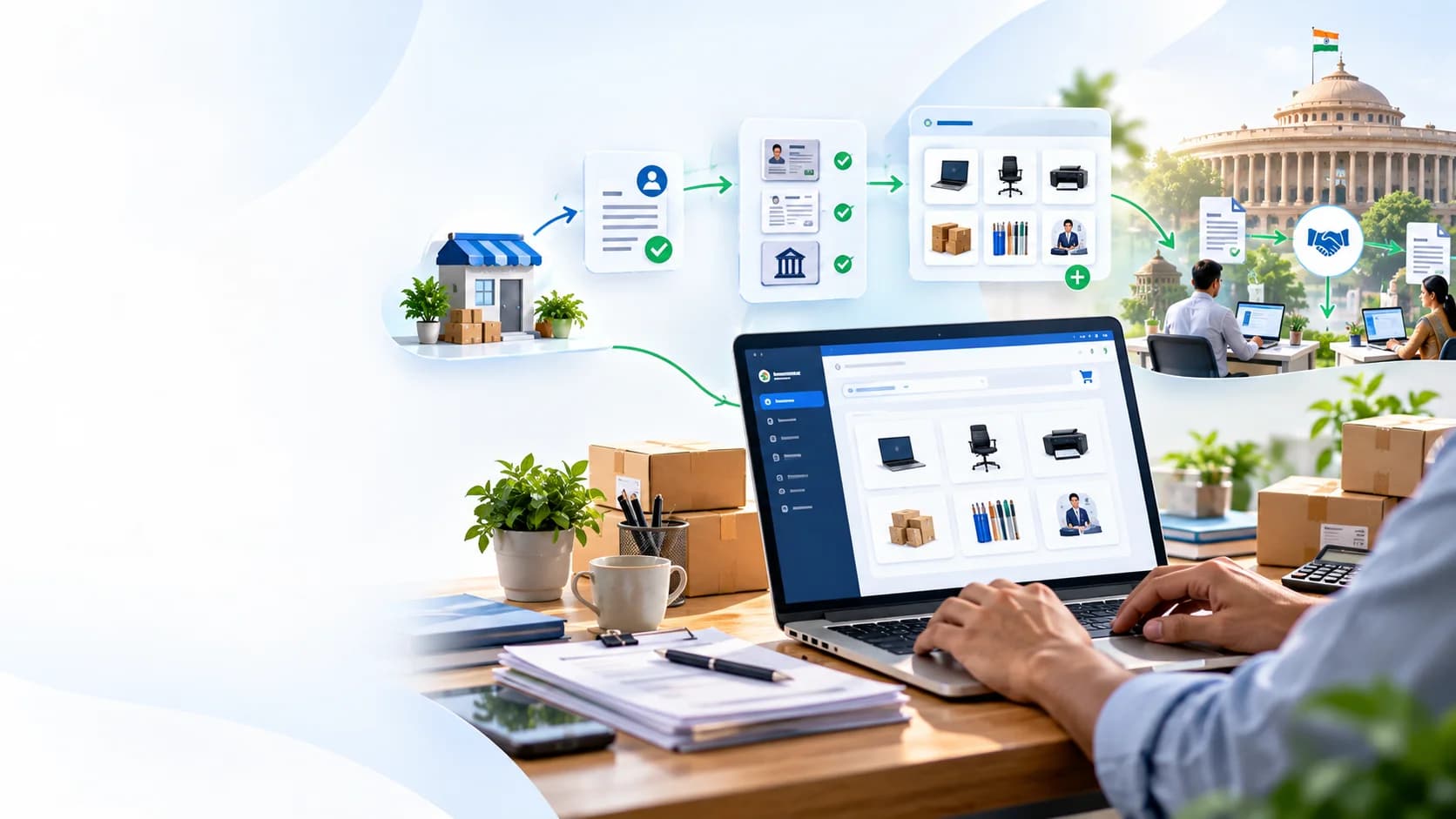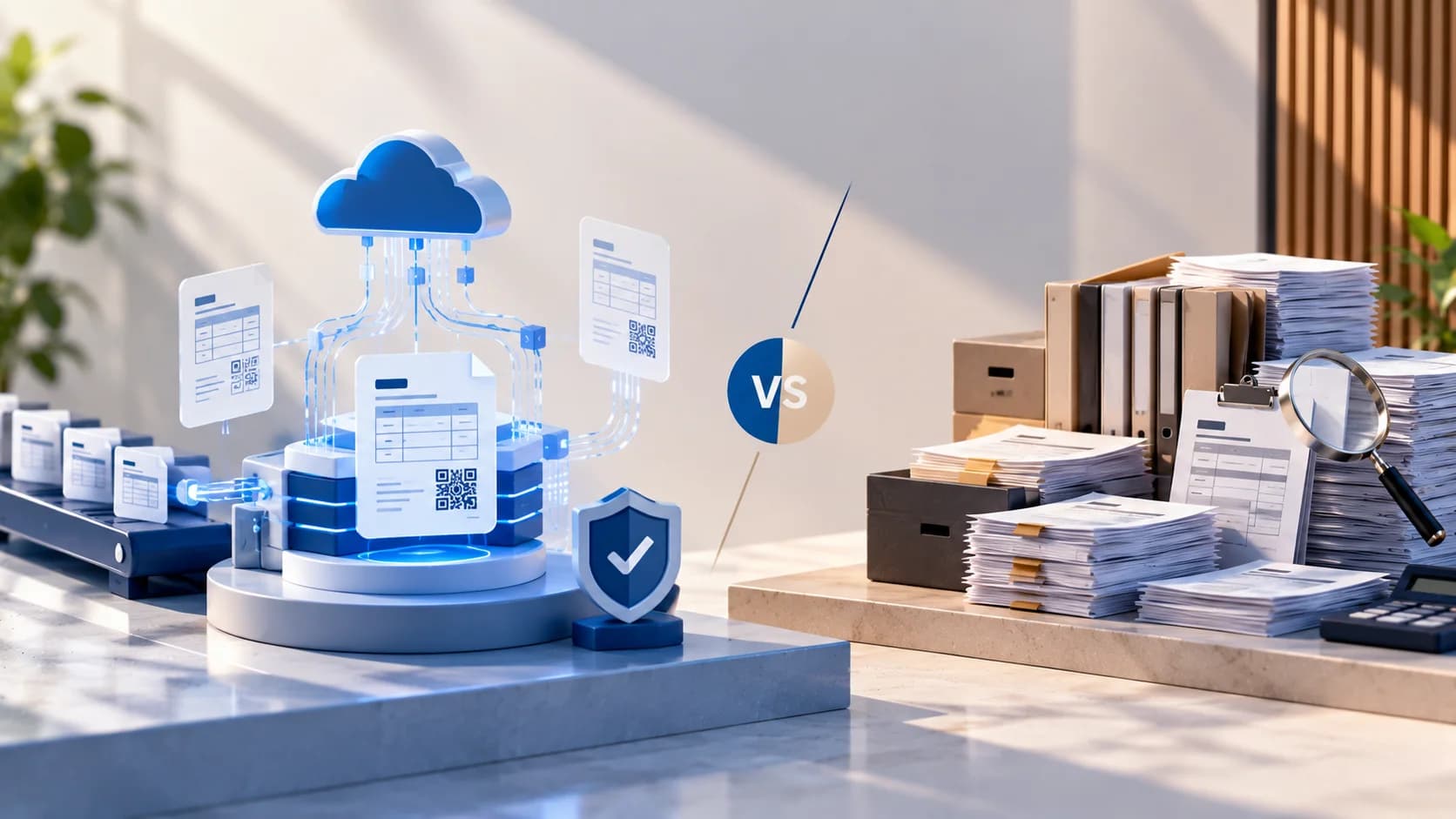
GST e-invoicing has become one of the most visible changes to India's indirect tax system since the Goods and Services Tax itself was introduced in July 2017. For businesses that fall under the mandate, generating a valid invoice is no longer just a matter of issuing a bill to a customer, it now involves routing transaction data through the government's Invoice Registration Portal to obtain a unique Invoice Reference Number before the invoice is considered valid for GST purposes. As adoption has expanded across smaller and mid-sized businesses, many owners are left asking whether the portal's automation reduces the need for hands-on GST filing support, or whether it simply changes what that support needs to look like.

This article is general information, not professional advice. GST rules, thresholds and portal procedures change, so confirm the current position on the official GST portal.
Key Takeaways
- GST e-invoicing validates invoice data and issues an Invoice Reference Number.
- It does not check the GST rate, classification or the true nature of the supply.
- E-invoice data feeds GSTR-1 and the recipient's GSTR-2B, so one error can repeat.
- The cancellation window is short, so corrections often go through credit or debit notes.
- Clean bookkeeping and periodic professional review make the automation reliable.
The Background Behind India's E-Invoicing Mandate
The Goods and Services Tax Network introduced GST e-invoicing in phases, starting with large taxpayers in October 2020 and gradually lowering the applicable turnover threshold over successive years. The stated goal was to standardize invoice data across businesses, reduce mismatches between what suppliers report and what recipients claim, and make it harder to generate fake invoices purely on paper. Each invoice generated under the mandate is submitted to an Invoice Registration Portal, validated, and returned with a unique Invoice Reference Number along with a QR code that can be printed on the invoice itself.
Why the Government Moved Away from Self-Reported Invoices
Before e-invoicing, GST returns relied heavily on self-reported data that was reconciled only after the fact, often months after the underlying transactions occurred. This created room for genuine errors as well as deliberate misreporting, and it made it difficult for tax authorities to verify claims of input tax credit in real time. By requiring invoices to be registered at the point of issue, the system shifts validation earlier in the process, which is intended to reduce both accidental errors and fraudulent claims across the supply chain.
How the E-Invoicing Portal Actually Works
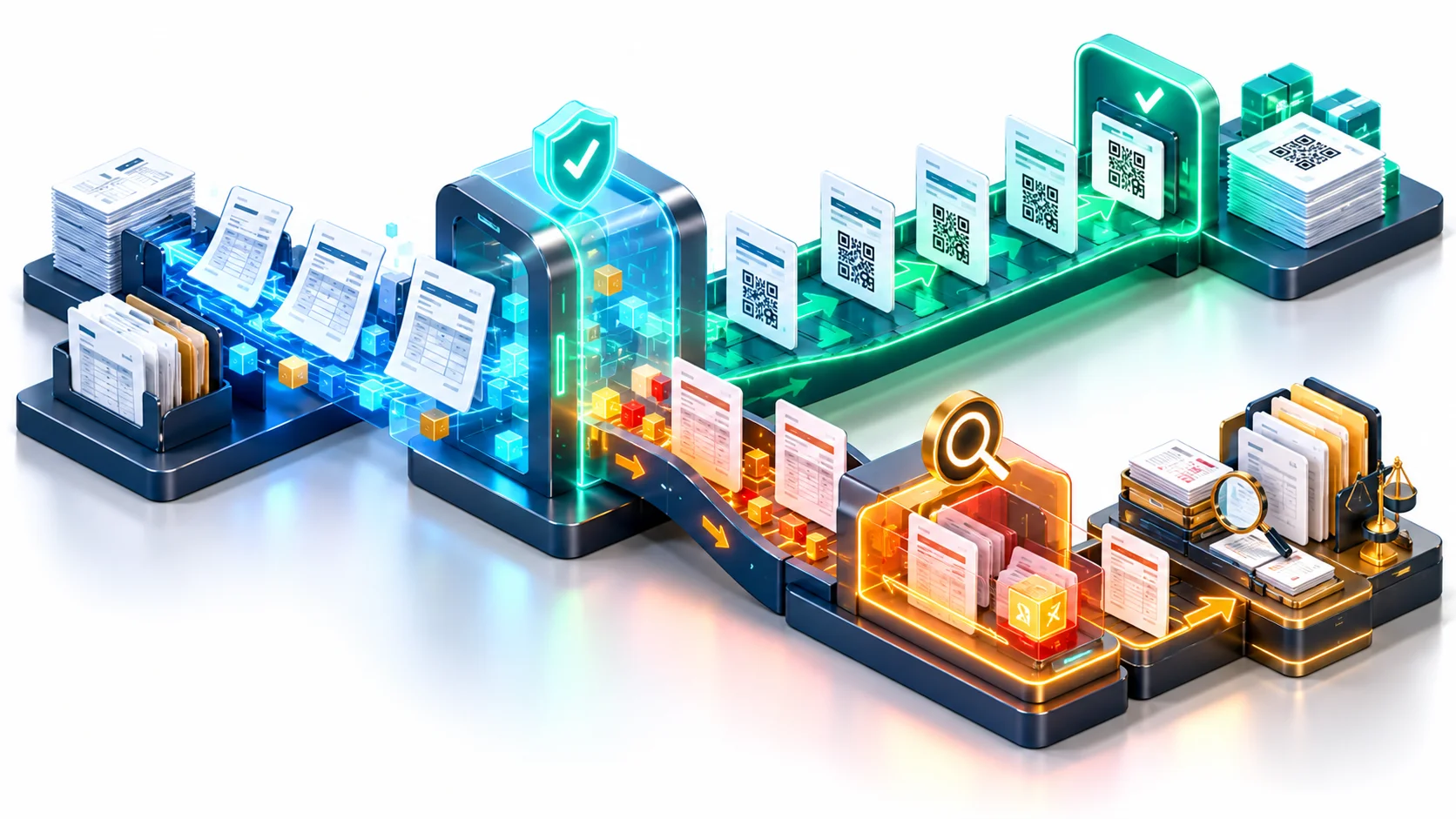
At a technical level, a business generates an invoice in its own accounting or billing system, then submits the relevant invoice details as a structured data file to the Invoice Registration Portal. The portal checks the data for completeness and validity, assigns an Invoice Reference Number, digitally signs the invoice, and generates a QR code containing key invoice details. This signed response is sent back to the business, which then shares the final invoice, complete with the Invoice Reference Number and QR code, with its customer.
Integration with GSTR-1 and E-Way Bills
One of the more practical benefits of the system is that validated invoice data can auto-populate parts of GSTR-1, reducing manual data entry and the risk of transposition errors between the invoice and the return. The portal is also integrated with the e-way bill system, so in many cases a business can generate the e-way bill required for movement of goods directly from the same data submission, rather than re-entering the same details twice.
Where the Automation Ends
It is worth being clear about what the portal does not do. It validates the structure and completeness of invoice data and issues a reference number, but it does not verify that the underlying transaction has been classified correctly for GST purposes, that the right tax rate has been applied, or that the invoice reflects the true nature of the supply. Those judgments still rest with the business and whoever is preparing its books and returns.
What GST E-Invoicing Handles Well on Its Own
For routine, well-understood transactions, such as a standard business-to-business sale of goods at a known GST rate, the GST e-invoicing portal genuinely reduces friction. It cuts down on data entry, standardizes invoice formats across vendors, and gives both supplier and recipient a shared, verifiable reference point. Businesses that have integrated their accounting systems with the Invoice Registration Portal often see fewer transcription errors between invoices and returns, and the automatic population of GSTR-1 fields saves real time during the filing cycle.
Reduced Mismatches Between Supplier and Recipient Records
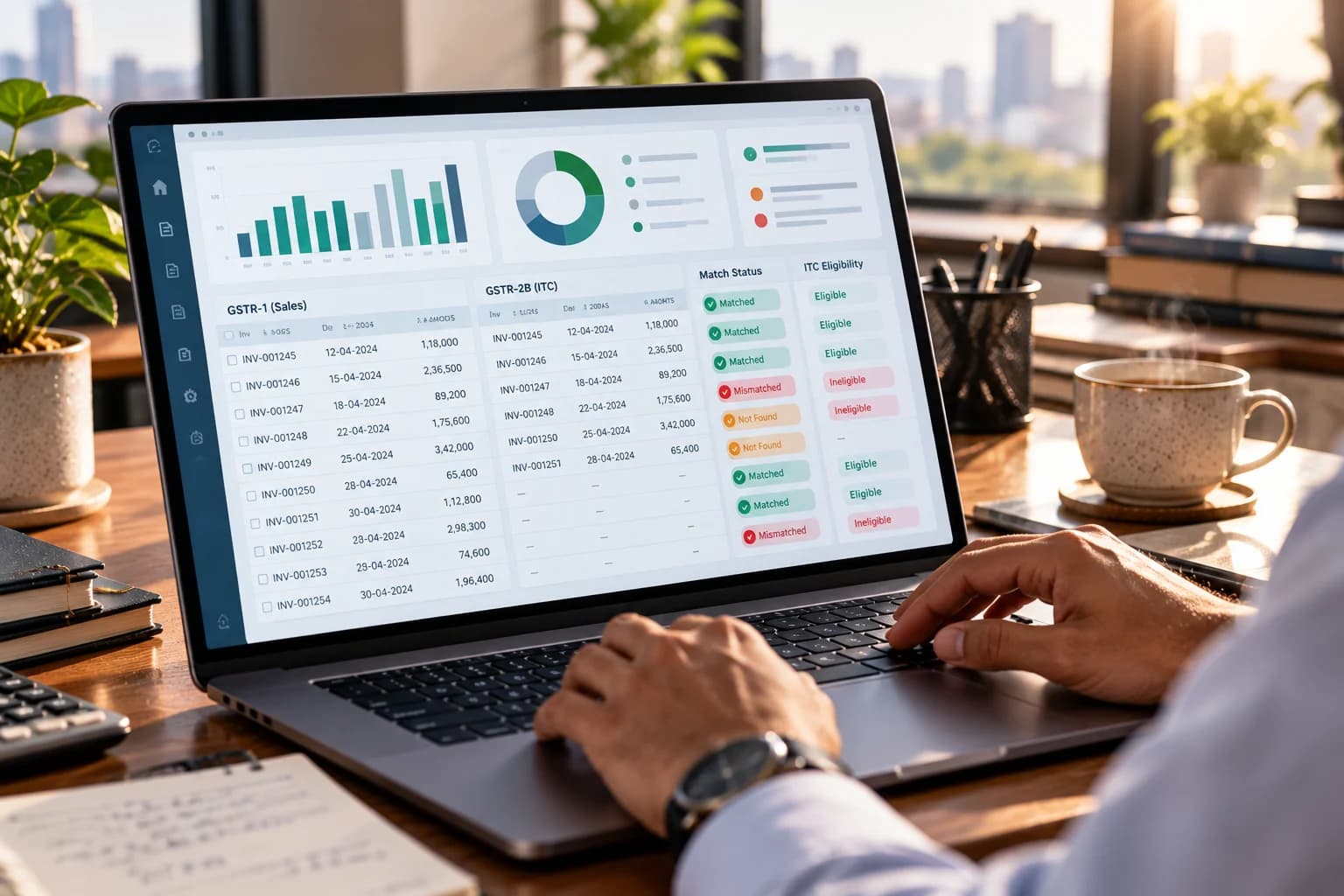
Because the same registered invoice data feeds into both the supplier's outward return and the recipient's auto-drafted GSTR-2B, discrepancies that used to surface only during reconciliation are now visible much earlier. This has made it easier for finance teams to catch missing or duplicate invoices before they become a dispute over input tax credit eligibility.
Why Manual GST Filing Support Is Still Necessary
Despite these improvements, GST e-invoicing does not remove the need for experienced GST filing support, it relocates where that expertise is applied. Someone still has to determine the correct GST rate and classification for each supply, decide how to treat mixed or composite supplies, handle exceptions like exports, SEZ transactions, or reverse charge, and correct errors within the narrow cancellation window before they cascade into return filings. These are judgment calls that depend on understanding both the transaction and the current state of GST law, not just the mechanics of the portal.
Handling Exceptions and Corrections
E-invoices can only be cancelled within a limited period, and once that window closes, corrections generally have to be made through credit or debit notes rather than simply deleting the original entry. Deciding which correction route applies, and making sure it is reflected consistently across the invoice, the e-way bill, and the return, is exactly the kind of detail that benefits from a professional reviewing the filing rather than relying purely on system defaults.
Reconciliation Across GSTR-1, GSTR-2B, and GSTR-3B
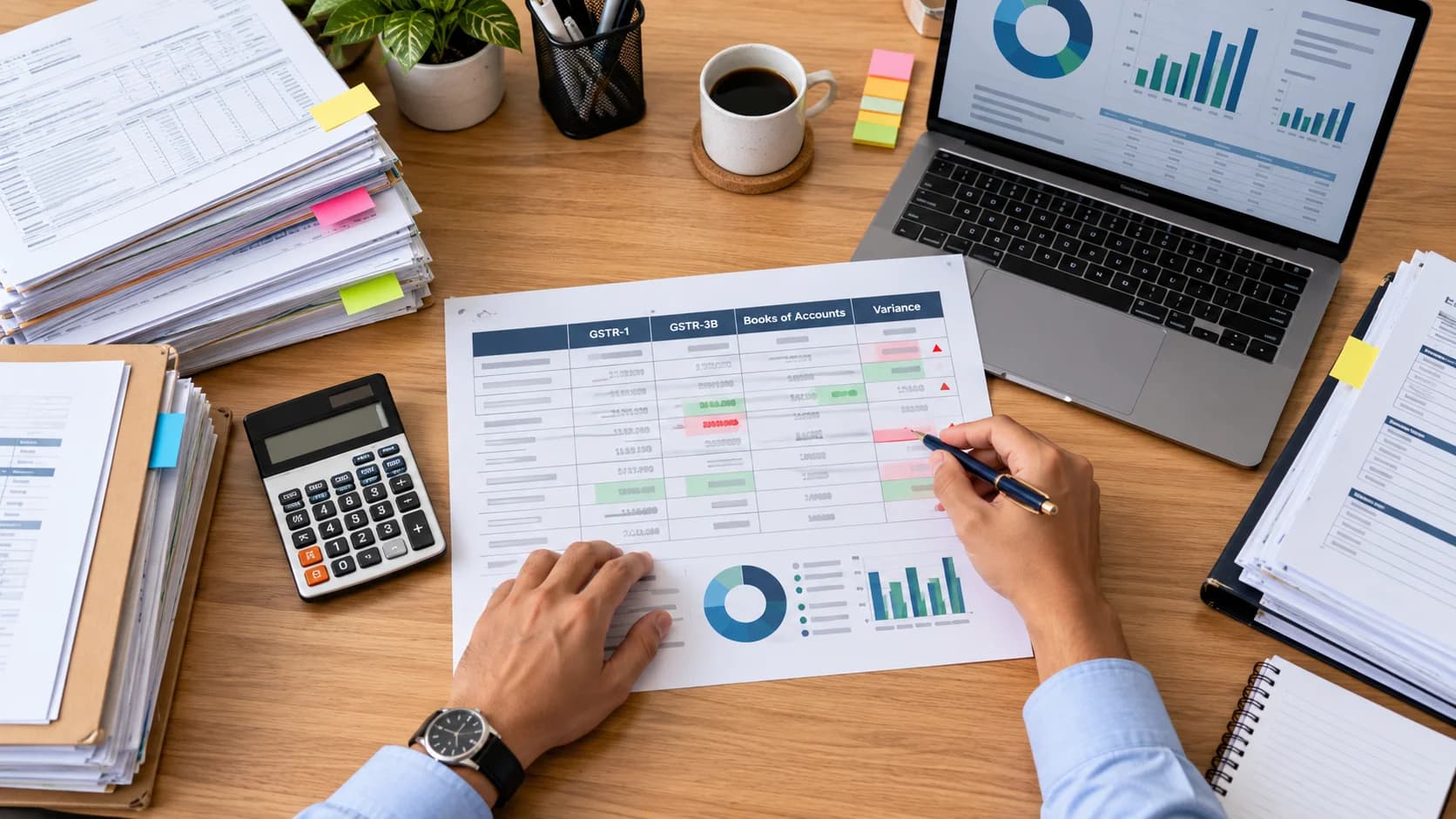
Even with GST e-invoicing in place, businesses still need to reconcile outward supplies reported through e-invoices against the auto-drafted GSTR-2B and the summary return GSTR-3B. Differences can arise from timing, vendor errors, or transactions that fall outside the e-invoicing mandate altogether, and someone experienced in GST compliance needs to investigate and resolve these gaps before the return is filed, not after a notice arrives from the department.
The Compliance Timeline and Threshold Changes to Watch
Since the initial rollout in October 2020, the aggregate turnover threshold that triggers mandatory GST e-invoicing has been reduced several times, bringing progressively smaller businesses into scope. This gradual approach has meant that a business exempt from the mandate one year can find itself covered the next, simply because its turnover in any preceding financial year since 2017-18 crossed the notified limit. Businesses near these thresholds need to monitor their turnover across multiple years, not just the most recent one, because the rule generally looks back across a range of years rather than only the latest completed year.
Planning Ahead Rather Than Reacting
Because threshold changes are usually announced with some lead time, businesses that are approaching the relevant turnover band benefit from preparing their systems and processes before the mandate applies to them, rather than scrambling once it becomes compulsory. This includes confirming that accounting software can generate the required data format, training staff on the new invoice workflow, and reviewing existing invoice templates so they can accommodate the Invoice Reference Number and QR code without disrupting other business processes like dispatch or delivery documentation.
Technology and Integration Considerations for Businesses
Adopting e-invoicing is not purely a compliance exercise, it is also a technology integration project. Businesses need their billing or ERP systems to correctly format invoice data, connect reliably to the Invoice Registration Portal, and handle the response, including the Invoice Reference Number and QR code, without manual intervention for every transaction. For businesses issuing a high volume of invoices, even small failures in this pipeline can create a backlog that is difficult to clear during a filing period.
Choosing Between Direct Integration and GST Suvidha Providers
Some businesses connect directly to government systems through Application Programming Interfaces, while others route their data through GST Suvidha Providers that offer additional tools for validation, bulk uploads, or error correction. Neither route eliminates the need for accurate underlying data, and the choice often comes down to transaction volume, existing software capabilities, and how much in-house technical support a business has available to maintain the integration over time.
Handling System Downtime and Portal Errors
Government portals occasionally experience downtime or validation errors that are unrelated to the accuracy of a business's own data. Having a clear internal process for what to do when the portal is unavailable, including how invoices are still issued to customers and later registered once the system is back online, prevents a technical outage from turning into a compliance gap. This is an area where an experienced accounting team can help establish workable contingency procedures in advance.
GST E-Invoicing Portal vs. Manual GST Filing Support at a Glance
| E-Invoicing Portal | Manual/Professional GST Filing Support | |
|---|---|---|
| Validating invoice data structure | Handled automatically | Not needed for this step |
| Confirming correct GST rate and classification | Not checked by the portal | Reviewed by a professional |
| Handling exceptions (exports, SEZ, reverse charge) | Not addressed by the portal | Assessed case by case |
| Reconciling GSTR-1, GSTR-2B, and GSTR-3B | Auto-populates some fields | Investigates and resolves mismatches |
| Correcting an error after the cancellation window | Not possible via the portal | Managed through credit/debit notes |
- The portal genuinely reduces manual data entry and transcription errors for routine, well-classified transactions
- Professional review remains necessary for classification, exceptions, and reconciliation the portal cannot judge on its own
5 Mistakes to Avoid With GST E-Invoicing
In our experience, these are the mistakes behind most avoidable corrections:
- Treating a valid Invoice Reference Number as proof that the GST treatment is right.
- Leaving default tax rates and classifications unreviewed after setup.
- Missing the cancellation window and then having no clear correction route.
- Assuming reconciliation shrinks to zero once invoice data flows into returns.
- Handling exports, SEZ supplies and reverse charge without a professional check.
Common Pitfalls When Businesses Rely Solely on Automation
A frequent mistake is assuming that because an invoice has been successfully registered on the portal, the underlying GST treatment must also be correct. The portal validates data format and completeness, not tax accuracy. Businesses that treat a successful Invoice Reference Number as a stamp of approval on the substance of the transaction can carry forward classification errors for months before they surface, often only when a supplier or recipient's records are cross-checked during an audit or notice.
Over-Reliance on Software Defaults
Accounting software that generates e-invoices automatically often applies default tax rates or classifications based on product or service codes entered once during setup. If those defaults are not periodically reviewed against current rates and rulings, the software will keep applying an outdated or incorrect treatment consistently and confidently, which can be harder to catch than an isolated manual error precisely because it looks systematic and repeatable.
Underestimating the Reconciliation Workload
Some businesses assume that because invoice data flows automatically into returns, the reconciliation workload has shrunk to near zero. In practice, the volume of data available for reconciliation has increased, and while automation handles the matching of straightforward invoices, exceptions, mismatches, and vendor-side errors still require a person to review, investigate, and resolve them before the return is finalized.
Cross-Border and Export Transactions
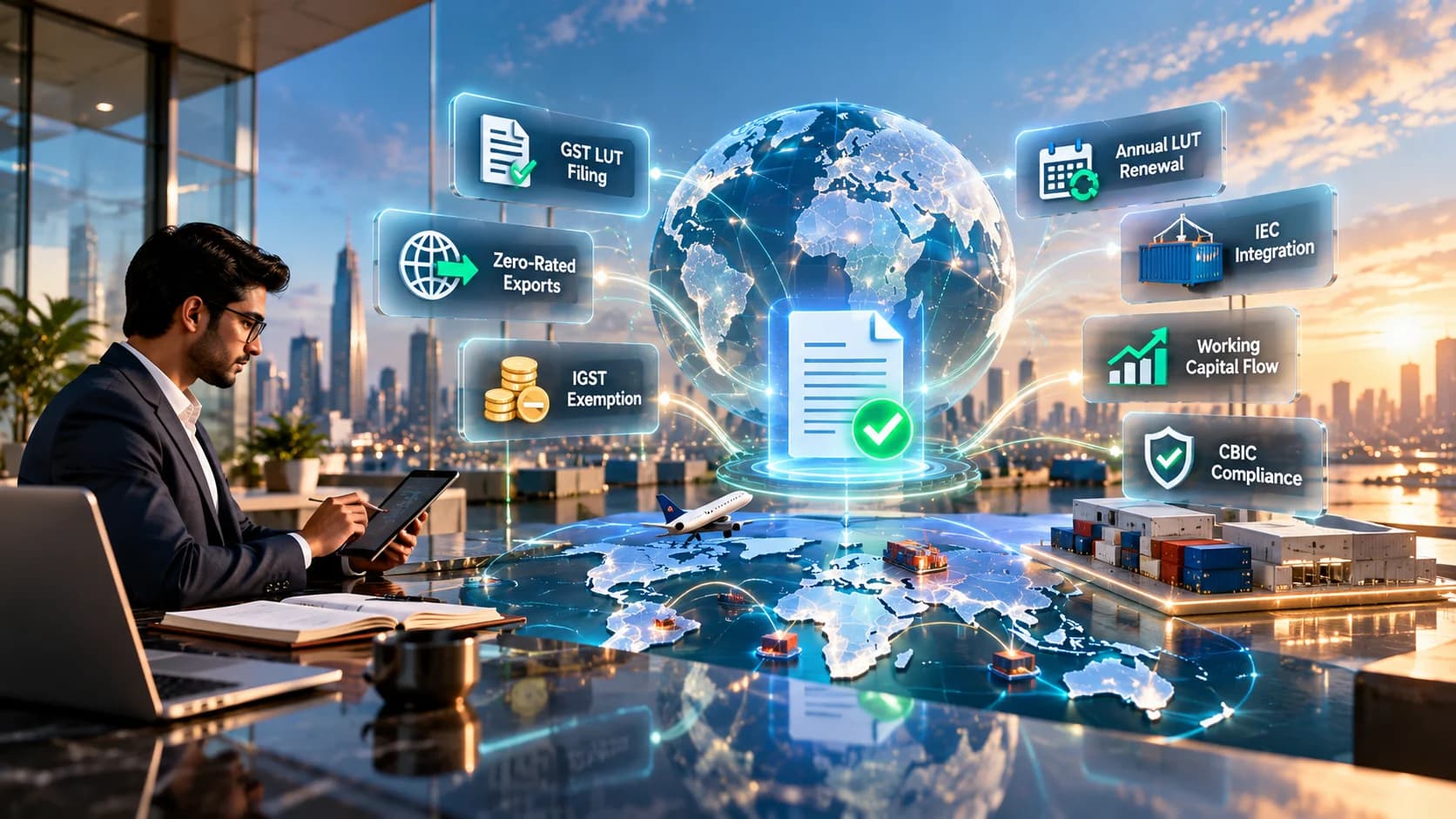
Export supplies, transactions with Special Economic Zones, and certain deemed exports carry their own GST treatment, and businesses sometimes assume the GST e-invoicing system will flag these automatically if handled incorrectly. It generally will not. The portal validates that submitted data is structurally complete, but it does not second-guess whether a transaction has been correctly identified as zero-rated, whether the right supporting documentation exists, or whether a refund claim tied to that export has been prepared consistently with the invoice data. These are precisely the areas where relying on software alone, without a professional reviewing the classification, tends to create problems that surface much later during an audit or refund scrutiny.
Impact on Small and Medium Enterprises
As the threshold has come down, the population of businesses affected by GST e-invoicing has shifted from a handful of very large corporations to a much broader base of small and medium enterprises, many of which do not have dedicated in-house tax teams. For these businesses, the transition is often felt less as a technology upgrade and more as a change in daily discipline: invoices need to be generated and registered close to the time of supply, staff need to understand what the Invoice Reference Number means, and errors need to be caught quickly given the short cancellation window.
Building Internal Capacity Without Losing Accuracy
Smaller businesses sometimes respond to the mandate by assigning e-invoice generation to whichever staff member handles billing, without necessarily equipping that person with a working understanding of GST classification rules. This can work adequately for simple, repetitive transactions, but it tends to break down as soon as a business starts dealing with new products, new states, or new categories of customers. Pairing internal staff who understand the day-to-day billing process with periodic professional review of GST treatment tends to produce more consistent results than leaving either function entirely to one side.
The Cost of Getting It Wrong at Scale
Because e-invoicing data feeds directly into GSTR-1 and, indirectly, into a recipient's GSTR-2B, an error in classification is no longer isolated to a single invoice, it can repeat across every similar transaction a business processes until the underlying mistake is identified and corrected. For a business issuing hundreds or thousands of invoices a month, a small, systemic misclassification can accumulate into a significant discrepancy by the time it is caught, which is one of the strongest arguments for periodic professional review rather than a purely set-and-forget approach to e-invoicing.

How Livida's GST Filing Support Fits Alongside the Portal
Livida's GST Filing services are built around this reality: the portal handles registration and validation of invoice data, while accurate classification, exception handling, and return preparation still depend on experienced professional review. As part of its broader accounting services in India, Livida works with a business's bookkeeping records, accounts receivable, and accounts payable data to make sure the figures feeding into GST returns are accurate before they are filed, rather than treating the GST e-invoicing portal as a substitute for that groundwork.
Supporting Accurate Records Before They Reach the Portal
Because e-invoicing depends on the underlying invoice data being correct from the outset, the value of disciplined bookkeeping has, if anything, increased rather than decreased. Livida's general accounting and bookkeeping services are designed to keep the source records clean, so that when invoices are generated and submitted for registration, the numbers behind them are already reconciled and classified correctly, reducing the chance of downstream corrections.
Year-End Accounting and Ongoing Filing Support
Beyond the invoice-by-invoice mechanics, Livida also supports year-end accounting and the broader compliance calendar that GST-registered businesses need to manage, including TDS filing where applicable and the coordination between GST records and statutory accounts. This wider view helps ensure that GST e-invoicing data, GST returns, and the annual accounts all tell a consistent, defensible story.
Looking at the Bigger Compliance Picture
E-invoicing is best understood as an improvement to the plumbing of GST compliance rather than a replacement for the judgment that compliance still requires. Details on thresholds, timelines, and technical specifications are published and updated by the government on the official GST portal at gst.gov.in, and businesses should check that source directly when determining whether a specific transaction or turnover bracket falls under the current mandate. What the portal automates is data validation and transmission; what it does not automate is the professional judgment needed to classify transactions correctly, handle exceptions, and reconcile records across multiple returns.
For businesses navigating this system, the practical takeaway is straightforward: use the efficiency the GST e-invoicing portal provides for routine, well-classified transactions, but continue to invest in accurate bookkeeping and professional GST filing support for everything the portal cannot judge on its own. Livida's accounting and GST filing services are designed to work alongside these government systems rather than in competition with them, keeping the records behind every invoice accurate so the automation has good data to work with in the first place.
None of this means treating the GST e-invoicing portal with suspicion. It has genuinely reduced certain categories of error and made reconciliation between suppliers and recipients more transparent than it used to be under the older, purely self-reported system. The point is simply that automation and professional oversight are complementary rather than competing, and businesses that recognize this early tend to avoid the costlier corrections that come from assuming a validated Invoice Reference Number means the underlying compliance work is finished. Businesses weighing how much of their GST compliance to hand over to software versus a professional team are welcome to reach out to Livida to discuss where the balance makes sense for their specific operations.
Conclusion
GST e-invoicing improves the plumbing of compliance. It does not replace classification, exception handling or reconciliation. We recommend a regular review of default tax settings and a written correction process for the cancellation window.
References
Official sources for GST e-invoicing rules and portals:
- GST portal, the official Goods and Services Tax portal for registration, returns and notified updates
- e-Invoice System portal, the National Informatics Centre portal used to submit B2B invoices to the Invoice Registration Portal
Talk to Livida
Our team can review how your invoices, returns and reconciliations fit together before the next filing. Reach us through our contact page, email info@livida.in, or call +91 94860 33194. You can also read about our GST annual return filing and GST notice reply services.
Related Reading and Services
For a broader look at where India's GST technology is heading, and for hands-on filing support:
- E-Invoicing Mandates vs Manual Invoicing Support, a related look at the mandate and what manual support still covers
- India's GST Technology Roadmap, a wider view of e-invoicing, GSTN portal updates, and filing software trends
- GST Registration India, for businesses that need their underlying GST registration reviewed or set up correctly before e-invoicing applies