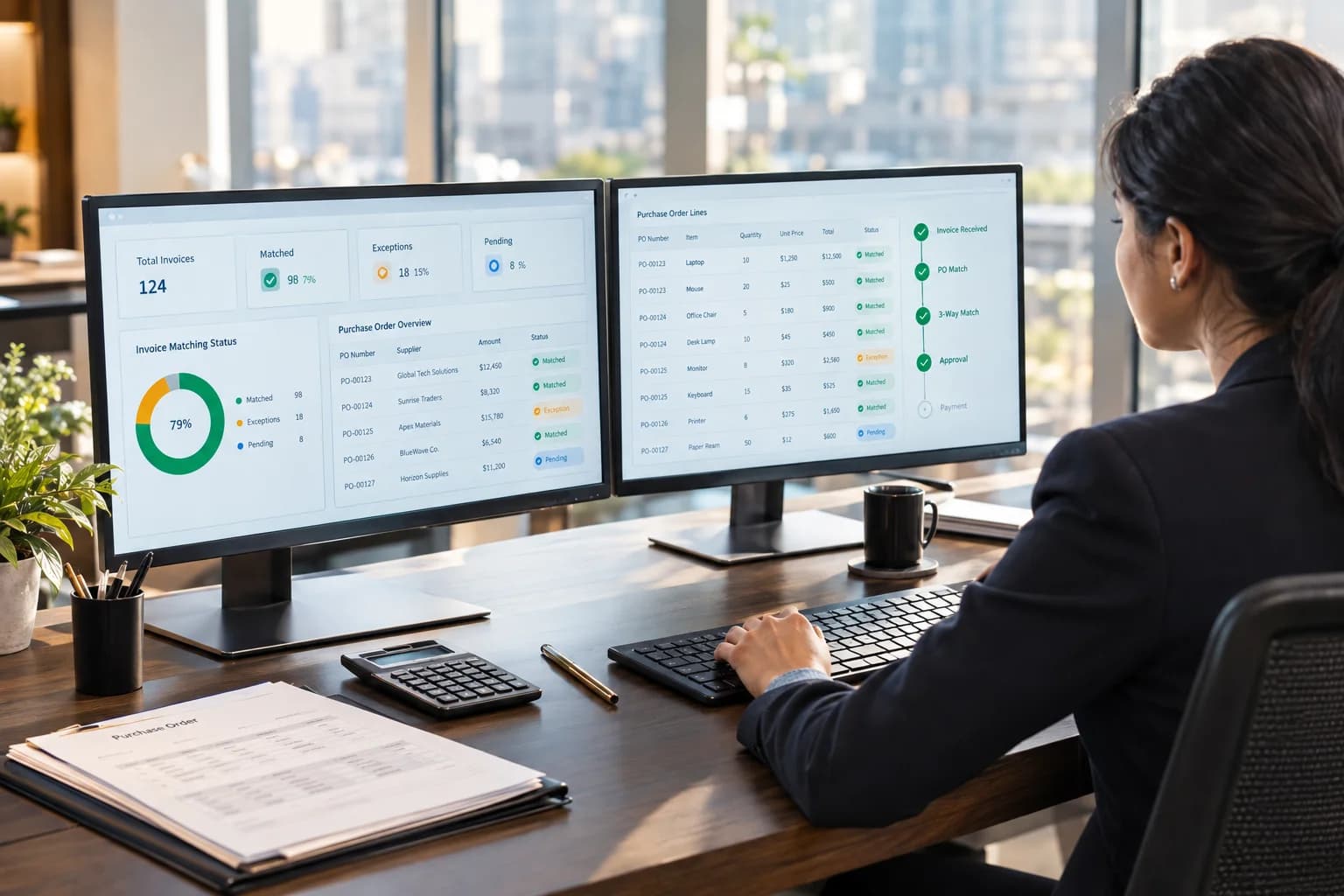
E-invoicing mandate compliance has quietly become one of the most consequential shifts in how businesses issue and receive invoices, moving what used to be a simple document exchange into a structured, government-validated process in a growing number of countries. For businesses operating across multiple regions, keeping up with e-invoicing mandate compliance means tracking different requirements, different platforms, and different timelines depending on where each transaction takes place. The technology behind these mandates is genuinely useful once understood, but understanding it, and getting the underlying data right, still depends heavily on accurate bookkeeping and invoicing support behind the scenes.

| E-Invoicing Mandate (Software) | Manual Invoicing Support | |
|---|---|---|
| Handles | Structured format generation and portal validation | Confirming data accuracy before generation |
| Cannot do alone | Verify tax classification or catch outdated customer data | Match the speed of automated validation at volume |
| Risk if used alone | Rejected invoices from bad underlying data | Slower processing without structured validation |
| Best used as | The transmission and validation layer | The review layer catching errors before they transmit |
For related reading on this same theme within India's GST system specifically, see our comparison of GST e-invoicing portal versus manual GST filing.
Key Takeaways
- E-invoicing mandate compliance depends on accurate underlying data, not only on switching on a software module.
- Rules, thresholds and timelines differ by country, so check official guidance for every region where you invoice.
- A rejected invoice can delay payment, so one person should own corrections and resubmission.
- Software handles transmission and validation. People handle review and reconciliation.
- Start readiness work before a mandate applies to your business, not after.

What an E-Invoicing Mandate Actually Requires
An e-invoicing mandate, in most of the jurisdictions that have introduced one, requires that certain invoices be generated in a structured digital format, validated through a government or approved network platform, and only then considered legally issued. This is a meaningfully different process from simply emailing a PDF or a scanned document to a customer. The structured format typically includes specific required data fields such as tax registration numbers, itemized tax breakdowns, and unique reference numbers, all of which need to be accurate for the invoice to pass validation.
The specifics vary considerably by country. India requires businesses above a notified turnover threshold to generate e-invoices through the government's Invoice Registration Portal for business-to-business transactions, receiving a unique Invoice Reference Number before the invoice is valid for GST purposes. Businesses can review current thresholds and requirements directly through the GST portal. Singapore has taken a different approach, promoting the InvoiceNow network as the national e-invoicing standard for domestic transactions, building on the international Peppol framework rather than a single centralized government portal. The UAE has announced its own phased e-invoicing mandate, moving toward mandatory structured invoicing for business transactions over the coming rollout period.
Why Governments Are Pushing E-Invoicing Requirements
The motivation behind these e-invoicing requirements is fairly consistent across jurisdictions: tax authorities gain real-time or near-real-time visibility into transaction data, which reduces opportunities for underreporting and makes cross-checking a business's reported figures against its actual invoicing activity far more direct. For businesses, the upside is a more standardized, ultimately more automatable invoicing process once the initial adjustment period is over. The transition period itself, though, is exactly where mistakes tend to happen.
The Real Compliance Burden Behind the Technology
It is tempting to think of e-invoicing mandate compliance as purely a software problem, solved once the right platform or module is switched on. In practice, the software only produces a compliant invoice if the underlying data feeding into it is accurate. A misclassified transaction, an incorrect tax rate applied to a specific good or service, or an outdated customer tax registration number will all produce an e-invoice that transmits successfully but is substantively wrong, and that kind of error is not always caught at the point of generation.
This is where the connection to ordinary bookkeeping becomes unavoidable. E-invoicing systems pull their data from a business's accounting or invoicing records, so the accuracy of the invoice is only as good as the accuracy of the records behind it. A business with clean, well-reconciled books produces reliable e-invoices largely as a byproduct of good bookkeeping practice. A business with messy, inconsistent records will find that e-invoicing surfaces those inconsistencies faster and more visibly than the old process did, since a government portal or network is now checking the data in something close to real time.
Rejected Invoices and the Cash Flow Impact
A structured e-invoice can be rejected by the validating platform if required fields are missing, formatted incorrectly, or fail a validation rule, and a rejected invoice generally cannot be used to support a customer's payment or tax credit claim until it is corrected and resubmitted. This has a direct cash flow consequence: a rejected e-invoice delays payment, sometimes by days, while the correction is made and revalidated. For businesses managing accounts receivable at any meaningful volume, a pattern of rejected invoices compounds into a real drag on collections timing.
Where Manual Invoicing Support Still Matters
Even in a jurisdiction with a fully mandatory e-invoicing system, there is still substantial work that happens around the structured invoice itself, and that work benefits enormously from experienced human support rather than software alone. Someone needs to confirm that a customer's tax classification is current before an invoice is generated, resolve a rejected submission quickly enough that it does not disrupt collections, and reconcile e-invoicing data against the general ledger to confirm the two systems actually agree with each other over time.
Livida's accounts receivable management and accounts payable services are built around exactly this kind of ongoing reconciliation and oversight. On the receivable side, that means confirming invoices go out correctly formatted and get collected on schedule, catching a rejection early enough to fix it before it becomes a payment delay. On the payable side, it means validating incoming e-invoices against purchase orders and goods received before payment is released, adding a checkpoint that a purely automated accounts payable process can miss if nobody is actively reviewing what comes through.
GST E-Invoicing and India-Specific Filing Support
In India specifically, e-invoicing mandate compliance intersects directly with GST filing obligations, since e-invoice data flows into the broader GST return process and affects input tax credit reconciliation for the receiving business. Livida's GST filing services in India work alongside this e-invoicing data, making sure that what has been generated through the Invoice Registration Portal reconciles cleanly with periodic returns rather than creating a mismatch that surfaces later as a compliance issue. TDS filing and year-end accounting depend on this same underlying data being accurate, which is another reason the invoicing and the broader bookkeeping process cannot really be treated as separate concerns.
Supporting Businesses Through a New Mandate Rollout
The period immediately after a new mandate takes effect, or when a threshold is lowered to bring more businesses into scope, tends to be when the most support is needed. Businesses that have never had to generate structured e-invoices before often underestimate the lead time required to get software configured, staff trained, and customer and vendor master data cleaned up before the deadline. A business with outdated customer records, for instance, may find a large share of its early e-invoices rejected simply because a registration number on file is no longer current, and untangling that after the mandate is already in force is considerably more stressful than addressing it beforehand.
Invoice Compliance Software Is a Tool, Not a Complete Answer
Invoice compliance software has genuinely improved over the past several years, and most modern accounting and ERP platforms can now generate the required structured format and transmit it to the relevant government or network portal with minimal manual effort. That said, the software is only ever as reliable as the process and the data behind it. A platform configured once and left alone will drift out of alignment as tax rates change, new customer relationships begin, or a jurisdiction updates its mandate requirements, none of which the software will necessarily flag on its own.
Ongoing oversight, rather than a one-time setup, is what actually keeps e-invoicing mandate compliance reliable over time. That oversight covers confirming the software's configuration still matches current rules, spot-checking a sample of generated invoices for accuracy, and making sure rejected invoices are corrected and resubmitted promptly rather than sitting unresolved. This is exactly the kind of ongoing, detail-oriented work that fits naturally alongside general accounting services and bookkeeping, rather than being treated as a separate, disconnected IT project.
How This Plays Out for Businesses Operating Across Regions
Businesses operating in more than one country face a particular version of this challenge, since e-invoicing requirements are not remotely standardized across borders. A business invoicing customers in India needs to route qualifying transactions through the Invoice Registration Portal, while the same business's Singapore operations may be adopting the InvoiceNow network on a different timeline, and its UAE operations will eventually need to meet the phased mandate the Ministry of Finance has outlined for that market. Keeping these requirements straight, and making sure each region's invoicing process is actually compliant with the rules that apply there rather than a generic approach, is a genuine operational challenge that benefits from coordinated bookkeeping support across the business's full footprint.
In the United States and Canada, where a nationwide e-invoicing mandate has not been implemented in the same way, the more immediate compliance focus tends to sit with accurate sales tax filing and accounts receivable and payable management rather than a structured invoice validation system. Even so, the broader discipline is the same: accurate, well-reconciled underlying records make every downstream compliance obligation, whether that is a structured e-invoice or a sales tax return, considerably more straightforward to get right the first time.
International Standards Behind Modern E-Invoicing
Much of the current wave of e-invoicing mandates draws on a common technical foundation, even where the government-facing process looks different from country to country. The Peppol framework, an international standard originally developed to support cross-border procurement, underpins Singapore's InvoiceNow network and has been adopted, in various forms, by a growing number of countries building out their own e-invoicing infrastructure. Understanding this shared foundation is useful for a business operating across regions, since a platform built to Peppol standards can often be adapted more quickly to a new jurisdiction's requirements than one built around a single country's proprietary format.
That said, shared technical standards do not mean shared compliance rules. Two countries can both build on the same underlying framework while requiring different data fields, different validation timelines, and different thresholds for who must comply. A business cannot assume that being e-invoicing ready in one Peppol-based jurisdiction automatically satisfies requirements elsewhere, and treating international standards as a shortcut past jurisdiction-specific compliance work is a common and avoidable mistake.
Common Mistakes Businesses Make When Adopting E-Invoicing
A handful of mistakes show up repeatedly as businesses transition into a new e-invoicing mandate. The first is waiting until the mandate is already in effect to start testing the new process, rather than using any available grace period or voluntary early-adoption window to work out data quality issues before they carry real consequences. The second is assuming existing customer and vendor tax registration data is accurate simply because it has not caused a problem under the old invoicing process, when in fact plenty of outdated or incomplete records only surface as a problem once a validation system starts actually checking them.
A third common mistake is treating e-invoicing as purely an IT project handled once by whoever configures the software, rather than an ongoing compliance responsibility that needs periodic review as tax rates, customer relationships, and mandate rules all continue to change. A fourth is failing to build a clear internal process for what happens when an invoice is rejected, leaving it unclear who is responsible for correcting and resubmitting it quickly enough to avoid a payment delay. Each of these mistakes is avoidable with reasonably modest planning, but they are common precisely because e-invoicing compliance tends to get deprioritized until a deadline forces attention onto it.
Technology Costs Versus the Cost of Getting It Wrong
Adopting e-invoicing capable software involves real costs, whether that is a new platform, an upgrade to an existing one, or integration work to connect accounting software with the relevant government or network portal. Businesses sometimes hesitate over this upfront cost, particularly smaller ones weighing whether to invest ahead of a mandate actually taking effect for their size of business. It is worth weighing that cost against the alternative, which is scrambling to implement compliant invoicing under deadline pressure once the mandate applies, often at a higher cost and with a much higher risk of errors during the rushed transition.
The businesses that navigate these transitions most smoothly tend to be the ones that treat e-invoicing readiness as part of their ongoing bookkeeping and accounts receivable and payable management, rather than a one-time technology purchase disconnected from the rest of their financial operations. Reviewing invoicing processes alongside regular bookkeeping means data quality issues get caught and corrected as part of routine work, well before a mandate deadline turns them into an urgent problem.
Preparing for the Next Phase of E-Invoicing Requirements
E-invoicing mandates tend to expand rather than contract once introduced, with turnover thresholds lowered over time to bring more businesses into scope and additional transaction types added to what must be reported through the structured system. A business that treats its current exemption as permanent is likely to find itself scrambling when the threshold changes, while a business that keeps its invoicing and accounts receivable processes reasonably clean regardless of current mandate status will have a much shorter runway to full compliance when the rules eventually catch up to it.
Practical preparation includes reviewing whether current accounting software supports the structured formats relevant jurisdictions require, confirming customer and vendor tax registration data is current rather than assuming it hasn't changed, and building a habit of reconciling invoicing data against the general ledger regularly rather than only at year-end. None of this needs to wait for a mandate to become active locally, and businesses that get ahead of it tend to have a far smoother transition than those that wait for the deadline to force the issue.

Staying Compliant Without the Guesswork
E-invoicing mandate compliance is not going away, and the trend across the jurisdictions Livida serves is clearly toward more structured, more automated, more closely monitored invoicing over time. The software behind these mandates genuinely reduces manual effort once properly configured, but it does not remove the need for accurate underlying data, ongoing reconciliation, and someone accountable for catching a rejected invoice or a misclassified transaction before it becomes a bigger problem.
Livida's accounts receivable, accounts payable, and GST filing services are built to work alongside whatever e-invoicing platform or requirement applies in a given region, keeping the data behind every invoice accurate and reconciled rather than treating compliance as a one-time software setup. As mandates continue to expand and thresholds continue to lower, the businesses in the best position are the ones that treated clean, well-supported invoicing and bookkeeping as a standing practice long before the deadline arrived, rather than a scramble once it did.
Who Owns What in E-Invoicing Mandate Compliance
Clear ownership is the simplest way to keep e-invoicing mandate compliance under control. Our experience is that problems rarely start with the software. They start when nobody is sure who checks the data first.
A workable split looks like this:
- The finance lead owns the process and the compliance calendar.
- The bookkeeper owns customer and vendor master data.
- The invoicing team owns the first fix when an invoice is rejected.
- A reviewer checks a sample of invoices each month.
In the filings we handle, the most common cause of a rejected e-invoice is an outdated customer registration number, not a software fault. That is why master data review comes first.
Livida's team also links this work to GST annual return filing and TDS return filing in India, GST filing in Singapore, VAT filing in the UAE and sales tax filing in the USA. For the UAE bookkeeping angle, see UAE VAT and bookkeeping technology trends.
A Short Readiness Check for Growing Businesses
A useful exercise for any business watching an e-invoicing mandate approach is a short internal readiness check, run well before the compliance date rather than in the final weeks before it. Start with the customer and vendor master file: are tax registration numbers current, and is there a documented process for keeping them that way as relationships change? Next, check the software itself: does the current accounting or invoicing platform already support the structured format the relevant mandate requires, or will an upgrade or additional module be needed, and how long does that typically take to implement properly?
Finally, look at the process around the software rather than the software alone. Is there a clear owner for reviewing rejected invoices and resubmitting them quickly, and does that person also have visibility into whether rejections are trending up in a way that points to a deeper data quality issue rather than isolated mistakes? Businesses that can answer these questions confidently tend to move through a new mandate with minimal disruption. Businesses that cannot are usually the ones that end up needing the most support once the compliance date actually arrives, and getting ahead of that gap is considerably easier than closing it under deadline pressure.
The five essential checks for e-invoicing mandate compliance readiness are:
- Whether customer and vendor tax registration numbers are current
- Whether the accounting or invoicing platform supports the required structured format
- Who owns reviewing and resubmitting rejected invoices
- Whether e-invoicing data is reconciled against the general ledger regularly
- Whether rejection trends are tracked over time, not just handled one by one
For a broader look at how tax authority technology is evolving worldwide, see our piece on digital tax authority portals: global trends and our comparison of corporate tax software versus corporate tax advisory. For cash collection and matching, see open banking APIs versus manual bank reconciliation.
Conclusion
E-invoicing mandate compliance is a shared job between software and people. Software validates and transmits. People keep the data clean, fix rejections and reconcile the results. Businesses that treat it as ongoing work, not a one-time setup, have the smoothest transition when a mandate arrives.
References
- e-Invoice System (e-Invoice 1 Portal), Government of India
- GST portal, Government of India
- Nationwide E-Invoicing Initiative, IMDA Singapore
- GST InvoiceNow Requirement, IRAS Singapore
- UAE Electronic Invoicing Guidelines, Ministry of Finance
Talk to Livida
If you want help with e-invoicing mandate compliance in your region, visit our contact page, email info@livida.in or call +91 94860 33194. Our team will review your invoicing process and tell you where the gaps are.
This article is general information, not professional advice. Tax rules, thresholds and mandate timelines change, so confirm current requirements with the relevant authority before you act.