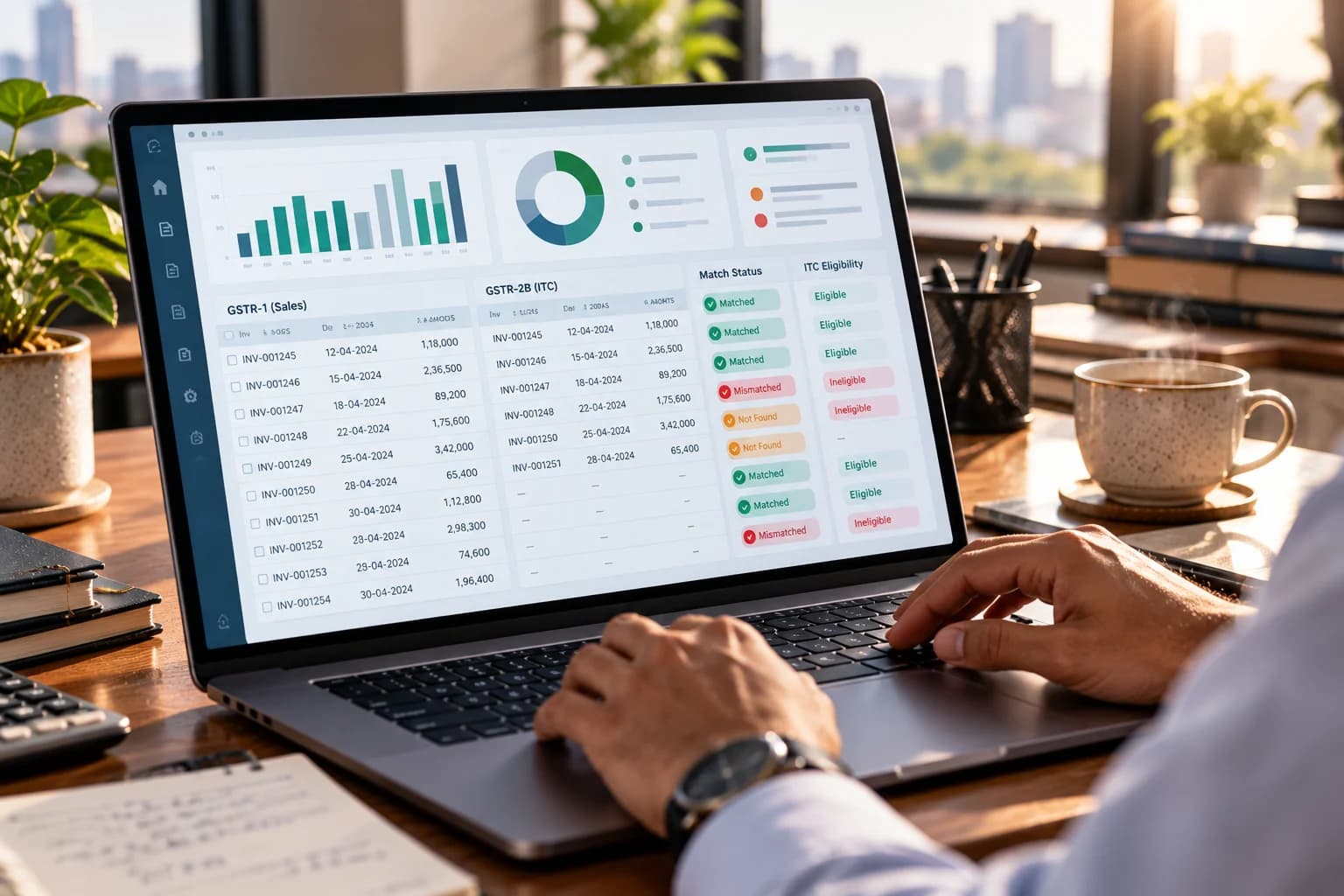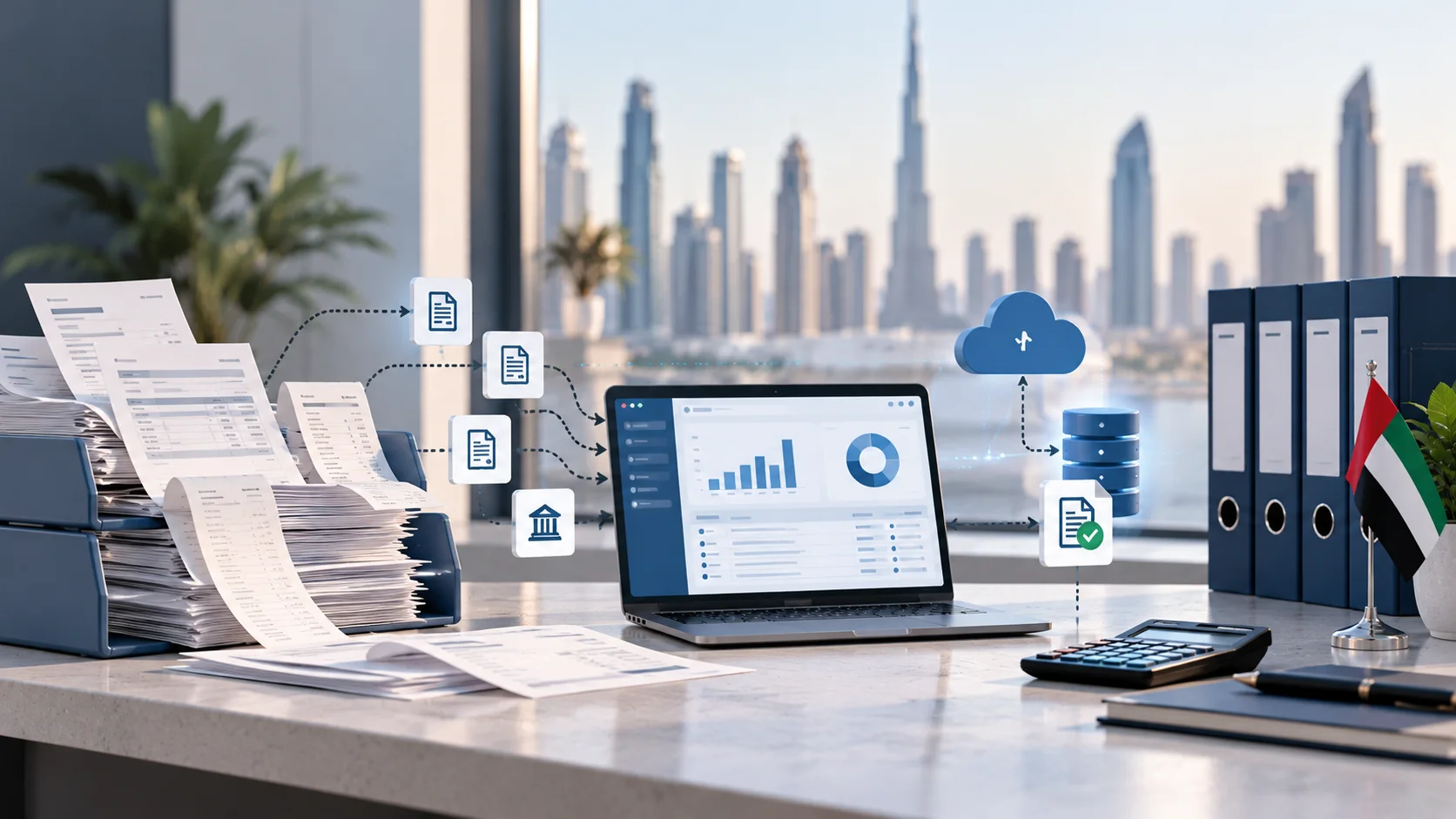
For UAE-based businesses, UAE VAT bookkeeping technology has moved from a back-office convenience to a genuine compliance necessity. Since the introduction of value added tax in 2018, the Federal Tax Authority has steadily raised expectations for how financial records are captured, stored, and reported, and the tools businesses use to meet those expectations have evolved just as quickly. Understanding where this technology is heading, and what it means for everyday bookkeeping, helps business owners stay ahead of both compliance risk and administrative overhead.
This article is general information, not professional advice, and UAE tax rules change, so confirm current requirements with the Federal Tax Authority or a licensed tax agent.
Businesses that are also working through UAE VAT registration for the first time will find that a solid bookkeeping setup makes that process considerably smoother.

Key Takeaways
- UAE VAT bookkeeping technology is now a compliance tool, not only a convenience.
- Digital records need to be complete, accurate and easy to retrieve, not just stored.
- E-invoicing is arriving in phases, so start by tidying how invoices flow through the business.
- Automation prepares VAT data, but a qualified person still reviews and files returns.
- Accurate monthly bookkeeping also lays the groundwork for UAE corporate tax.
UAE VAT Bookkeeping Technology and the Changing Face of Compliance
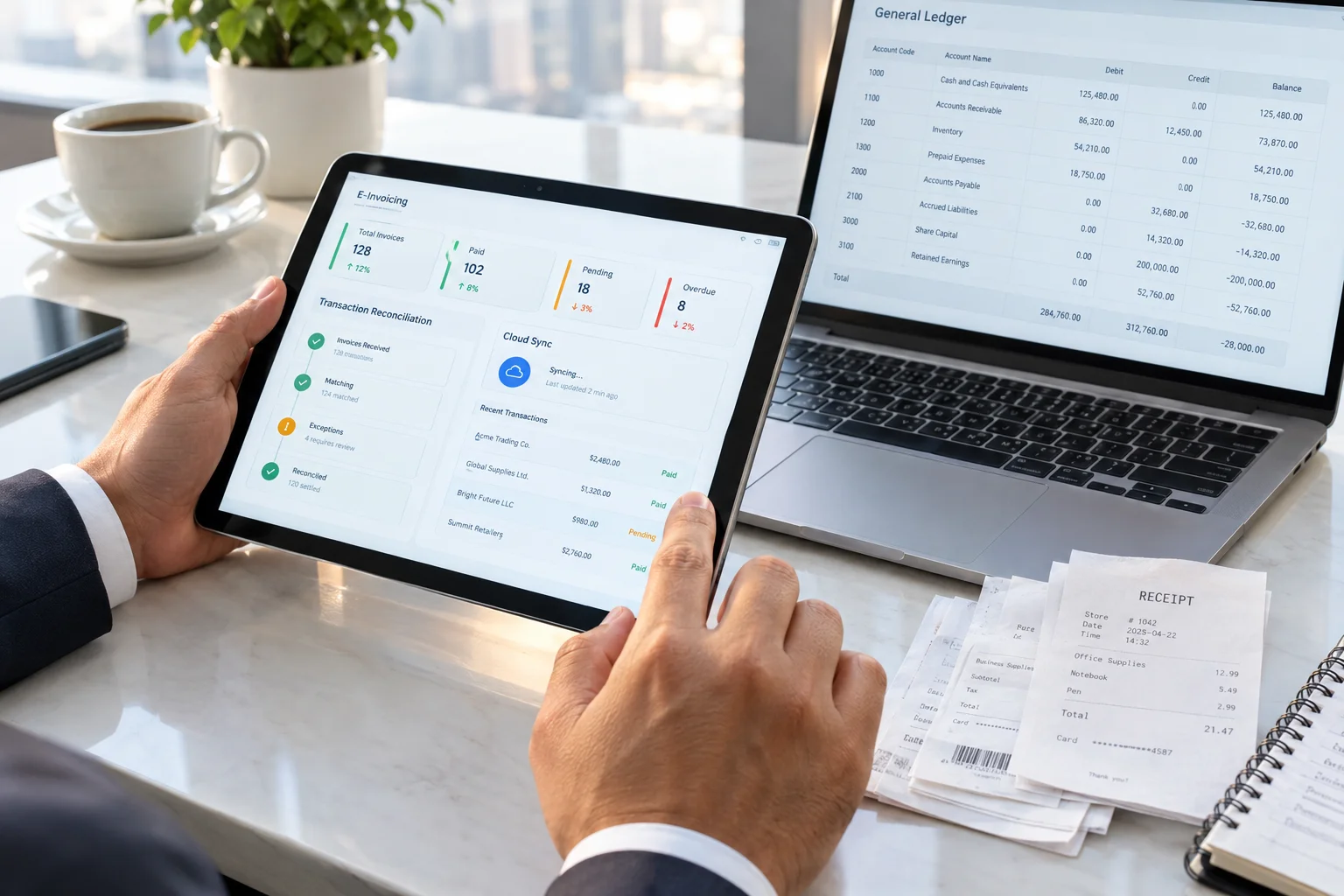
VAT compliance UAE requirements have never been static. UAE VAT bookkeeping technology has changed with them. In the years since VAT was introduced, businesses have moved from simple spreadsheet-based tracking toward more structured digital systems capable of producing an audit-ready trail on demand. This shift has been driven partly by regulation and partly by the practical reality that manual processes struggle to keep pace with transaction volume as businesses grow.
What used to be an annual or quarterly scramble to assemble invoices and receipts is increasingly a continuous, ongoing process. Businesses that treat VAT record-keeping as a daily habit, rather than a periodic chore, tend to face fewer surprises when a return is due or when the Federal Tax Authority requests supporting documentation. Technology has made that daily habit far more achievable than it once was, particularly for small and mid-sized businesses without a large in-house finance team.
Why This Matters for Growing Businesses
A business that starts out with a handful of transactions a month can often manage on paper or in basic spreadsheets. But as transaction volume grows, so does the risk of manual error, duplicate entries, and missed documentation. Technology adoption tends to accelerate at exactly the point where manual methods start to strain, which is why so many growing UAE businesses are reassessing their bookkeeping setup well before a compliance issue forces the question.
Common Pitfalls in Manual VAT Tracking
Manual VAT tracking tends to fail in predictable ways. Invoices get filed under inconsistent names or dates, making them hard to find later. VAT amounts get calculated correctly on the invoice itself but transcribed incorrectly into a spreadsheet. Credit notes issued against an original invoice never get linked back to it, so the two show up as unrelated entries. None of these mistakes are dramatic on their own, but they accumulate quietly over months, and they are usually only discovered when a return needs to be reconciled or a query arrives from the Federal Tax Authority. Structured bookkeeping systems reduce these errors by enforcing consistent data entry from the start.
Digital VAT Record-Keeping Requirements
Digital tax records UAE authorities expect, which UAE VAT bookkeeping technology should capture, typically include tax invoices, credit and debit notes, import and export documentation, and general ledger entries, all retrievable for a defined retention period. The specifics can shift as regulations are refined, which is one reason businesses are encouraged to confirm current requirements with a licensed tax agent rather than relying on older guidance.
What has stayed consistent is the underlying principle: records need to be complete, accurate, and accessible, not simply present. A folder of scanned invoices with no consistent naming convention or reconciliation against the general ledger does not meet the spirit of the requirement, even if the documents technically exist somewhere. This is where structured digital bookkeeping earns its keep, turning a pile of documents into an organized, searchable record.
Retention and Retrievability
Retention periods matter less than most business owners assume, and retrievability matters more. It is not especially useful to keep records for the required number of years if nobody can locate a specific invoice within a reasonable amount of time when it is requested. Digital systems that index and tag records as they are entered, rather than after the fact, make retrieval dramatically faster and reduce the pressure of a sudden documentation request.
Backups and Version Control
A less obvious but equally important part of digital record-keeping is protecting against accidental loss. A single corrupted file or an accidentally deleted folder can undo months of careful record-keeping if there is no backup in place. Cloud-based bookkeeping platforms generally handle this automatically, storing records redundantly and keeping a history of changes so an entry can be traced back to when and how it was created. Businesses relying on local spreadsheets or desktop software should confirm their own backup routine is just as reliable, since the responsibility falls entirely on them when there is no cloud provider handling it in the background.
E-Invoicing and UAE VAT Bookkeeping Technology
The UAE has been progressing toward broader e-invoicing adoption as part of its wider digital tax administration strategy, following a pattern seen in several other jurisdictions in the region and beyond, a trend covered in more depth in our post on digital tax authority portals globally. E-invoicing generally means invoices are generated, transmitted, and stored in a structured digital format rather than as a PDF or paper document, which allows tax authorities to receive standardized data with less manual intervention.
For businesses, this is less about a single software purchase and more about a shift in how invoicing fits into the broader bookkeeping workflow. An e-invoice that is not properly matched to the underlying transaction in the general ledger creates the same reconciliation headache as a paper invoice, just in a different format. The real benefit shows up when e-invoicing is paired with UAE VAT bookkeeping technology that automatically logs and categorizes each invoice as it arrives.
Practical Preparation Steps
Businesses do not need to wait for a specific mandate deadline to start preparing. Reviewing how invoices currently flow through the business, identifying where paper or unstructured PDFs still dominate, and gradually shifting toward invoicing tools that integrate with the bookkeeping system all reduce the work involved when broader e-invoicing requirements apply more fully. Early, gradual adoption tends to be far less disruptive than a rushed transition close to a deadline.
Matching E-Invoicing Formats to Business Size
The right level of e-invoicing investment differs by business size. A sole trader issuing a few invoices monthly may only need invoicing software that produces a clean, structured digital file, while a larger business with high transaction volume may benefit from tighter integration between its invoicing tool and its accounting system so figures update automatically without duplicate manual entry. Overinvesting in complex e-invoicing infrastructure before it is genuinely needed rarely pays off, just as underinvesting once transaction volume grows creates avoidable manual work. Reviewing this fit periodically, rather than setting it once and forgetting it, keeps the setup appropriate as the business changes.
Cloud Bookkeeping Dubai: Replacing Manual Ledgers
Cloud bookkeeping Dubai adoption has grown steadily as businesses move away from local spreadsheets and paper ledgers that live on a single computer or in a filing cabinet. Cloud-based systems allow transactions to be entered, categorized, and reviewed from anywhere, which matters for UAE businesses that work with remote finance support, multiple locations, or owners who travel frequently.
Beyond convenience, cloud bookkeeping reduces the single points of failure that plague manual ledgers. A spreadsheet stored only on one laptop can be lost, corrupted, or simply out of date the moment someone else needs to see the numbers. A cloud-based ledger, properly maintained, gives everyone who needs access a consistent, current view of the business's financial position, which supports both day-to-day decision-making and VAT-related record-keeping.
Real-Time Reconciliation
One of the more practical advantages of cloud bookkeeping is real-time reconciliation, where bank feeds and transaction records are matched continuously rather than in a single batch at month end. This means discrepancies, duplicate entries, or missing transactions tend to surface within days rather than being discovered weeks or months later during a larger review.
Real-time reconciliation also makes VAT preparation less stressful. When the underlying ledger is reconciled continuously, pulling together the figures needed for a return, or handing them to a tax agent, becomes a matter of running a report rather than reconstructing months of activity from scratch. Businesses that reconcile only occasionally often find themselves spending days catching up before a filing deadline, time that continuous reconciliation largely eliminates.
Collaboration Between Business Owners and Bookkeepers
Cloud-based systems also change how business owners and their bookkeepers work together. Rather than emailing spreadsheets back and forth or waiting for a physical folder of receipts to be handed over, both parties can view the same live ledger, leave notes on specific transactions, and flag items that need clarification. This is particularly useful for UAE-based businesses that work with a remote bookkeeping provider, since a shared cloud platform removes the friction of distance and time zones. Questions about a transaction can be resolved in the system itself rather than in a separate, disconnected conversation.
Automating VAT Data With UAE VAT Bookkeeping Technology
Automation has increasingly entered the VAT preparation process, though it is worth being precise about what that automation actually covers. Modern UAE VAT bookkeeping technology can automatically categorize transactions, apply the correct VAT treatment based on rules set up in the system, and generate summary reports that a business or its tax agent can use when preparing a return. What automation does not do, at least not responsibly, is remove the need for a qualified person to review the output and file the return itself.
This distinction matters because it shapes how a business should think about its own role. Automated categorization dramatically reduces the manual work of sorting transactions and tagging them correctly, but someone still needs to confirm that the automated rules were applied correctly, especially for unusual transactions that do not fit the standard pattern. Treating automation as a tool that supports the person responsible for filing, rather than a replacement for that person, keeps expectations realistic.
Where the Business's Own Role Still Matters
Even with strong automation in place, a business retains responsibility for reviewing its own records before they reach a tax agent or filing system. Flagging unusual transactions, confirming that new types of income or expense are categorized correctly, and keeping supporting documentation attached to entries all remain manual habits that no software fully automates. Good UAE VAT bookkeeping technology makes these habits easier to maintain consistently, rather than eliminating the need for them.
Choosing UAE VAT Bookkeeping Technology for Your Business
Not every UAE business needs the same UAE VAT bookkeeping technology setup, and the right choice depends heavily on transaction volume, industry, and how the business already works with its tax agent or accountant. A small consultancy issuing a handful of invoices a month has very different needs from a trading business managing inventory, multiple currencies, and frequent imports. Choosing a platform because it is popular, rather than because it fits the business's actual transaction patterns, often leads to underused features and continued reliance on spreadsheets for the parts the software does not handle well.
Questions Worth Asking Before Switching Systems
Before adopting or switching bookkeeping software, it helps to ask a few grounding questions: Does the platform support the currencies and transaction types the business regularly handles? Can it produce the specific reports a tax agent needs at filing time, in a format they can actually use? Does it integrate with the bank accounts and invoicing tools already in place, or will data still need to be entered twice? Answering these honestly, ideally with input from whoever handles the bookkeeping day to day, prevents an expensive switch that ends up solving the wrong problem.
UAE Corporate Tax and the Role of Accurate Bookkeeping
The introduction of federal corporate tax in the UAE, and the UAE corporate tax registration it requires, has added a further layer to why accurate, ongoing bookkeeping matters. Corporate tax calculations depend on clean financial statements, properly categorized income and expenses, and a clear audit trail for adjustments, all of which are far easier to produce when the underlying bookkeeping has been maintained consistently throughout the year rather than assembled after the fact.
Businesses that have historically treated bookkeeping as a light, periodic task are finding that corporate tax obligations raise the bar considerably. A general ledger with inconsistent categorization, missing reconciliations, or gaps in supporting documentation creates real risk when it comes time to calculate taxable profit, because errors in the underlying records tend to flow directly into the tax calculation itself. Strong bookkeeping practices reduce that risk well before a return is ever prepared. In our experience supporting UAE-based clients remotely, the most common delay is missing supporting documents for a handful of transactions, not the software. Our team therefore chases those early each month.
Timing Bookkeeping Cleanup Before Tax Season
Waiting until close to a filing deadline to review the year's bookkeeping is one of the most common and most avoidable mistakes a business can make. Corrections to miscategorized transactions, missing invoices, or unreconciled accounts take far longer to fix under time pressure than they do when addressed as part of a regular monthly or quarterly review. Businesses that build a habit of closing their books cleanly each month, rather than leaving cleanup for once a year, generally find that both VAT and corporate tax preparation require far less last-minute effort.
Bookkeeping as the Foundation, Not the Filing
It is worth being clear about where bookkeeping ends and tax filing begins. Bookkeeping produces the accurate financial picture, correctly categorized transactions, reconciled accounts, properly prepared statements, that a tax agent or in-house tax professional then uses to calculate and file corporate tax or VAT returns. Livida's remote bookkeeping service for UAE-based businesses focuses specifically on that foundation: keeping the books accurate, current, and ready for whoever ultimately handles the filing, whether that is an external tax agent or the client's own team.
Livida does not prepare or file VAT or corporate tax returns on a client's behalf, and its role is deliberately focused on the bookkeeping that supports that process rather than replacing it.
UAE VAT Bookkeeping Technology at a Glance
| Area | What technology does | What a person still does |
|---|---|---|
| Records | Stores and indexes invoices | Confirms completeness |
| Reconciliation | Matches bank feeds | Resolves exceptions |
| VAT data | Applies set rules | Reviews unusual items |
| E-invoicing | Structures invoice data | Matches to the ledger |
| Filing | Produces summary reports | Tax agent files returns |
Data Security Considerations for Financial Records
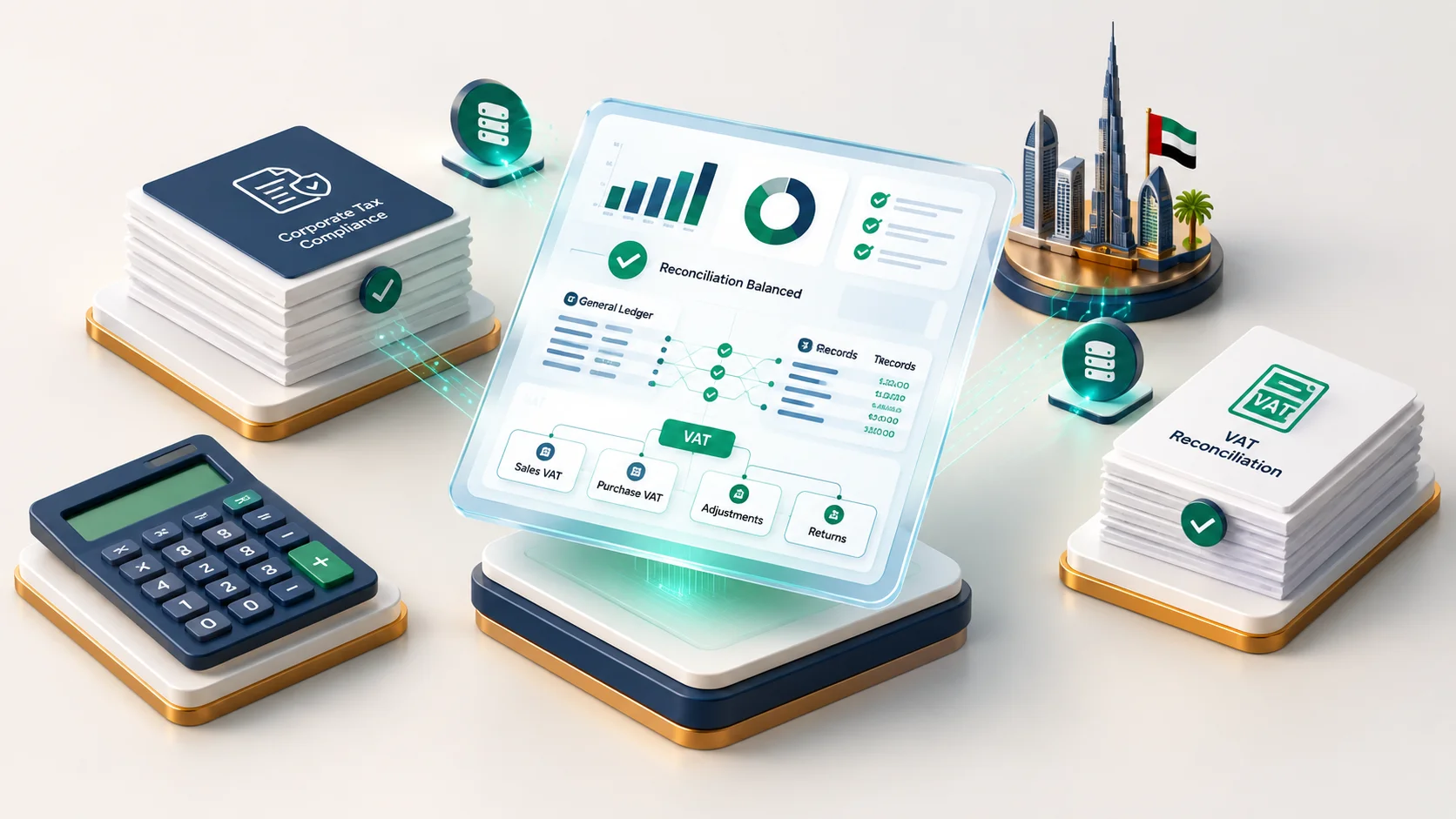
As more financial record-keeping moves onto cloud platforms, data security becomes as important as the bookkeeping accuracy itself. Financial records contain sensitive information, and a breach or loss of access can be just as disruptive to VAT and tax readiness as poor record-keeping in the first place. Businesses adopting UAE VAT bookkeeping technology in the cloud should look closely at how a provider handles encryption, user access controls, and backup practices before committing to a platform.
Access control deserves particular attention in growing businesses. As more people, bookkeepers, accountants, managers, need visibility into financial records, it becomes easy to over-grant access without a clear review process. Role-based permissions, where each person can see and edit only what their role requires, reduce both the risk of accidental errors and the exposure if a login is ever compromised.
Practical Security Habits Worth Adopting
Beyond choosing a secure platform, a few habits make a meaningful difference:
- Using strong, unique passwords with multi-factor authentication on financial systems.
- Reviewing user access periodically and removing it promptly when someone leaves the business.
- Keeping an independent backup of critical records rather than relying on a single system alone.
- Documenting who has access to what, so a review doesn't start from scratch each time.
None of these require significant technical expertise, but they do require someone in the business to own the responsibility consistently.
Vetting a Bookkeeping Technology Partner
When a business works with an external bookkeeping provider, whether local or remote, it is reasonable to ask directly how client data is stored and protected. A trustworthy provider should be able to explain, in plain terms, what platform is used, how access is restricted to authorized staff, and what happens to records if the relationship ends. Businesses should be cautious of any provider that is vague about these details or unwilling to discuss them, since financial data deserves the same scrutiny a business would apply to any other sensitive information it shares with a third party.
Five Steps for UAE VAT Bookkeeping Technology
- Move invoices and receipts into a searchable digital system as they arrive.
- Reconcile bank feeds at least monthly.
- Match every e-invoice or credit note to its ledger entry.
- Review automated VAT treatment on unusual transactions.
- Share clean reports with your tax agent well before each deadline.
Conclusion
Taken together, these trends point toward a UAE VAT bookkeeping technology landscape that rewards businesses for treating financial record-keeping as a continuous, structured process rather than a periodic scramble. Digital record requirements, gradual e-invoicing adoption, cloud-based ledgers, real-time reconciliation, and automation all reinforce each other, and businesses that adopt them together tend to find VAT and corporate tax season considerably less stressful than those still relying on manual, disconnected methods. For further detail on how VAT and corporate tax policy in the UAE continues to evolve, the Ministry of Finance is a useful primary source.
None of this technology removes the need for qualified tax advice; it simply makes the underlying financial picture clearer and more reliable for whoever provides that advice. Livida supports UAE-based businesses with remote bookkeeping, keeping records accurate, organized, and ready for VAT and corporate tax filing handled by the client's own tax agent, alongside the same general accounting, payroll, and financial reporting services available to clients everywhere. Businesses looking to strengthen their bookkeeping foundation before their next filing deadline are welcome to reach out and discuss what that might look like.
References
Talk to Livida
To discuss remote bookkeeping for your UAE business, contact Livida, email info@livida.in or call +91 94860 33194. You may also find our guide to e-invoicing mandates and manual invoicing support helpful.