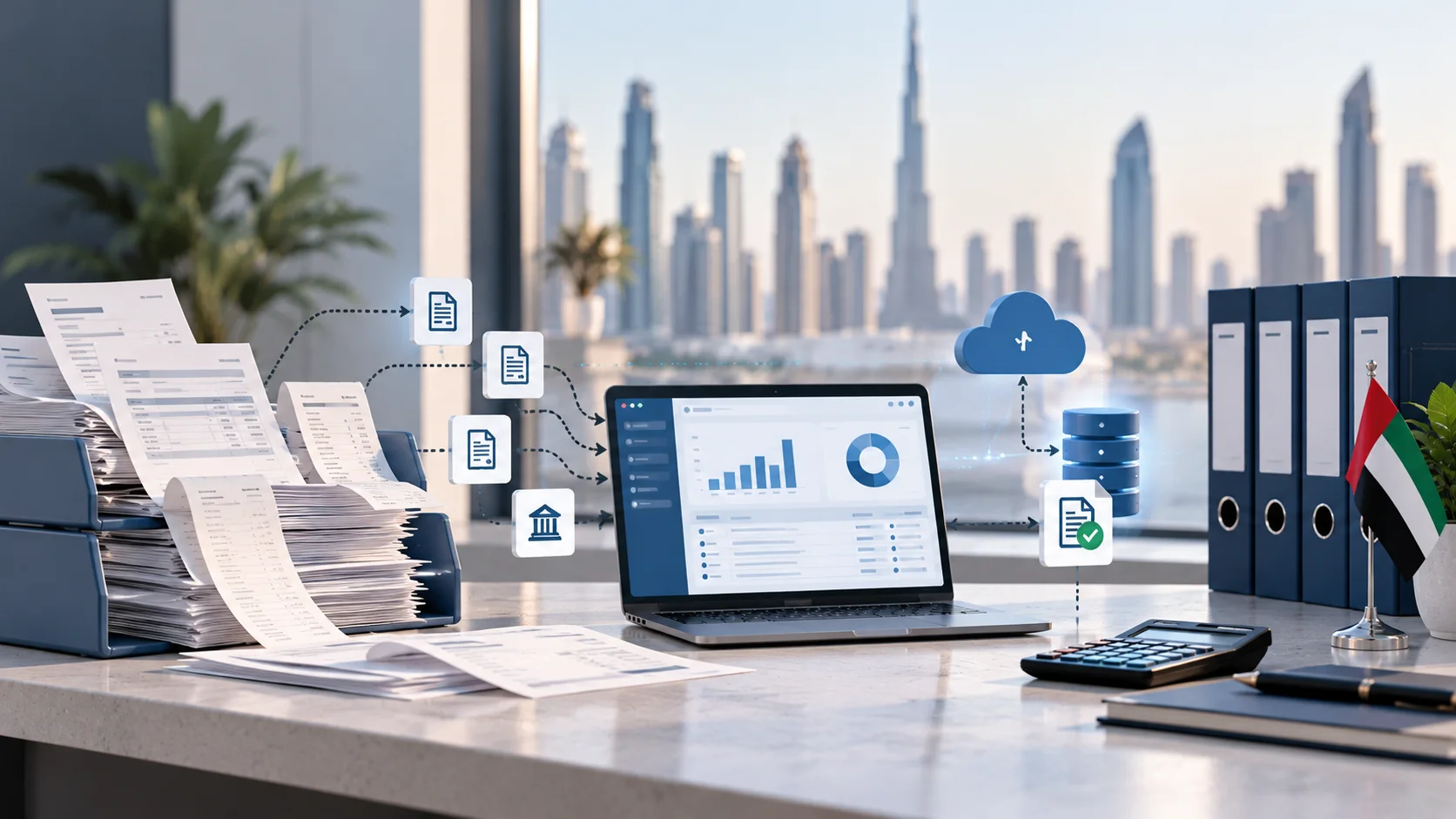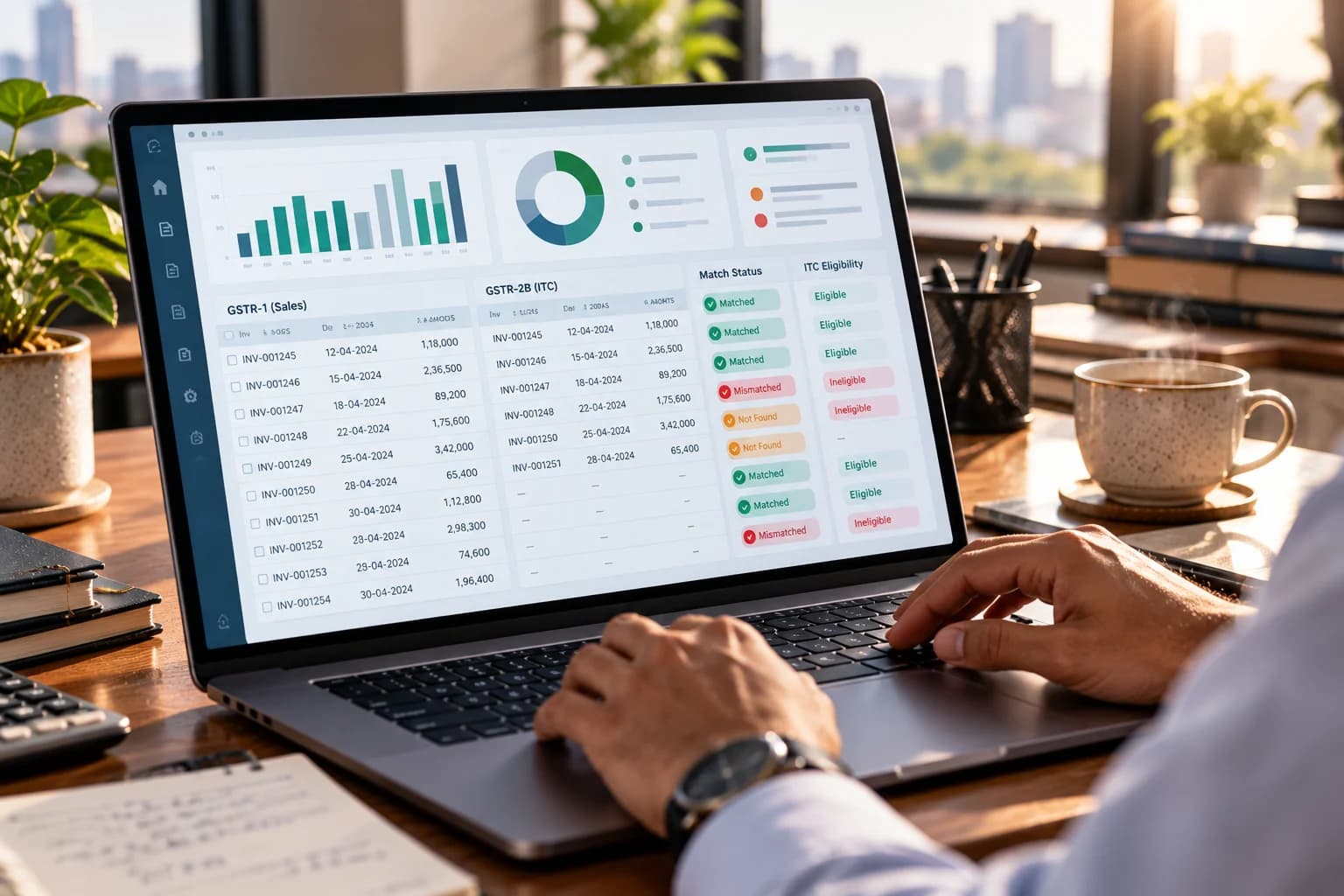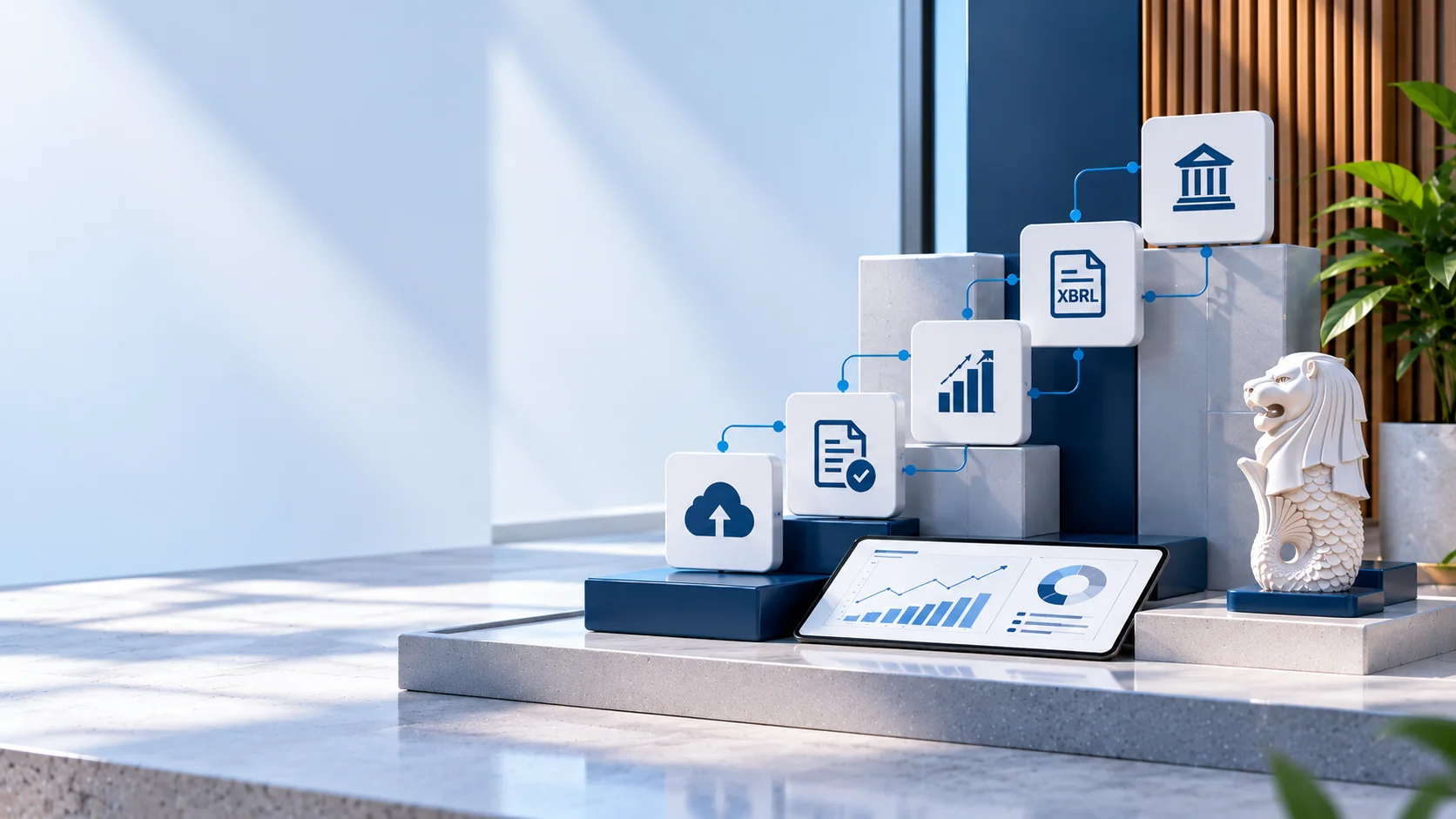
Singapore corporate tax technology has moved well beyond simple spreadsheets and paper forms. Over the past several years, IRAS and ACRA have pushed nearly every stage of corporate compliance, from tax filing to financial statement submission, onto digital platforms, and businesses that adapt quickly are finding compliance faster, cheaper, and less error-prone. This shift matters just as much for small family-run companies as it does for larger enterprises, since the underlying filing obligations apply broadly across company sizes.

Key Takeaways
- Singapore corporate tax technology now covers filing, payment, notices and statutory reporting, so digital records are no longer optional.
- IRAS and ACRA channels are separate, but both draw on the same books, so one clean ledger serves both.
- Automation speeds up data preparation, yet a human reviewer should still check the output before anything is submitted.
- XBRL scope and exemptions change over time, so check current ACRA guidance rather than assuming.
- Keeping records current through the year makes filing season shorter and calmer.
The Shift Toward Singapore Corporate Tax Technology
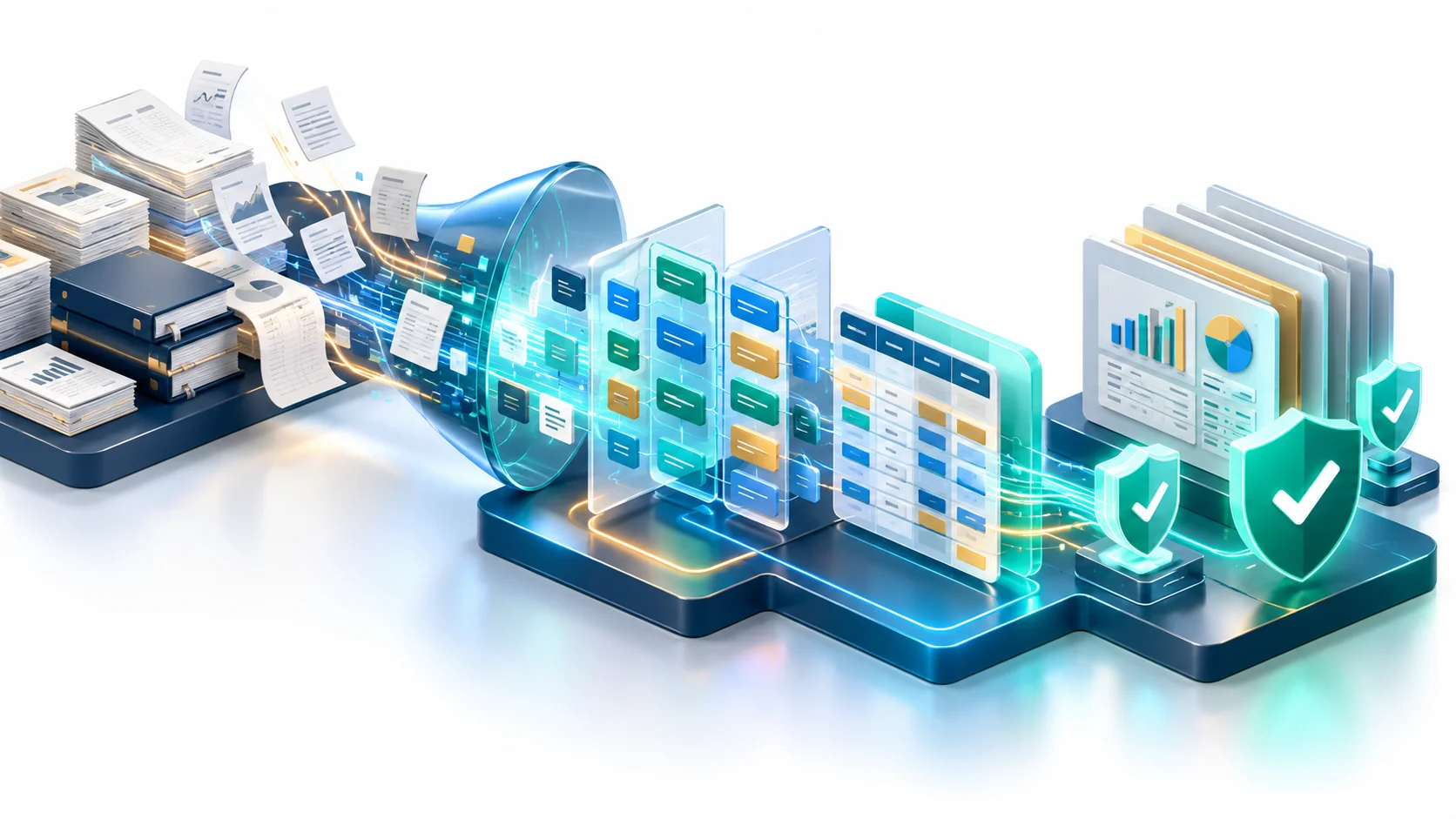
For years, corporate tax compliance in Singapore meant printed forms, physical submissions, and manual reconciliation between a company's books and its tax filings. That has changed substantially. IRAS has digitized nearly every corporate tax touchpoint, and ACRA has done the same for statutory filings, so companies now interact with regulators almost entirely through online systems. This transition has been gradual but steady, with mandatory e-filing, structured data formats, and system-to-system integrations becoming the norm rather than the exception. Singapore corporate tax technology today is less about whether a business uses digital tools and more about how well it uses them, since the filing channels themselves are no longer optional for most companies operating in the country.
Why This Matters for Business Owners
A business owner does not need to understand every technical detail of e-filing systems, but understanding the broad direction of travel is useful. Filing deadlines, penalty structures, and audit risk are all increasingly tied to how cleanly a company's financial data can be converted into the formats regulators expect. Businesses that treat these systems as an afterthought often scramble each filing season, while those that build reasonably tidy digital records throughout the year find the process considerably less stressful.
IRAS Digital Services and the myTax Portal
IRAS digital services now cover the great majority of interactions a company has with the tax authority, from filing returns to checking assessment notices and making payments. The myTax Portal is the central hub for this activity, and companies, or their appointed tax agents, use it to handle corporate tax filing Singapore obligations from start to finish. This includes registering for corporate tax, submitting estimated income figures, filing annual returns, and corresponding with IRAS on queries or audits.
e-Filing Corporate Tax Returns (Form C-S/C)
All companies in Singapore are required to file their corporate income tax returns electronically, using either Form C-S, Form C-S (Lite), or Form C, depending on the company's revenue and complexity. Paper filing is no longer accepted for these returns. The form a company qualifies for depends on factors like annual revenue thresholds and whether the company has more complex tax matters, such as claims for group relief or foreign tax credits. Choosing the correct form, and populating it with figures that reconcile to the audited or management accounts, is one of the more common pain points businesses run into each filing season.
Estimated Chargeable Income (ECI) Filing
Separately from the annual return, companies must file their Estimated Chargeable Income within three months of their financial year end, unless they qualify for a specific waiver. This estimate feeds into how IRAS calculates provisional tax instalments, so getting it reasonably accurate matters for cash flow planning. Companies with well-organized bookkeeping throughout the year tend to produce more reliable ECI estimates, since the underlying figures are already close to final by the time the filing deadline arrives.
GIRO Instalments and Digital Tax Payments
Most companies pay their corporate tax through GIRO, which allows IRAS to deduct instalments directly from a company's bank account according to an agreed schedule, rather than requiring a single lump sum payment. Setting this up is done through the myTax Portal, and it is one of the more useful pieces of Singapore corporate tax technology for businesses managing cash flow across the year. Companies that fall behind on bookkeeping sometimes miscalculate how much cash to set aside for these instalments, which is another reason accurate, current records matter well before a filing deadline arrives. Missed or dishonored instalments can also affect a company's standing with IRAS for future arrangements.
Digital Notices and Correspondence
IRAS increasingly issues assessment notices, reminders, and other correspondence electronically through the myTax Portal rather than by post. This means a business, or its appointed tax agent, needs to check the portal regularly rather than waiting for a physical letter to arrive. Missing a digital notice can mean missing a response deadline, since the clock generally starts running from when the notice is issued rather than when someone happens to notice it. Businesses that assign clear internal responsibility for monitoring the portal, or that delegate this to an accounting partner, tend to avoid this particular pitfall.
XBRL Reporting Singapore Companies Must Navigate
XBRL reporting Singapore requirements sit alongside, rather than instead of, corporate tax filing, but the two are closely linked in practice because both draw on the same underlying financial data. ACRA requires many Singapore-incorporated companies to file their financial statements in XBRL format as part of their annual return, using the BizFinx preparation tool or compatible accounting software. XBRL tags each line item in a set of financial statements with a standardized label, which allows regulators to analyze and compare data across companies far more efficiently than they could with static PDF documents.
Who Needs to File XBRL
Not every company is required to file full XBRL statements. Exemptions exist for certain categories, including some solvent exempt private companies, though the exact scope of exemptions has changed over time and companies should check current ACRA guidance rather than relying on older assumptions. Companies that do fall within scope generally need to file either a full set of XBRL statements or a simplified version, depending on their size and structure. Getting this classification right at the outset avoids wasted effort preparing the wrong format later.
Common Challenges in XBRL Preparation
The most frequent difficulty businesses encounter with XBRL is mapping their own chart of accounts to the standardized taxonomy ACRA requires. A company's internal ledger structure rarely lines up perfectly with the XBRL elements, so someone has to make judgment calls about how each account should be classified. Errors here can cause validation failures or, worse, statements that technically pass validation but misrepresent the underlying figures. Businesses that keep clean, consistently categorized books throughout the year usually find this mapping exercise considerably faster than those reconciling a year's worth of inconsistent entries all at once.
Preparing for XBRL Filing Season Ahead of Time
Companies that wait until close to their filing deadline to think about XBRL often find themselves untangling a year's worth of miscategorized transactions under time pressure. A more workable approach is to review the chart of accounts against the XBRL taxonomy earlier in the financial year, so any structural mismatches can be corrected before they accumulate. This also gives more time to resolve unusual items, such as one-off gains, related party transactions, or restructured loans, which often need extra care when mapped into standardized XBRL elements. Treating XBRL preparation as a year-round discipline rather than a year-end task tends to produce cleaner filings with fewer late corrections.
Cloud Accounting Singapore Businesses Are Adopting
Cloud accounting Singapore adoption has accelerated as more companies recognize that desktop software and manual spreadsheets create bottlenecks precisely when timely data matters most: at filing deadlines. Cloud platforms allow multiple people, including external accountants or bookkeepers, to work on the same live set of books rather than emailing files back and forth. This is particularly relevant for companies that rely on remote accounting support, since a shared cloud ledger removes the friction of exchanging files across time zones.
Real-Time Bookkeeping and Cash Flow Visibility
One of the clearest benefits of cloud accounting is real-time visibility into cash position, outstanding invoices, and upcoming liabilities, including tax instalments. Rather than waiting for a monthly close to understand where the business stands, owners and finance managers can check current figures at any time. This matters directly for tax planning, since a business that can see its provisional tax obligations building up over the year is far better positioned to manage cash flow than one that only discovers the total at filing time.
Integration Between Software and Government Portals
A growing number of accounting software providers offer some degree of integration or data export compatibility aimed at government filing systems, including formats that align with ACRA's XBRL taxonomy. This does not eliminate the need for careful review, since automated exports still require someone to check that the mapped figures are accurate, but it does reduce the amount of manual re-entry involved in preparing statutory filings. Businesses evaluating accounting software should ask specifically about export formats and whether the vendor keeps those formats updated as regulatory requirements change.
Comparing Traditional and Digital Compliance Workflows
The practical difference between a traditional, paper-and-spreadsheet workflow and a digitally connected one shows up most clearly at filing time. In a traditional setup, a business typically spends weeks each year reconstructing transactions from bank statements, receipts, and disconnected files before an accountant can even begin preparing the tax return or XBRL statements. In a more connected setup, transactions are already categorized and reconciled on an ongoing basis, so the filing preparation is mostly a review and finalization step rather than a rebuild from scratch. Neither approach removes the underlying filing obligations, but the digital workflow generally compresses the most stressful part of the compliance calendar into a much shorter window.
Automating GST and Corporate Tax Data Preparation
Automation is changing how businesses prepare the underlying data for both GST returns and corporate tax filings, even though the returns themselves remain separate obligations. Many cloud accounting platforms can now categorize transactions, flag likely GST treatment, and generate draft reports that a bookkeeper or accountant then reviews before submission. This does not replace professional judgment, since GST treatment often depends on specifics that software cannot always infer correctly, but it does reduce the volume of manual data entry involved in getting to a reviewable draft.
Where Automation Helps Most
Automation tends to add the most value in high-volume, repetitive tasks: bank feed reconciliation, invoice categorization, and flagging transactions that look unusual compared to historical patterns. These are exactly the tasks that consume disproportionate time during manual bookkeeping, so removing them frees up time for the more judgment-heavy work of reviewing edge cases and preparing the final filings. Businesses that adopt these tools successfully usually still keep a human reviewer in the loop rather than treating automated output as final.
Where Human Review Still Matters
No current software fully replaces the judgment required for correct GST treatment of unusual transactions, cross-border services, or corporate tax adjustments like capital allowances and disallowable expenses. These areas still benefit from an experienced bookkeeper or accountant reviewing the automated draft before it becomes a filing. Businesses that skip this review step, assuming the software has handled everything correctly, are the ones most likely to face queries or corrections after filing.
Choosing the Right Automation Tools
Not every automation feature is worth adopting immediately, and businesses are generally better served by starting with the highest-volume, lowest-judgment tasks first, such as bank feed matching and receipt capture, before moving on to more complex areas like automated GST coding. Vendors vary considerably in how well their categorization rules handle Singapore-specific GST scenarios, so it is reasonable to ask for a trial period and to test the software against a sample of real transactions before committing. A tool that saves time on simple entries but creates extra review work on complex ones may not be a net improvement, so the evaluation should look at overall time saved, not just the headline automation features.
Singapore Corporate Tax Technology at a Glance
The table below sets out how Singapore corporate tax technology divides the compliance calendar between digital channels.
| Area | Digital channel | What the business prepares |
|---|---|---|
| Corporate tax return | IRAS myTax Portal | Tax computation and reconciled accounts |
| ECI estimate | IRAS myTax Portal | Reasonable income estimate from current books |
| Financial statements | ACRA filing tools | Statements mapped to the XBRL taxonomy |
| GST returns | IRAS myTax Portal | Categorised sales and purchase records |
Data Security in Singapore Corporate Tax Technology
As more corporate tax technology in Singapore moves financial data into cloud systems, security and compliance considerations become part of the conversation alongside efficiency gains. Company financial data, tax records, and payroll information are all sensitive, and businesses need reasonable assurance that any software or service provider handling this data maintains appropriate safeguards. This includes questions about data encryption, access controls, backup practices, and where data is physically stored.
Choosing Providers and Platforms Responsibly
Business owners evaluating cloud accounting or bookkeeping support should ask providers directly about their security practices rather than assuming all platforms are equivalent. Reasonable questions include how access is restricted to authorized staff, whether multi-factor authentication is supported, and how quickly data can be exported if a business decides to switch providers. These are practical, answerable questions, and a provider that cannot answer them clearly is worth reconsidering carefully before any data is handed over.
Business Continuity and Backup Planning
Beyond day-to-day security, businesses should also think about what happens if a cloud provider experiences an outage or if a business needs to move to a different accounting platform. Regular exports of financial data, kept in a readable format outside the primary system, provide a practical safety net that does not depend on any single vendor remaining available indefinitely. This is a simple habit rather than a major project, and it is worth confirming as part of any accounting system review rather than assuming it is unnecessary until something goes wrong.
What These Trends Mean for Small and Mid-Sized Businesses
Small and mid-sized businesses often assume that heavier compliance technology requirements are mainly a large-company concern, but in Singapore the obligations for e-filing and XBRL reporting apply broadly regardless of company size, with only specific, narrow exemptions. This means smaller businesses cannot simply opt out of digital compliance, even if they have fewer internal resources to manage it. The practical response is usually to keep bookkeeping current throughout the year rather than reconstructing it at filing time, and to work with an accounting partner who understands both the software and the underlying filing requirements.
Common Mistakes to Avoid
A few recurring mistakes show up often enough among small and mid-sized businesses to be worth naming directly:
- Treating XBRL as a last-minute formality rather than an extension of ongoing bookkeeping
- Assuming a company is exempt from e-filing or XBRL requirements without actually checking current ACRA and IRAS guidance
- Relying entirely on automated software output without any human review before submission
- Letting ECI estimates drift from reality because bookkeeping is not current when the three-month deadline arrives
Avoiding these habits alone resolves a large share of the compliance stress businesses tend to experience during filing season. Livida's Singapore corporate tax filing and Singapore GST filing services are built specifically around keeping bookkeeping current enough that these mistakes rarely have room to occur, and our Singapore corporate secretarial service coordinates the ACRA side of the same calendar.
Building Toward Year-Round Readiness
Businesses that treat corporate tax and XBRL filing as a once-a-year scramble typically spend far more time and incur more stress than those that maintain reasonably current books throughout the year. Monthly or bi-monthly bookkeeping, regular reconciliation, and periodic review of cash flow projections all make the eventual filing process shorter and less error-prone. This is true whether the bookkeeping is handled in-house or through an external accounting service, since the underlying principle, keeping records current, does not change based on who performs the work.
Working With a Remote Accounting Partner
Since Singapore corporate tax technology now runs almost entirely through digital channels, there is less practical need for a business to rely on a locally based accountant sitting in the same building. Cloud platforms, secure file sharing, and video calls make it entirely workable to have bookkeeping and reporting handled remotely, provided the partner understands Singapore's specific filing requirements. What matters is consistency and familiarity with the relevant forms, portals, and deadlines, not physical proximity to the company's registered address.
Livida Accounting Services supports clients in Singapore with remote accounting and bookkeeping, including Audit Compilation, Consolidation of Accounts, Annual Financial Report Preparation, GST Filing, XBRL, and Corporate Tax, alongside core services like monthly bookkeeping, cash flow planning, and financial statement preparation. If your business is navigating these changing filing requirements and would find it useful to have an experienced remote accounting partner reviewing your numbers throughout the year rather than only at deadline time, feel free to reach out to discuss how ongoing support might fit your situation.
In our experience, the most common delay with Singapore corporate tax technology is not the portal itself. It is a ledger that was never reconciled to the bank, so the tax computation has to wait. Our team therefore starts with the books and only then moves to the return.
Five Essentials for Singapore Corporate Tax Technology
If you only act on a few things in Singapore corporate tax technology, we recommend these five:
- Keep bookkeeping current every month, so the figures behind each filing are close to final.
- Confirm which form and which XBRL treatment apply to your company before the deadline season starts.
- Name one person, or one accounting partner, who checks the myTax Portal for notices.
- Review automated GST and categorisation output before it becomes a filing.
- Export your books regularly to a readable format kept outside your main system.
For deeper reading on related topics, see our comparison of XBRL automation versus professional XBRL filing and corporate tax software versus corporate tax advisory. Livida's Singapore ACRA annual return service covers the statutory side of the same calendar.
Conclusion
Singapore corporate tax technology rewards businesses that treat compliance as a year-round habit. The portals are digital, the formats are structured, and the filing obligations apply broadly, so the practical edge comes from tidy records and a clear review step. Tools help with the mechanics, and people still own the judgment.
This article is general information, not professional advice, and tax and filing rules change, so check current guidance for your own company before acting.
References
- IRAS: Corporate Income Tax for filing channels and ECI information
- ACRA for statutory filing services and XBRL filing tools
- PDPC Singapore for data protection guidance relevant to cloud platforms
Talk to Livida
If you would like a second pair of eyes on how Singapore corporate tax technology applies to your filings, visit our Singapore contact page, email info@livida.in, or call +91 94860 33194.