India GST technology has moved well beyond the original goal of simply digitizing tax returns. What began as an online filing portal has grown into an interconnected system of invoice registration, automated return population, and credit-matching tools that touch almost every part of how a business records and reports its transactions. For business owners and finance managers across India, understanding this roadmap, where the system has been, where it is heading, and what it means for day-to-day accounting, has become part of running a compliant operation.

| Area | What the technology does | What still needs a person |
|---|---|---|
| E-invoicing | Validates data, issues an invoice reference number and QR code | Correct rate, classification and description |
| GSTN portal | Auto-drafts statements such as GSTR-2B | Following up mismatches with suppliers |
| Return filing software | Auto-populates returns from books of account | Reviewing exports, reverse charge and borderline supplies |
| TDS | Runs on a separate income tax portal | Keeping payment records consistent across systems |
Key Takeaways
- India GST technology has grown from an online filing portal into a connected system of e-invoicing, auto-drafted statements and credit matching.
- Registration of an e-invoice confirms the data is complete and formatted. It does not confirm the GST rate or classification is right.
- Software can populate returns, but clean books of account decide whether those returns are accurate.
- Thresholds and portal features change, so check the official GST portal before each filing cycle.
- A simple monthly reconciliation routine and a named owner prevent most credit disputes.

Why GST Technology Keeps Evolving
The Goods and Services Tax was designed from the outset as a technology-driven tax, built around the Goods and Services Tax Network as its digital backbone. Unlike older indirect tax systems that relied heavily on paper trails and after-the-fact audits, GST was structured so that returns, payments, and credit claims would flow through a common online system. This foundation is precisely why the government has been able to layer new capabilities onto India GST technology over time, rather than needing to rebuild the system from scratch each time a gap or a fraud pattern is identified.
From a Filing Portal to a Compliance Ecosystem
In its early years, the GST portal was mainly a place to file returns and make payments. Over successive years, it has absorbed additional functions: e-invoicing for reporting business-to-business transactions in near real time, e-way bills for tracking the movement of goods, and increasingly sophisticated auto-drafted statements that pull data from one part of the system into another. Each addition has reduced how much a business needs to manually re-enter the same information across different filings.
The Shift Toward Real-Time Reporting
Perhaps the most consequential shift in India GST technology has been the move from periodic, self-reported data toward reporting that happens closer to the moment a transaction occurs. E-invoicing is the clearest example: instead of waiting until a monthly return to disclose a sale, a covered business now reports the invoice details as they are generated. This earlier visibility is what allows downstream automation, like credit matching, to function with data that is fresher and less prone to later correction.
The Phased Rollout of GST E-Invoicing
GST e-invoicing has been introduced gradually rather than all at once, starting with the largest taxpayers and progressively extending to smaller businesses as the applicable turnover threshold has been lowered over time. Under this system, specified categories of invoices must be registered with an Invoice Registration Portal, which validates the data, assigns a unique Invoice Reference Number, and returns a digitally signed response along with a QR code. Businesses should always check the current notified threshold directly on the official portal, since the government has adjusted it more than once.
What Registration Actually Verifies
It is worth being precise about what invoice registration does and does not confirm. The portal checks that submitted data is structurally complete and properly formatted, and it issues a reference number confirming that registration. It does not verify that the correct GST rate has been applied, that the transaction has been classified correctly, or that the supply itself has been described accurately. Those remain judgment calls that rest with the business and whoever prepares its accounts.
How E-Invoicing Feeds Into Returns
One of the more practical benefits for businesses is that registered invoice data can auto-populate parts of the GSTR-1 return, cutting down on manual re-entry and reducing the chance of a transposition error between an invoice and the corresponding return line. This is one of the clearest examples of how India GST technology has been designed to reduce duplicate work across what used to be separate manual steps.
GSTN Portal Updates and What They Change
GSTN portal updates happen on a rolling basis, covering everything from return form revisions to changes in validation rules, dashboard layouts, and the auto-population logic behind key statements. Because these updates are incremental, businesses that check the portal only once a year risk missing a change that affects how they file. Reviewing portal notifications periodically, rather than relying purely on institutional memory from a previous filing cycle, has become a necessary habit for anyone managing GST compliance directly. Keeping up with India GST technology is now a routine task, not an occasional one.
Auto-Drafted Statements as a Core Feature
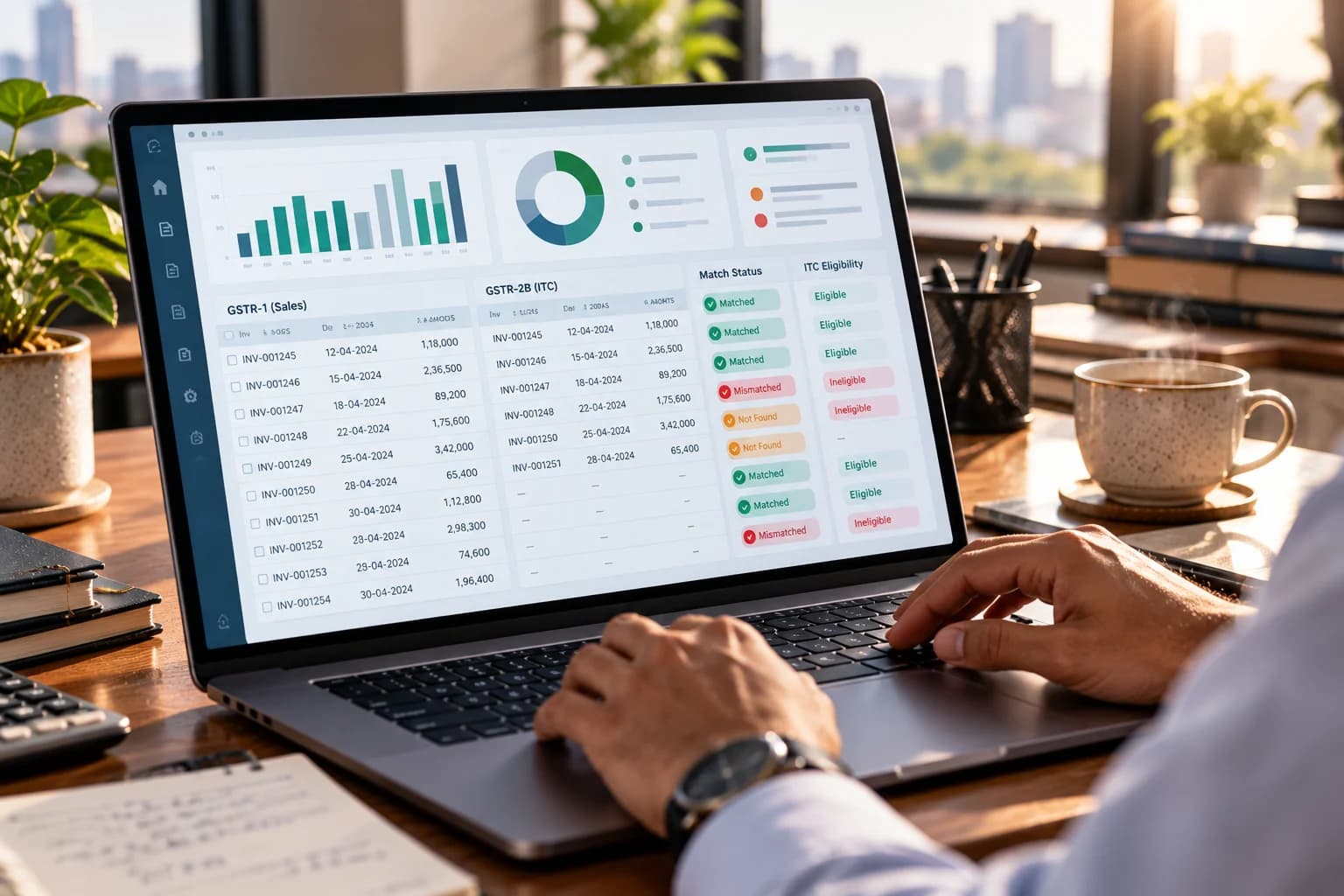
A significant piece of recent GSTN portal updates has been the expansion of auto-drafted statements, most notably GSTR-2B, which compiles inward supply data reported by a business's suppliers into a single, largely static monthly statement. This gives recipients a clearer, more stable reference point for what input tax credit they are eligible to claim, compared to earlier systems where this information was harder to consolidate reliably.
Why Businesses Should Not Assume the Portal Is Static
Because portal changes tend to arrive as incremental notifications rather than a single annual overhaul, it is easy for a business to keep following an old process out of habit even after a rule has changed underneath it. Building a simple internal routine, such as having someone check for GSTN updates before each filing cycle, helps prevent a business from filing returns based on outdated assumptions about how a particular field or statement behaves.
Wider Access Through APIs and Mobile-Friendly Tools
Alongside changes to the core filing dashboard, GSTN portal updates have also extended how businesses can reach the system in the first place, including Application Programming Interfaces that let accounting software communicate with the portal directly rather than requiring someone to log in and re-key data manually. This has made it more practical for smaller businesses to work through their existing software rather than treating the government portal as a separate destination they visit only at filing time, though the underlying data quality still depends entirely on what the connected software sends across.
GST Return Filing Software and Reduced Manual Errors
GST return filing software has become central to how most registered businesses in India now prepare their monthly and annual returns. Rather than manually transcribing invoice-level data into return forms, modern accounting systems can pull transaction data directly from books of account, map it to the correct return fields, and flag inconsistencies before submission. This has materially reduced the kind of manual transcription errors that used to be a common source of mismatches between what a business reported and what its underlying records showed.
Auto-Population From Books of Account
A defining feature of current GST return filing software is its ability to auto-populate return fields directly from accounting entries rather than requiring a separate data entry exercise for tax purposes. When bookkeeping is accurate and up to date, this auto-population meaningfully cuts the time needed to prepare a return and reduces the risk that the return diverges from the actual books. When bookkeeping is inconsistent, however, the same automation simply carries those inconsistencies straight into the filed return, which is why clean source records matter more, not less, as software handles more of the mechanical work.
Where Software Still Needs a Human Check
Even well-designed GST return filing software, however capable, cannot reliably judge unusual or borderline transactions on its own. Mixed supplies, reverse charge scenarios, exports, and transactions involving Special Economic Zones typically require a person familiar with current GST rules to confirm the treatment before the software's default classification is accepted. Businesses that skip this review step, treating software output as automatically correct, tend to discover classification errors only later, often during a reconciliation exercise or after a query from the tax department.
Choosing Software That Fits the Business, Not the Other Way Around
Businesses sometimes select GST return filing software based on brand familiarity or a vendor's marketing rather than how well it fits their actual transaction patterns, such as high invoice volume, multiple states of registration, or frequent export activity. Software that works well for a simple, single-location retail business may struggle to handle the reconciliation needs of a business with multiple GST registrations or complex supply chains. Reviewing how a system handles the specific transaction types a business actually deals with, before committing to it, tends to save considerable rework later.
Input Tax Credit Matching and Reconciliation Technology
Input tax credit matching has become one of the more technically sophisticated parts of India GST technology because it depends on data reported by two separate parties, the supplier and the recipient, lining up correctly. The system compares what suppliers report as outward supplies against what recipients claim as input tax credit, surfacing mismatches through statements like GSTR-2B rather than leaving reconciliation entirely to manual cross-checking after the fact.
Common Sources of Mismatch
Mismatches typically arise from a handful of recurring causes: a supplier filing late, a supplier omitting an invoice, a data entry error on either side, or a genuine difference in how a transaction has been classified. Reconciliation tools within India GST technology can flag that a mismatch exists, but resolving it still requires someone to contact the supplier, correct the underlying record, or adjust the credit claim accordingly. The technology narrows down where to look; it does not resolve the underlying disagreement on its own.
Building a Reconciliation Routine
Businesses that treat reconciliation as a periodic, disciplined exercise, rather than something addressed only when a credit claim is challenged, tend to catch and resolve mismatches while they are still small and easy to fix. A practical monthly reconciliation routine typically includes:
- Comparing purchase records against the auto-drafted GSTR-2B statement.
- Following up promptly with suppliers on any discrepancies identified.
- Keeping a clear record of how each mismatch was resolved.
- Assigning clear ownership for follow-up rather than leaving it as an unassigned task.
This has become standard practice for businesses that want to avoid credit disputes accumulating over an entire financial year.
Following Up With Suppliers Rather Than Just Flagging Errors
Reconciliation technology is only as useful as the follow-up action it triggers. A mismatch report that sits unread in a dashboard does not recover a missing input tax credit on its own, someone still needs to contact the supplier, confirm whether the invoice was omitted or filed late, and track the correction through to resolution. Businesses that assign clear ownership for this follow-up, rather than leaving it as an unassigned item on a long reconciliation list, tend to resolve mismatches while records are still fresh and the supplier can be reached easily.
TDS Compliance Technology Touchpoints
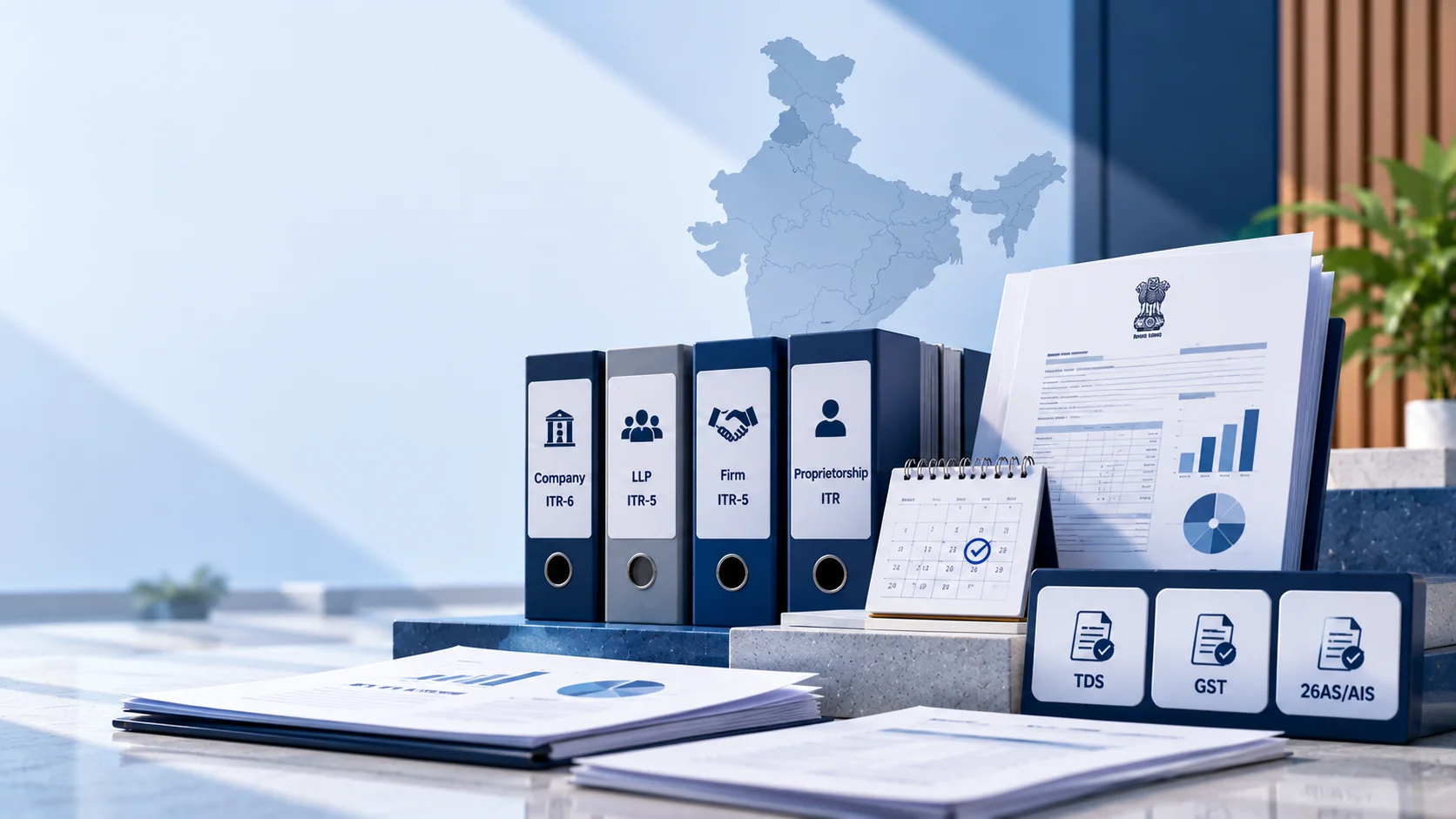
Tax Deducted at Source obligations under both income tax and GST law intersect with the same broader digital compliance environment, even though they run through separate government systems. Income tax TDS filings are managed through the Income Tax Department's own portal, while GST has its own TDS provisions applicable to specified categories of deductors. For a business handling both, the practical challenge is less about the technology itself and more about keeping the underlying payment and deduction records consistent across both compliance streams.
Why Consistent Records Matter Across Systems
Because income tax and GST TDS obligations are assessed independently, a discrepancy between the two, such as a payment recorded differently in each system, can raise questions even where no actual error in tax payment has occurred. Businesses that maintain a single, well-organized set of underlying records, rather than treating income tax and GST compliance as entirely separate exercises handled by different people with no coordination, generally find it easier to explain their figures if either authority raises a query.
TDS Filing as Part of the Broader Compliance Calendar
For businesses operating in India, TDS filing needs to be planned alongside GST return deadlines and year-end accounting rather than treated as an isolated monthly task. Missing a TDS filing deadline can create its own penalties independent of GST compliance, so businesses benefit from a consolidated compliance calendar that tracks both obligations together rather than managing them through separate, disconnected processes.
How Indian SMEs Are Adapting Their Workflows
Small and medium enterprises have generally felt the shift toward India GST technology and digital tax compliance more acutely than large corporations, simply because they often lack a dedicated in-house tax team to absorb each new requirement. As thresholds for e-invoicing and other technology mandates have come down over time, a growing number of smaller businesses have needed to adapt processes that were previously handled with far less formal structure.
Moving Away from Ad Hoc, Paper-Based Habits
Many smaller businesses historically generated invoices and tracked GST obligations through a mix of spreadsheets and manual entries, updated close to a filing deadline rather than continuously. Digital tax compliance in India increasingly requires invoice-level data to be accurate and available closer to the time of the transaction itself, which has pushed many SMEs to adopt accounting software earlier than they might have otherwise, simply to keep pace with reporting timelines.
Training Staff Without Losing Oversight
A common adaptation among smaller businesses has been assigning day-to-day invoice generation and data entry to existing staff while relying on periodic professional review to catch classification issues those staff are not necessarily trained to spot. This division tends to work better than either extreme, leaving all compliance work to untrained staff, or routing every single transaction through an external advisor, because it keeps routine work efficient while still catching the judgment calls that automation and general staff training cannot reliably handle.
Planning Ahead of Threshold Changes
Because thresholds for e-invoicing and other India GST technology mandates have been lowered more than once, businesses that are approaching a relevant turnover band benefit from preparing before a mandate applies to them rather than reacting once it becomes compulsory. This includes confirming that existing accounting software can produce the required data formats, reviewing invoice templates, and making sure staff understand the new workflow well before a compliance deadline forces the issue.
Weighing the Cost of Technology Against the Cost of Errors
Smaller businesses sometimes hesitate to invest in better accounting software or professional support because the upfront cost feels significant compared to their current, informal way of managing GST. What this comparison often misses is the cost of the errors that an informal process tends to produce over time, missed input tax credit, penalties for late or incorrect filings, and the time spent untangling a mismatch months after the transaction occurred. Viewed over a full financial year rather than a single month, the investment in reliable digital tax compliance in India frequently pays for itself well before the first serious error would have been caught manually.
India GST Technology Readiness: 5 Essential Steps
A business does not need to master every portal feature to be ready. These five steps cover the practical groundwork, and each one is covered in more detail earlier in this article.
- Review bookkeeping accuracy and invoice data quality before relying on auto-population.
- Confirm your accounting software can produce the file formats needed for e-invoicing and return filing.
- Check the current e-invoicing threshold on the official portal against your own turnover.
- Set up a monthly reconciliation routine against the auto-drafted GSTR-2B statement.
- Assign one person to watch GSTN portal notifications before each filing cycle.

Where Livida Fits Into This Changing Landscape
As a firm based in Tamil Nadu, India, with offices in Thoothukudi and Tirunelveli, Livida works directly with businesses navigating India GST technology and its constant changes day to day.
In the GST work we handle, one of the most common causes of delay is a supplier invoice that is missing from the auto-drafted statement at month end, not a portal fault. Our team recommends starting reconciliation as soon as the statement is available, so that follow-ups with suppliers happen early. Livida's GST Filing service is built around the reality that the GST portal, e-invoicing system, and GSTR-2B reconciliation tools handle data validation and automation, while accurate classification, exception handling, and consistent record-keeping still depend on experienced review. Rather than treating government technology as a substitute for professional oversight, Livida's approach is to make sure the records feeding into that technology are correct from the outset.
Supporting the Records Behind the Automation
Livida's broader accounting services in India, including Accounts Receivable, Accounts Payable, and Year-end Accounting, are designed to keep the underlying bookkeeping clean so that when data flows into e-invoicing, GST returns, or TDS filings, it reflects an accurate picture of the business. Because so much of current GST technology depends on auto-populating returns from books of account, the quality of those books matters more than ever, not less, as automation expands.
A Coordinated View Across GST and TDS
Beyond India GST technology specifically, Livida also supports TDS Filing, EPF and ESI compliance, and Company Incorporation, giving businesses a single point of coordination across the various compliance streams that Indian technology mandates now touch. This coordinated view helps ensure that GST returns, TDS filings, and year-end statutory accounts tell a consistent story, rather than being prepared in isolation by different people working from different versions of the same underlying data.
India GST Technology: Looking Ahead on the Roadmap
The direction of travel for India GST technology has been consistent even as individual rules and thresholds have changed: more real-time reporting, more auto-population between systems, and less tolerance for reconciliation happening only after the fact.
Businesses that treat each new phase as an isolated compliance hurdle tend to find themselves reacting late, while those that build flexible bookkeeping habits and periodic professional review into their routine tend to absorb each change more smoothly.
Details on current thresholds, return formats, and portal functionality are published directly on the official GST portal at gst.gov.in, and businesses should treat that source, alongside the Income Tax Department's portal for TDS-related matters, as the authoritative reference when questions arise about a specific rule or deadline.
None of this technology, however sophisticated, removes the need for accurate underlying records and sound professional judgment about how a transaction should be treated. If your business is trying to work out how ready its current systems and processes are for where India GST technology is heading, Livida is happy to have a conversation about where the gaps might be and how its GST annual return filing, TDS return filing and broader accounting services can help close them.
Related Reading and Services
For a closer look at one specific piece of this roadmap, and for hands-on registration support:
- GST E-Invoicing Portal Updates vs. Manual GST Filing Support, a detailed look at what the e-invoicing system automates and what still needs professional review
- GST Registration India, for businesses that need their underlying registration set up or reviewed as new technology mandates take effect
Conclusion
India GST technology keeps moving toward real-time reporting, automatic population of returns and credit matching between suppliers and recipients. The portals do the mechanical work. Accurate books, sound classification and a steady review routine are still the business's responsibility.
References
- GST portal: the official Goods and Services Tax Network portal for registration, returns and notifications.
- e-Invoice system portal: the government portal where GST-registered businesses register B2B invoices with the Invoice Registration Portal.
- Income Tax Department: the official portal for income tax and TDS compliance.
Talk to Livida
If you want help working out how ready your systems are for India GST technology, reach out through our contact page, email info@livida.in or call +91 94860 33194.
This article is general information, not professional advice, and GST rules, thresholds and portal features change. Please confirm your own position on the official portal or with a qualified professional before acting.