EPF ESI compliance software has become a standard feature of nearly every payroll platform sold to Indian businesses, promising to automate two of the country's more detail-sensitive statutory obligations. Employees' Provident Fund and Employees' State Insurance contributions each carry their own eligibility rules, wage ceilings, contribution splits, and filing deadlines, and getting any of these wrong exposes an employer to interest, penalties, and closer regulatory scrutiny. API-based payroll software has made the mechanics of calculating and submitting these contributions considerably faster than manual processes ever allowed. What it has not eliminated is the need for someone who actually understands the regulations well enough to know when the software's default configuration no longer matches current rules.

Key Takeaways
- EPF ESI compliance software automates calculations and file generation, which removes a lot of manual effort.
- It cannot notice a rule change, an eligibility shift or a misclassified allowance on its own.
- Wage ceilings, eligibility checks and allowance treatment need regular review against official guidance.
- Filing on time with wrong data creates more work than a short delay with correct data.
- A knowledgeable reviewer beside the software gives the most reliable result.
| Dimension | API-based payroll software | Dedicated EPF and ESI compliance management |
|---|---|---|
| Wage ceiling and eligibility calculation | Fast, but only as current as its configuration | Actively reviewed against current rules |
| Regulatory rule changes | Applied only after a configuration update | Monitored and applied by a knowledgeable reviewer |
| Filing submission | Can push data directly to government systems | Data verified before submission |
| Documentation for an inspection | Stored, but not organized for explanation | Maintained and readily explainable |
This piece walks through what API-based payroll software genuinely automates well, where its blind spots tend to appear, and why EPF and ESI compliance in India continues to reward businesses that pair automation with a knowledgeable human reviewer rather than relying on software configuration alone.

What API-Based Payroll Software Actually Automates
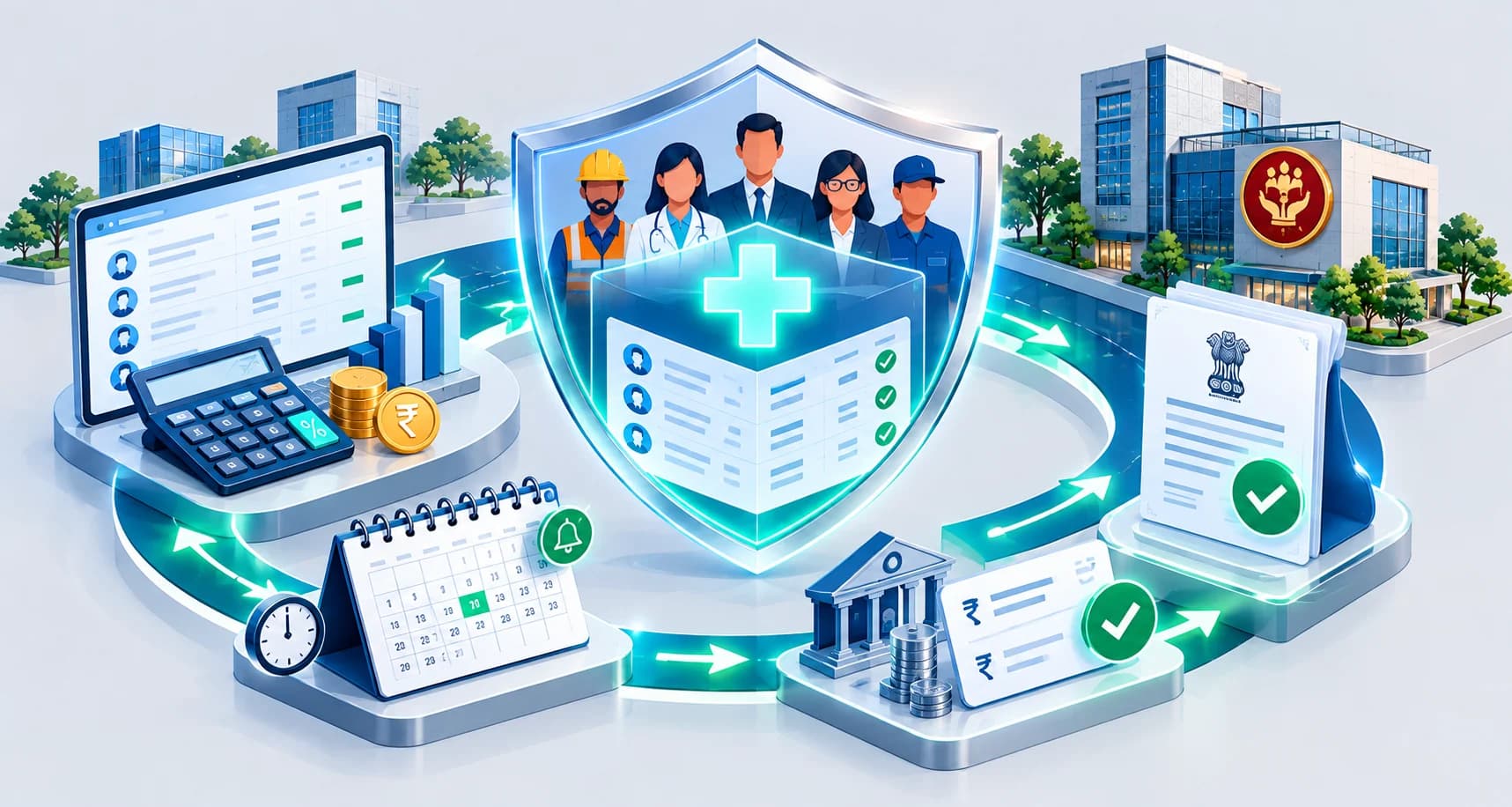
API-based payroll software typically connects a business's payroll data directly to government filing systems, or at minimum generates the specific file formats those systems expect, removing a substantial amount of manual data entry from the compliance process. For EPF, this usually means calculating employer and employee contributions against current wage ceilings, generating the electronic challan required for monthly deposits, and preparing the periodic returns that summarize contributions across the workforce. For ESI, the software calculates contributions for employees who fall under the applicable wage threshold and prepares the corresponding half-yearly returns and monthly contribution data.
The efficiency gain from EPF ESI compliance software is real and significant. A payroll team handling these calculations manually for a workforce of any meaningful size faces a genuinely tedious, error-prone task every single month. Automating the arithmetic and the file generation removes a large share of that burden and reduces the kind of simple transcription errors that come from re-entering the same data across multiple government-mandated formats.
Where the API Connection Itself Can Go Wrong
An API integration is only as reliable as the data flowing into it and the configuration governing how that data is interpreted. If an employee's wage components are misclassified, if a wage ceiling has been updated by regulators but not yet reflected in the software's settings, or if a new joiner's eligibility for ESI has not been correctly evaluated against current thresholds, the API will submit incorrect data with the same confidence and speed as it submits correct data. Automation increases the speed of both good and bad outcomes equally, which is precisely why the configuration behind the automation deserves ongoing scrutiny rather than a one-time setup and indefinite trust.
Common Configuration Mistakes Worth Watching For
A handful of configuration mistakes show up repeatedly in EPF ESI compliance software setups:
- Treating a wage ceiling as a static number rather than a figure subject to periodic revision
- Misclassifying allowances that should or should not count toward the contribution base
- Failing to re-evaluate an employee's ESI eligibility after a mid-year salary increase pushes them above the applicable wage threshold
- Missing a new joiner's eligibility check during onboarding
Each of these is a small, specific error, but each recurs often enough across Indian payrolls that a periodic review process specifically designed to catch them earns its cost many times over. Our related comparison of biometric attendance technology and payroll accuracy covers a similar class of silent reconciliation errors on the attendance side of payroll.
Why EPF and ESI Compliance Is Harder Than It Looks
EPF and ESI compliance in India involves more moving parts than a simple percentage calculation. Wage ceilings for both schemes are periodically revised, and the categories of pay components that count toward the contribution base are not always intuitive, since certain allowances may or may not be included depending on how they are structured and documented. Employers with a workforce spanning multiple wage bands, some employees above the ESI threshold and some below, some newly hired mid-month, need each individual case correctly evaluated rather than treated as a uniform rule applied across the board.
Eligibility Thresholds Change and Need Monitoring
Because eligibility thresholds and contribution rates are set by regulatory bodies and can be revised, a payroll system configured correctly at the time of setup can quietly drift out of compliance if no one is responsible for checking whether the underlying rules have since changed. This is one of the more common and avoidable sources of EPF and ESI compliance errors: not a fundamental flaw in the software, but a configuration that was correct once and was never revisited after a rule change took effect.
Documentation and Audit Trail Requirements
Beyond calculating contributions correctly, employers need to maintain clear documentation supporting each filing: wage registers, contribution breakdowns, and evidence of how eligibility determinations were made for each employee.
When a regulatory inspection or audit occurs, having this documentation organized and readily explainable matters as much as the underlying calculations being correct. API-based payroll software generally stores this data, but retrieving it in a format an inspector or auditor can quickly understand often requires someone familiar with both the software's reporting tools and the specific documentation standards Indian regulators expect to see. Treating documentation as an afterthought, rather than a standing part of the monthly compliance routine, tends to create unnecessary stress during an inspection that could otherwise be a routine, low-friction process.
Statutory Compliance India Requires Ongoing Interpretation
Statutory compliance in India, across EPF, ESI, TDS, and GST alike, is characterized by periodic circulars, clarifications, and amendments issued by the relevant authorities, sometimes with limited advance notice. A payroll platform's engineering team updates the software's logic once they have processed a given regulatory change, but there is inevitably a gap between when a rule changes and when every affected business's software configuration has been correctly updated to reflect it. Businesses that assume their software is automatically and immediately current with every regulatory change are taking on more risk than they may realize.
The Value of a Dedicated Compliance Review
A dedicated review process, whether performed by an internal compliance specialist or an outsourced payroll partner familiar with Indian statutory requirements, catches this drift before it becomes a filing error. Reviewing wage ceiling configurations, confirming employee eligibility classifications, and cross-checking a sample of calculated contributions against manual verification on a periodic basis is exactly the kind of unglamorous, detail-oriented work that prevents small configuration errors from compounding into a larger compliance problem discovered only during an inspection or audit.
The Cost of Getting It Wrong
The financial cost of an EPF or ESI compliance error is rarely limited to the interest and penalty attached to the specific mistake. A pattern of errors can trigger closer regulatory scrutiny of an establishment's broader compliance history, extending the time and attention required to resolve matters that a single, isolated mistake would not have provoked.
There is also a less tangible cost in employee trust: EPF and ESI contributions directly affect an employee's retirement savings and access to medical benefits, and errors here are felt personally in a way that other administrative mistakes are not. Employers who treat these two schemes with the seriousness they deserve, rather than as a checkbox item handled entirely by default software settings, protect both their regulatory standing and their standing with their own workforce.
Where Livida Fits Beside EPF ESI Compliance Software
Livida's India-specific services, including ESI return filing and PF return filing, treat EPF and ESI as a distinct offering precisely because these two statutory schemes require more than a software subscription to manage reliably. Combined with payroll processing and salary disbursement, statutory compliance, and payroll tax filing more broadly, the service is built around having a person accountable for verifying that contribution calculations, wage ceiling configurations, and filing deadlines are all correctly aligned with current regulations, not just aligned with whatever the software's default settings happened to be at initial setup.
This matters most for growing businesses whose workforce composition changes frequently, new joiners crossing eligibility thresholds, employees receiving salary revisions that change their contribution base, or departing employees whose final EPF and ESI obligations need to be settled correctly as part of a full and final settlement. Each of these transitions is a moment where an automated system, left unsupervised, is more likely to make a silent error than a payroll professional actively reviewing the specific case.
EPF and ESI Filing Deadlines Leave Little Room for Error
Both EPF and ESI filings operate on strict monthly and periodic deadlines, and the penalties for late or incorrect filing accumulate in ways that are entirely avoidable with a disciplined process. An API-based EPF ESI compliance software setup that submits data automatically on schedule is helpful for meeting the deadline itself, but meeting a deadline with incorrect data creates its own set of problems, often more complicated to resolve after the fact than simply filing a few days late with correct figures would have been.
Employers considering the EPFO and ESIC portals directly, at epfindia.gov.in and esic.gov.in, can find current contribution rates and procedural guidance, though interpreting how those rules apply to a specific workforce still benefits from professional review.
Running EPF ESI Compliance Software In-House or Outsourced
Businesses generally choose between three approaches to using EPF ESI compliance software: running the API-based software entirely in-house with internal staff responsible for configuration and review, outsourcing the entire function to a payroll partner, or a hybrid model where software handles the calculations and an external partner handles review, filing, and regulatory monitoring. The fully in-house approach works well for larger organizations with a dedicated compliance team that has the bandwidth to track regulatory changes continuously. For smaller and mid-sized businesses, this level of dedicated internal attention is often difficult to justify, and compliance responsibilities end up spread thinly across a finance team already occupied with other priorities.
The fully outsourced model removes the burden from internal staff entirely but requires trusting a partner's processes and responsiveness, particularly around tight filing deadlines. The hybrid model, software plus outsourced review and filing, tends to suit a wide range of businesses well because it keeps the speed benefits of automation while adding an accountable layer of expertise specifically for the parts of the process, eligibility determination, wage ceiling interpretation, and regulatory monitoring, that benefit most from human judgment.
Employee Communication Matters Too
EPF and ESI contributions appear on every employee's payslip, and employees increasingly ask questions about how these figures are calculated, particularly when a salary revision or a change in employment status affects their contribution amount.
A payroll process that can answer these questions clearly and promptly, whether through an internal HR team briefed properly or through a payroll partner willing to field these questions, reduces friction and builds trust. Software alone rarely provides this kind of accessible explanation; a payslip line item showing a contribution figure doesn't tell an employee why that figure changed from the previous month, and a knowledgeable person answering that question directly tends to resolve the concern far more effectively than directing the employee back to a dashboard.
Payroll Compliance Automation Has Real Limits
EPF ESI compliance software, whatever the specific vendor, is built to execute rules consistently once those rules are correctly configured. It is not built to independently notice that a regulatory clarification has been issued, that an employee's role change has altered their eligibility status, or that a wage component previously excluded from the contribution base should now be included following a change in interpretation. These are exactly the kinds of judgment calls that require a person with current regulatory knowledge, not a system executing a fixed rule set.
Balancing Automation with Accountability
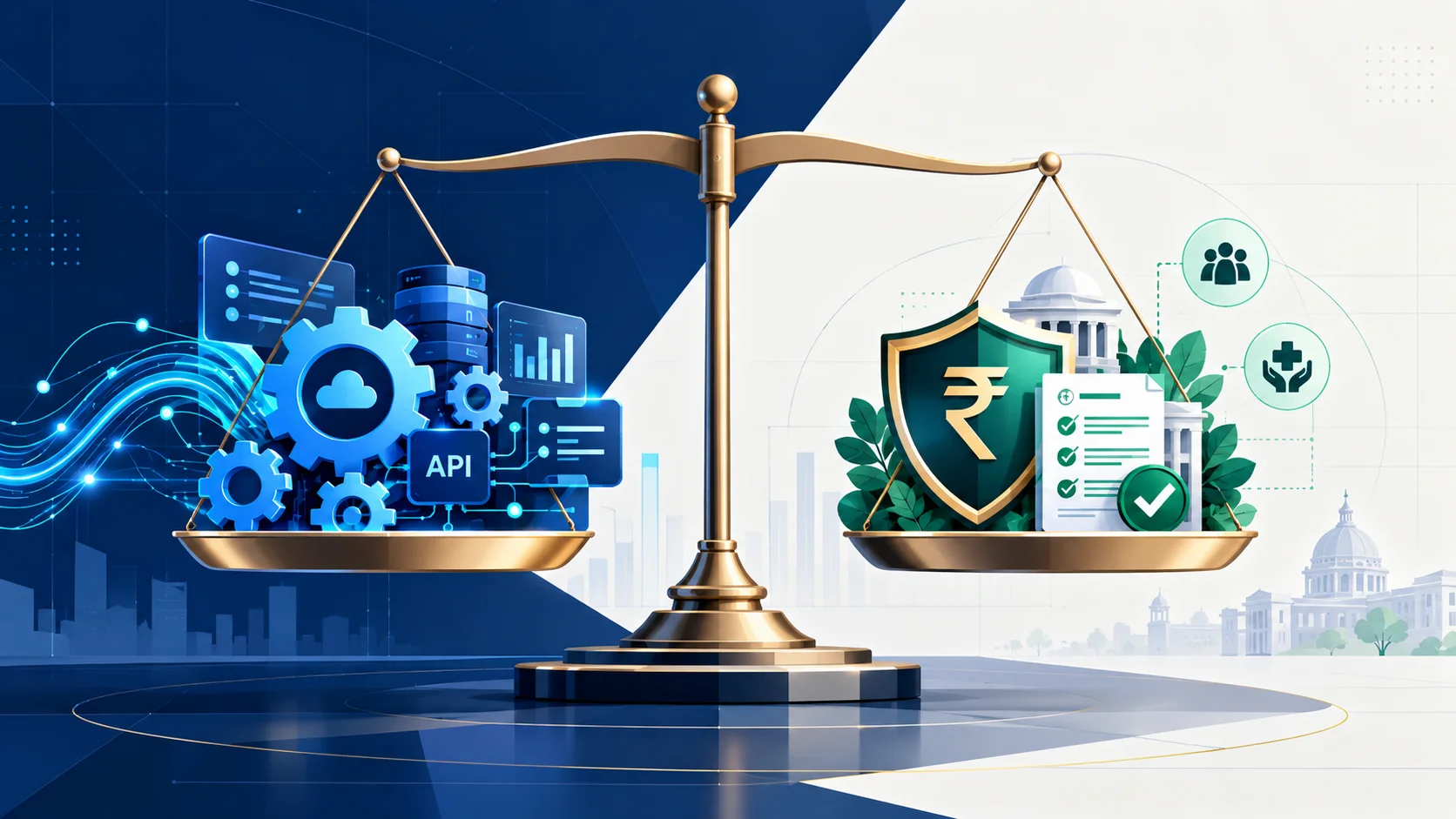
The most reliable approach for Indian businesses managing EPF and ESI obligations combines the efficiency of API-based payroll software with the accountability of a payroll partner who actively monitors regulatory changes, verifies configuration accuracy, and takes responsibility for the filings actually submitted. This is not a rejection of the technology; it is a recognition that the technology performs best when paired with expert oversight rather than left to run unsupervised on rules that periodically shift beneath it.
Businesses that have experienced an EPF or ESI compliance notice, even a minor one requiring correction and resubmission, generally come away from the experience with a clearer sense of how much value a knowledgeable reviewer adds beyond what the software alone provides. Preventing that notice in the first place is considerably less costly, in time and reputation, than resolving it after the fact.
Scaling Compliance as Headcount Grows
The complexity of EPF and ESI compliance rarely grows in a straight line with headcount. A business with a handful of employees may find manual oversight manageable, but as headcount increases, the number of edge cases, new joiners near an eligibility threshold, employees transitioning between wage bands, departures requiring final settlement reconciliation, grows disproportionately.
This is often the point at which businesses that previously managed compliance informally start to see errors creep in, not because the software has changed, but because the volume and variety of cases has outpaced what an internal team can review carefully alongside their other responsibilities. Recognizing this inflection point early, and bringing in dedicated payroll support before errors accumulate, tends to be considerably cheaper than correcting a backlog of mistakes after a regulatory notice arrives.

A Practical Path Forward
Five checks make a good starting routine:
- Sample recent contribution calculations and verify them manually.
- Confirm the wage ceilings in the software match current official figures.
- Re-check ESI eligibility after every salary revision.
- Check each new joiner's eligibility at onboarding.
- Confirm filings and challans match the data you reviewed.
For a business currently relying entirely on EPF ESI compliance software, a useful next step is a periodic audit: sampling a set of recent contribution calculations, verifying them manually against current EPFO and ESIC rules, and confirming that wage ceiling and eligibility configurations in the software match what current regulations actually require. This exercise, whether done internally or with the help of a payroll partner, tends to surface any drift before it becomes a filing problem, and it builds confidence that the automation in place is actually producing correct results rather than merely producing results quickly.
Conclusion
EPF ESI compliance software has undeniably made the mechanical side of Indian statutory payroll obligations faster and less error-prone than manual processing ever was. The judgment required to keep that automation correctly configured against a regulatory landscape that shifts periodically still depends on people who track those changes as part of their actual job. Businesses that pair the speed of API-based payroll software with the accountability of a payroll partner familiar with Indian statutory compliance get a meaningfully more reliable outcome than either approach could deliver alone.
Regulatory frameworks around EPF and ESI will likely continue to evolve, and the software supporting compliance will keep improving alongside them. Neither of those trends removes the underlying need for someone accountable to keep pace with the changes as they happen, rather than discovering after the fact that a configuration quietly fell out of step with current rules. Businesses that build this accountability into their payroll process from the outset, whether through an internal specialist or an experienced outsourced partner, tend to spend far less time and money correcting problems than those who treat compliance as something the software alone will always handle correctly.
In the payroll filings we handle, the most common problem is not a calculation error but a setting that was correct once and never revisited. We recommend a scheduled review of wage ceilings and eligibility rules. Our related piece on AI-driven payroll platforms against managed payroll services looks at the same accountability question from the platform side.
This article is general information, not professional advice. EPF and ESI rules, rates and thresholds change, so confirm current requirements on the official portals or with a qualified adviser before acting.
References
- Employees' Provident Fund Organisation (EPFO)
- EPFO employer portal
- Employees' State Insurance Corporation (ESIC)
Talk to Livida
If your business wants a second opinion on how your current EPF and ESI configuration holds up against current regulations, Livida's payroll team can walk through a review of your setup and flag anything that needs attention.
- Contact page: Talk to our team
- Email: info@livida.in
- Phone: +91 94860 33194