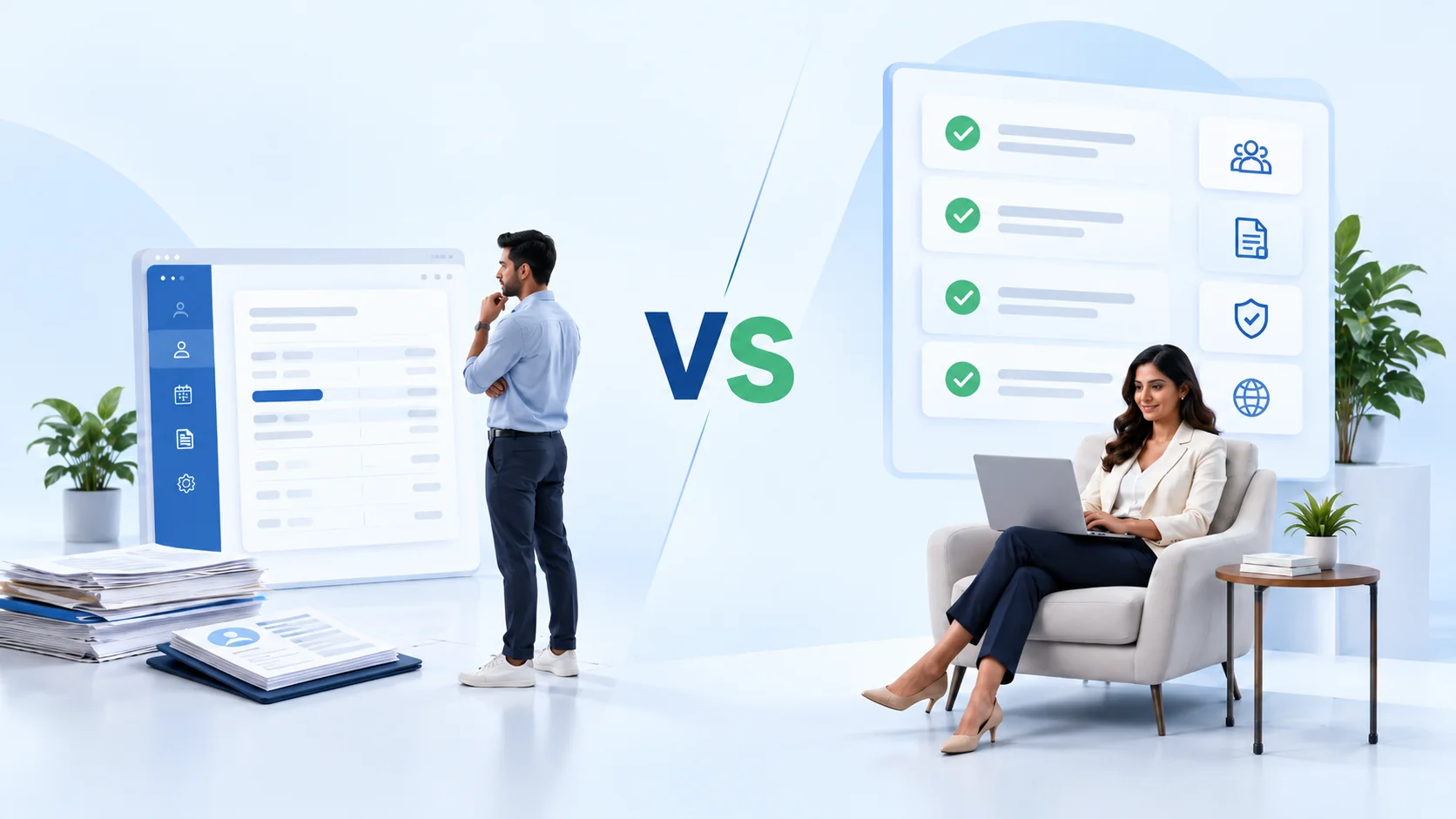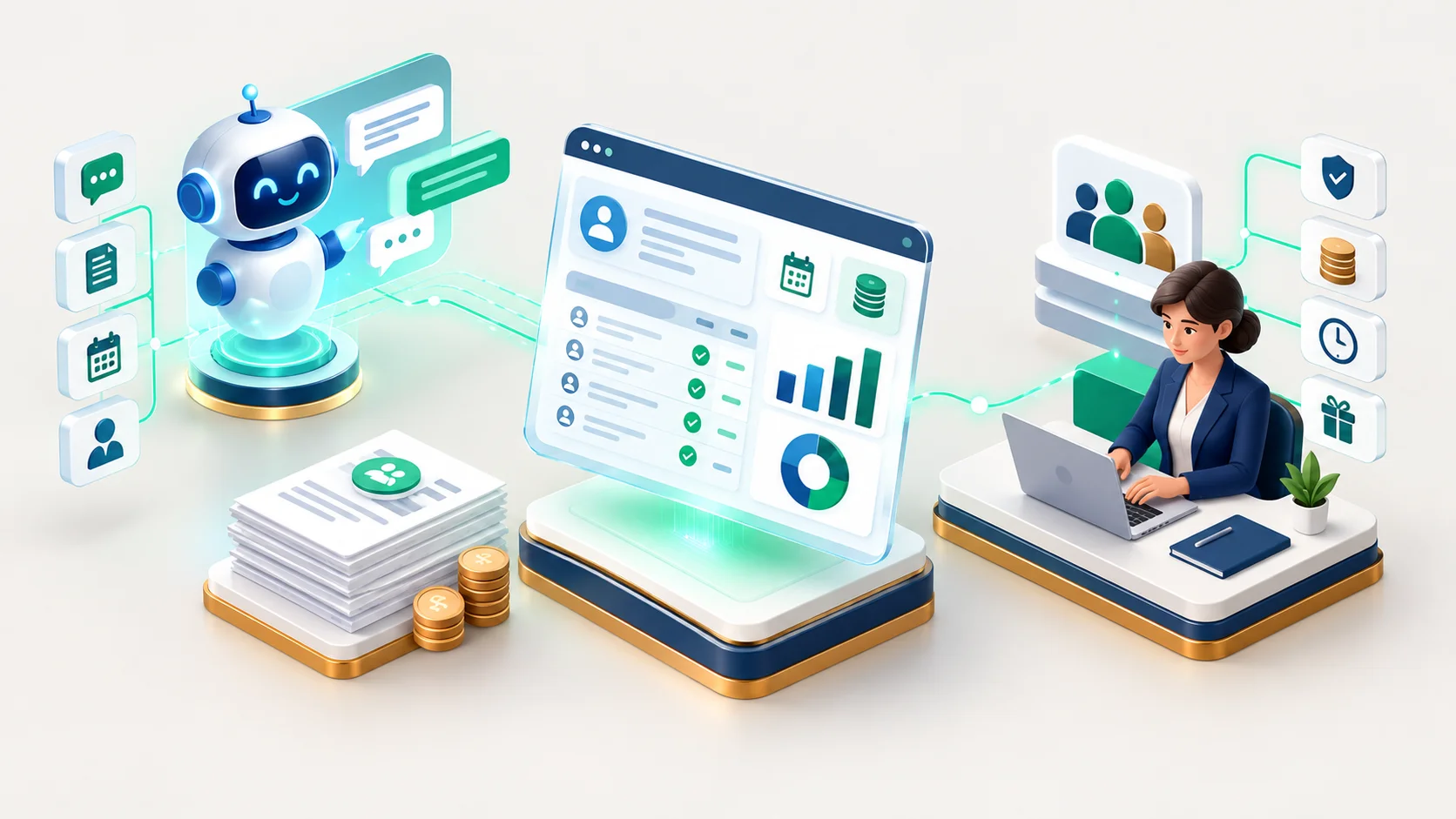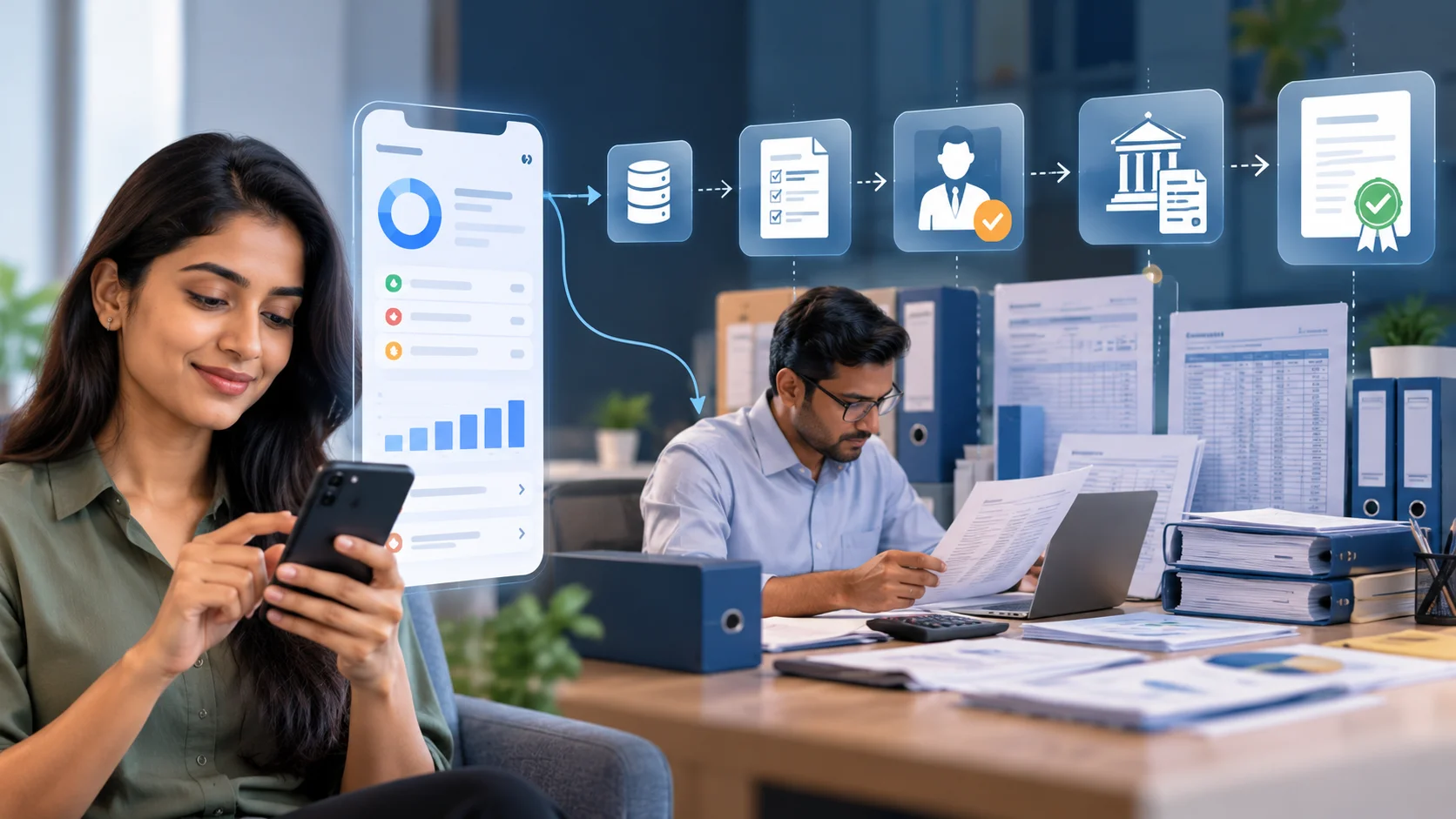
A mobile payslip app gives employees instant access to their pay history from a phone, replacing the older pattern of emailed PDFs or physical printouts collected at the end of each month. For employee experience, this shift is a clear improvement, and most businesses adopting one see a genuine drop in routine "can you resend my payslip" requests. What a mobile payslip app does not automatically deliver, though, is the fully compliant payroll reporting that sits behind that clean, employee-facing display, the statutory filings, retention practices, and audit-ready documentation that regulators actually require. This piece looks at what these apps genuinely do well, what they leave out, and why compliant payroll reporting needs more than a well-designed employee interface.

Key Takeaways
- A mobile payslip app shows pay clearly. It does not check that the pay is right.
- Statutory filings and record retention run separately from payslip delivery.
- A clean layout can hide a wrong figure, so review the calculation itself.
- Ask how long the app keeps history and whether that matches your legal duty.
- Employee experience and compliance are two workstreams, and both need an owner.
What a Mobile Payslip App Actually Delivers
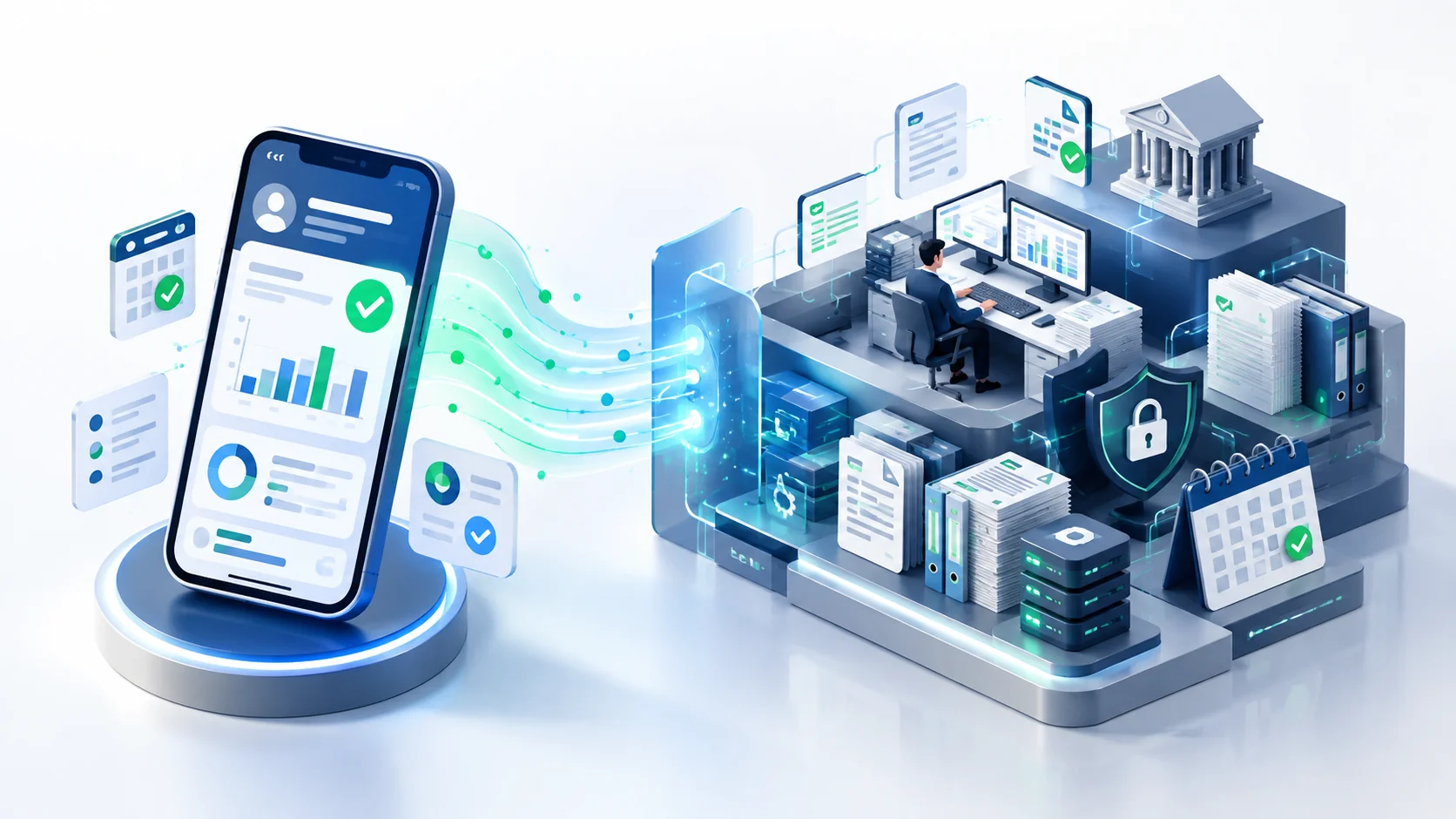
At its core, a mobile payslip app takes payroll data that has already been calculated and formats it into a clean, easily navigable view an employee can access from their phone: current pay, historical payslips, deduction breakdowns, and sometimes supplementary information like leave balances or tax declarations. The genuine value here is accessibility and transparency. Employees who previously had to email HR for a copy of a payslip from several months ago can now retrieve it themselves in seconds, which reduces friction for employees and routine request volume for payroll teams alike.
Digital payslip access through a well-designed mobile app also tends to improve how clearly employees understand their own pay. A well-formatted breakdown of gross pay, deductions, and net pay, presented consistently every period, helps employees notice changes and ask informed questions rather than only skimming a document they don't fully understand. This transparency benefit is real and worth taking seriously as a genuine improvement in the employee experience around pay, independent of any compliance considerations.
The App Is a Presentation Layer, Not a Compliance Engine
The important distinction is that a mobile payslip app is fundamentally a presentation layer sitting on top of whatever payroll data feeds into it. The app itself does not determine whether that underlying data was calculated correctly according to current statutory rules, whether the required filings based on that data were submitted on schedule, or whether the records are being retained in the form and for the duration a regulator requires. A beautifully designed app displaying incorrect underlying payroll data is still displaying incorrect data, just more legibly than a plain PDF would have.
Why This Distinction Is Easy to Miss
Because a clean, professional-looking mobile payslip app creates an impression of overall payroll sophistication, it is easy for both employees and, sometimes, internal finance teams to assume that a business using such a tool has its broader payroll compliance well in hand. This assumption doesn't necessarily follow. The quality of an employee-facing interface and the quality of the statutory compliance work behind it are two separate things that can, and sometimes do, diverge considerably, particularly if a business adopted the app primarily to improve employee experience without giving equal attention to what happens on the compliance side.
What Payroll Reporting Compliance Actually Requires
Payroll reporting compliance involves considerably more than generating a document that shows an employee what they were paid. It requires calculating statutory deductions correctly according to current rules, filing the required reports and returns with the relevant tax and labor authorities on their specific schedules, and retaining supporting records in a form that satisfies each jurisdiction's specific audit and record-keeping requirements. None of this is visible to an employee looking at their payslip in a mobile app, which is exactly why it is easy to overlook when a business is evaluating whether its payroll setup is genuinely sound.
Statutory Record-Keeping Has Its Own Rules
Statutory payroll records typically need to be retained for a defined period, often several years or longer depending on the specific jurisdiction and record type, and need to be reconstructable in a form that satisfies an auditor's or regulator's specific requirements if requested. A mobile payslip app that only retains, say, the past two years of history for storage or licensing reasons may leave a business without ready access to older records a regulator later asks to review, even though the payslips themselves were accurate when originally issued. Businesses should confirm explicitly how long their payslip app retains historical data and whether that retention period matches, or ideally exceeds, the statutory requirement in each relevant jurisdiction.
Filing Deadlines Operate Independently of Payslip Generation
Generating and distributing a payslip to an employee is a separate process from filing the statutory reports that same payroll data feeds into, whether that is a tax withholding filing, a social security contribution report, or another jurisdiction-specific requirement. A business can have a flawless mobile payslip experience for employees while still missing a filing deadline on the compliance side, since the app's job ends at presenting data to the employee, not at ensuring every downstream statutory obligation tied to that data has been met on schedule.
Employee Self-Service Has Real Limits
Employee self-service through a mobile payslip app genuinely reduces routine administrative burden, but it is worth being clear about where its usefulness ends. An employee using the app can view and download their own payslips, which is valuable, but they are not positioned to independently verify whether the underlying calculation was correct according to current statutory rules, since that verification requires knowledge and context the app's interface was not built to provide. Self-service improves access to information; it does not substitute for the compliance review that confirms the information itself is correct.
A Clean App Can Mask a Quiet Error
One of the more subtle risks with a polished mobile payslip app is that its visual consistency and professional presentation can make even an incorrect payslip look entirely trustworthy. An employee has little reason to question a cleanly formatted figure that matches the format of every previous payslip they've received, even if the underlying number reflects a miscalculation, an outdated tax table, or a misapplied statutory rate. This is precisely why independent review of the underlying payroll calculation matters regardless of how good the employee-facing presentation looks, since presentation quality and calculation accuracy are not the same thing and shouldn't be assumed to travel together.
Where Human Oversight Still Fits
A mobile payslip app works best as one visible layer within a broader payroll process that includes genuine human oversight of the calculations, filings, and records behind it. Someone needs to confirm that the statutory rates and rules feeding into each payslip are current, that the required filings tied to that payroll run have actually been submitted correctly and on time, and that historical records are being retained appropriately for as long as regulations require. This oversight doesn't need to be visible to employees using the app day to day, but it needs to exist and be genuinely accountable to someone.
Livida's Approach to Payslip Generation and Compliance
Livida's payroll processing includes payslip generation as one part of a broader statutory compliance process, rather than treating the payslip itself as the end product. The underlying payroll tax filing, statutory compliance work, and full and final settlement calculations that feed into each payslip are handled with the same level of accountability as the payslip an employee ultimately sees, so the clean presentation an employee gets access to is backed by compliance work that has actually been verified, not just formatted attractively.
Auditability Requires More Than a Digital Archive
When a regulator or external auditor requests payroll records, having a digital archive of payslips accessible through a mobile app is helpful, but auditors typically want more than the payslip itself: the underlying calculation logic, the statutory basis for specific deductions, and supporting documentation showing how a particular figure was derived. A business that can produce a payslip on demand but struggles to explain the reasoning behind a specific line item is in a materially weaker position during an audit than one that maintains both the employee-facing record and the compliance documentation behind it in an organized, retrievable form.
Evaluating a Mobile Payslip App Honestly
Before adopting or continuing to rely on a mobile payslip app as a core part of payroll operations, it is worth asking a few direct questions: what payroll data source actually feeds the app, and is that source maintained with the same rigor as the app's user interface; how long does the app retain historical payslips, and does that match statutory retention requirements; and if an employee or auditor finds a discrepancy, who is responsible for investigating and correcting it. If the honest answer to any of these is unclear, that ambiguity is worth resolving before treating the app as a complete solution rather than one visible component of a larger compliance process.
A short comparison of what each layer actually covers:
| Mobile Payslip App | Compliant Payroll Reporting | |
|---|---|---|
| What it shows | A formatted, employee-facing view of pay | The statutory filings and records behind that pay |
| What it verifies | Nothing on its own; it displays existing data | Whether deductions and filings are correct and on time |
| Who is accountable | The app vendor for uptime and display | The payroll provider or team for compliance accuracy |
Before treating a payslip app as a complete solution, it's worth checking a few things directly:
- How long the app retains historical payslips, and whether that matches statutory retention requirements.
- Whether the underlying payroll data source is reviewed with the same rigor as the app's interface.
- Who is responsible for investigating and correcting a discrepancy an employee or auditor flags.
- Whether filing deadlines tied to that payroll data are tracked separately from payslip generation.
A Reference Point Worth Checking
For businesses with India payroll obligations, the EPFO website provides current guidance on provident fund contribution requirements and record-keeping expectations that any payroll process, app-based or otherwise, needs to reflect accurately. Comparing an app's underlying calculation logic against primary sources like this periodically is a reasonable check, rather than assuming vendor documentation alone is sufficient confirmation that statutory rules are being applied correctly.
Balancing Employee Experience With Compliance Depth
The most sensible approach doesn't treat employee experience and compliance depth as competing priorities to trade off against each other. A business can offer employees a genuinely good mobile payslip experience, fast, clean, accessible, while separately ensuring the statutory compliance and record-keeping behind that experience is handled with equal seriousness by people accountable for getting it right. Neither goal has to be sacrificed for the other, but achieving both requires treating them as two distinct workstreams rather than assuming a good app automatically implies good compliance, or that solid compliance work is wasted if it isn't paired with a reasonably accessible employee-facing presentation.
Questions Worth Raising With a Payroll Provider
Businesses working with an external payroll provider that includes a mobile payslip app as part of its service should ask specifically how the compliance work behind the app is staffed and reviewed, not just how the app itself functions. A provider that can speak confidently and specifically about its statutory filing process, record retention practices, and error-correction procedures is generally a stronger long-term partner than one whose pitch focuses primarily on the app's interface and user experience without equal attention to what happens behind it.
Rolling Out a Mobile Payslip App Without Creating Gaps
Introducing a mobile payslip app to a workforce that previously received payslips by email or in print works best when it is treated as a change to how information is delivered, not a change to the compliance process behind it. Employees need a clear transition period, guidance on how to access historical payslips within the new app, and a defined fallback for anyone who has difficulty using the app, whether due to limited smartphone access or unfamiliarity with the platform. Businesses that switch over abruptly without this transition period sometimes end up with a subset of employees who effectively lose easy access to their own pay records during the changeover.
Testing the App Against Edge Cases Before Full Rollout
Before rolling a mobile payslip app out to an entire workforce, it is worth testing it against a handful of genuinely unusual payroll scenarios: an employee with a mid-cycle salary revision, someone on extended leave, a recent joiner with a partial first month, or a departing employee's final settlement. These edge cases are where formatting or calculation display issues are most likely to surface, and catching them during a limited pilot with a small group of employees is far less disruptive than discovering a formatting problem after the app has already gone live for the full workforce.
Vendor Evaluation Beyond the User Interface
When comparing mobile payslip app vendors, it is worth resisting the temptation to make the decision primarily on how polished the interface looks in a sales demo. The more consequential questions are less visible: how the app's underlying data pipeline connects to the actual payroll system, how quickly a correction made in the payroll system propagates to what the employee sees in the app, and what happens to historical data if the business ever needs to switch to a different vendor. A visually appealing app built on a fragile or poorly documented data pipeline is a worse long-term choice than a plainer app backed by a robust, well-integrated data connection.
Support Responsiveness Matters More Than It Seems
Because payslip issues are often time-sensitive, particularly around payday when employee questions and complaints are most likely to arise, a vendor's support responsiveness deserves real weight in the evaluation process. Asking for specifics about typical response times for a reported data discrepancy, rather than accepting a generic service-level statement, gives a clearer picture of what happens in practice when something needs fixing quickly. A vendor unwilling to commit to specific response expectations is signaling something worth factoring into the decision before a contract is signed.
Involving Payroll Staff Early in Vendor Selection
The people who understand the underlying payroll data best, the internal payroll team or the external provider managing statutory compliance, are often left out of mobile payslip app vendor selection until late in the process, after a decision has effectively already been driven by other stakeholders focused primarily on employee experience. Involving them earlier, particularly in evaluating how cleanly the app's data pipeline integrates with the existing payroll system, tends to surface integration risks and data accuracy questions that a purely interface-focused evaluation would miss entirely. This small process change costs little and meaningfully reduces the odds of choosing an app that looks good but creates ongoing data reconciliation headaches once it is actually connected to live payroll.
Five Essential Checks for Your Mobile Payslip App
Our team suggests this order when we review a payslip setup:
- Find out which payroll system feeds the app and who maintains it.
- Confirm how long the app keeps payslips and whether that meets your record rules.
- Test edge cases such as joiners, leavers and mid-month changes.
- Track filing dates separately from payslip release dates.
- Name the person who fixes an error and how fast it reaches the employee.
Bringing It Together
A mobile payslip app is a genuine improvement in employee experience, giving people fast, self-service access to their own pay information in a format that is far more convenient than the emailed PDFs and physical printouts it typically replaces. It is not, by itself, evidence that the payroll reporting compliance behind that experience is sound, since the app's job is presentation, not verification of statutory accuracy or management of the filings and record-keeping regulators actually require.
Businesses that pair a well-designed employee-facing app with genuinely accountable compliance work behind it get the full benefit of both; businesses that adopt the app and assume compliance follows automatically are taking on risk they may not fully recognize until an audit or a regulatory inquiry surfaces it.
Employee expectations around digital payslip access will likely keep rising, and that is a reasonable trend for payroll providers and internal teams to keep meeting. The underlying discipline doesn't change with the interface, though: statutory compliance still requires accurate calculation, timely filing, and proper record retention, handled by people accountable for getting each of those right, regardless of how the resulting payslip is ultimately delivered to the employee who receives it.
If you would like to confirm that the compliance work behind your payslip process is as solid as the employee experience in front of it, Livida's payroll team can review your current setup.
In our experience, the most common gap is simple. The app shows a payslip, but nobody has reconciled the statutory deductions behind it. We recommend a monthly check of the numbers that feed the app, not only the screen the employee sees. Employers with staff in India should also keep PF and ESI filing dates on the same calendar as payroll runs. Our experience is that this one habit prevents most late surprises.
For related comparisons, see Real-Time Payroll Processing vs. Year-End Accounting and Payroll Chatbots vs. Human Payroll Advisory. Employers with India-based staff can also review Livida's PF Return Filing service, which feeds directly from the same payroll data that drives each payslip. Our ESI return filing service works the same way.
Conclusion
A mobile payslip app improves how employees see their pay. Compliant payroll reporting is what proves the pay was right. Treat them as two jobs, give each an owner, and check both regularly.
This article is general information, not professional advice, and payroll rules change. Confirm current requirements for your own business.
References
- EPFO, the Employees' Provident Fund Organisation of India
- ESIC, the Employees' State Insurance Corporation of India
- MOM Singapore: Itemised pay slips, for employers with staff in Singapore
Talk to Livida
To review your payroll setup, visit our India contact page, email info@livida.in, or call +91 94860 33194.