Real-time payroll processing lets businesses pay employees closer to when work is actually performed, rather than confining every payment to a fixed weekly, biweekly, or monthly cycle. As more businesses adopt this kind of flexible payment technology, a reasonable question follows. Does paying employees continuously throughout the month create friction with year-end accounting, where financial statements need to reflect a clean, accurate picture of the full year?
The short answer is that the two don't inherently conflict. That holds only if the underlying payroll data is reconciled consistently and treated with the same rigor that year-end accounting has always demanded.

Key Takeaways
- Real-time payroll processing changes when wages are paid. It does not change what is owed or when filings are due.
- Year-end accounting still needs accrued wages recognised as a liability at the reporting date.
- Reconciliation matters more, not less, when payment frequency goes up.
- A clean audit trail links every disbursement to the hours, leave or salary calculation behind it.
- Name one owner for ongoing reconciliation and review it weekly.

What Real-Time Payroll Processing Actually Changes
Real-time payroll processing changes the timing and frequency of payments to employees, not the underlying nature of the wage obligation itself. An employee is still earning wages according to the same hours worked or salary structure as before; what changes is how quickly that earned wage becomes accessible to them, sometimes within the same day rather than at the end of a defined pay period. This shift creates more frequent transactions for a business to track, more payment events to reconcile against attendance and leave records, and, if not handled carefully, more opportunities for small inconsistencies to accumulate unnoticed between one formal review point and the next.
The Appeal for Employers and Employees Alike
The appeal of real-time payroll is fairly intuitive: employees value faster access to earned wages, and some employers see it as a meaningful tool for improving retention and reducing financial stress among their workforce, particularly in hourly and shift-based roles where pay timing can matter significantly to day-to-day financial stability. For employers, faster payment cycles can also provide more immediate visibility into labor costs, which is valuable for operational decision-making even outside the context of formal accounting.
Year-End Accounting Still Follows Its Own Rules
Year-end accounting operates under a different set of principles than day-to-day payroll disbursement. Financial statements need to reflect accrued obligations accurately as of a specific reporting date, following recognized accounting principles regardless of when cash actually changed hands. This means wages earned but not yet paid at year-end still need to be recognized as a liability, and any payroll-related adjustments, corrections, or reconciliations that affect the accuracy of the year's financial position need to be captured before the books are closed. Real-time payment timing doesn't change these underlying accounting requirements; it simply changes how frequently cash movements occur throughout the year.
Statutory Filing Deadlines Don't Move Either
Just as with year-end accounting principles, statutory filing deadlines are set by regulators around defined reporting periods, not around how frequently a business chooses to disburse wages to employees. A business processing payroll in real time still needs to calculate and remit statutory withholdings according to the same periodic schedule required by the relevant tax and labor authorities. Confusing payment frequency with filing frequency is a mistake that can lead to real compliance problems if not carefully managed from the outset.
Payroll Reconciliation Becomes More Important, Not Less
Payroll reconciliation, the process of confirming that payments made match what was actually owed based on hours worked, leave taken, and applicable statutory deductions, becomes more important, not less, as payment frequency increases. A business processing one payroll run per month has one clear checkpoint to catch and correct errors before they compound. A business processing payments continuously throughout the month needs a reconciliation process robust enough to catch errors just as reliably, even though the checkpoints are less naturally built into the payment cadence itself.
Building Reconciliation Into a Continuous Cycle
Rather than treating reconciliation as a single event at the end of a pay period, businesses adopting real-time payroll benefit from building reconciliation into an ongoing, ideally daily or weekly, review cycle. This might involve regularly cross-checking disbursed amounts against attendance and leave data, flagging unusual payment patterns for review, and maintaining a running, accurate picture of accrued wage liability that can be reported accurately whenever a financial statement, whether monthly, quarterly, or annual, needs to be prepared.
Financial Statement Accuracy Depends on Payroll Data Integrity
Financial statement accuracy depends heavily on payroll data integrity, since payroll is frequently one of the largest expense line items a business reports. Any systemic error in how payroll transactions are recorded, whether from a timing mismatch, a misclassified payment, or an unreconciled discrepancy between disbursed cash and accrued liability, can materially distort reported financial results. This is true whether a business processes payroll monthly or in real time, but the risk of an error going unnoticed for longer is arguably higher in a real-time environment simply because there are more individual transactions and fewer natural pause points to catch problems.
Where Livida's Approach Fits
Livida's approach to payroll processing, cash management reporting, and annual financial statement preparation is built around treating payroll data as a continuous input into accurate accounting, not a separate process that only intersects with financial reporting once a year. Financial analysis and consolidation of accounts depend on payroll figures being accurate and properly reconciled throughout the year, and businesses adopting faster, more flexible payment technology benefit from a payroll partner who treats that ongoing reconciliation discipline as a core part of the service rather than an afterthought handled only at year-end close.
Cash Flow Implications Deserve Attention Too
Real-time payroll processing has cash flow implications that traditional, fixed-cycle payroll does not carry to the same degree. Disbursing wages continuously throughout a pay period requires a business to maintain sufficient liquidity available at all times, rather than planning around a small number of known, predictable payment dates. Budgeting and cash flow planning need to account for this shift, ensuring the business doesn't find itself short of available funds because cash was allocated on the assumption of a traditional, less frequent payment schedule.
Avoiding a Mismatch Between Cash Planning and Payment Timing
A business that adopts real-time payroll without adjusting its cash flow planning accordingly risks a mismatch between when funds are needed and when they are actually available, particularly during periods of tighter cash flow or unexpected expenses elsewhere in the business. Budgeting and cash flow planning that explicitly accounts for the more continuous nature of real-time wage disbursement helps avoid this kind of avoidable strain, and this is an area where a payroll and accounting partner familiar with a business's full financial picture can add meaningful value beyond just processing the payments themselves.
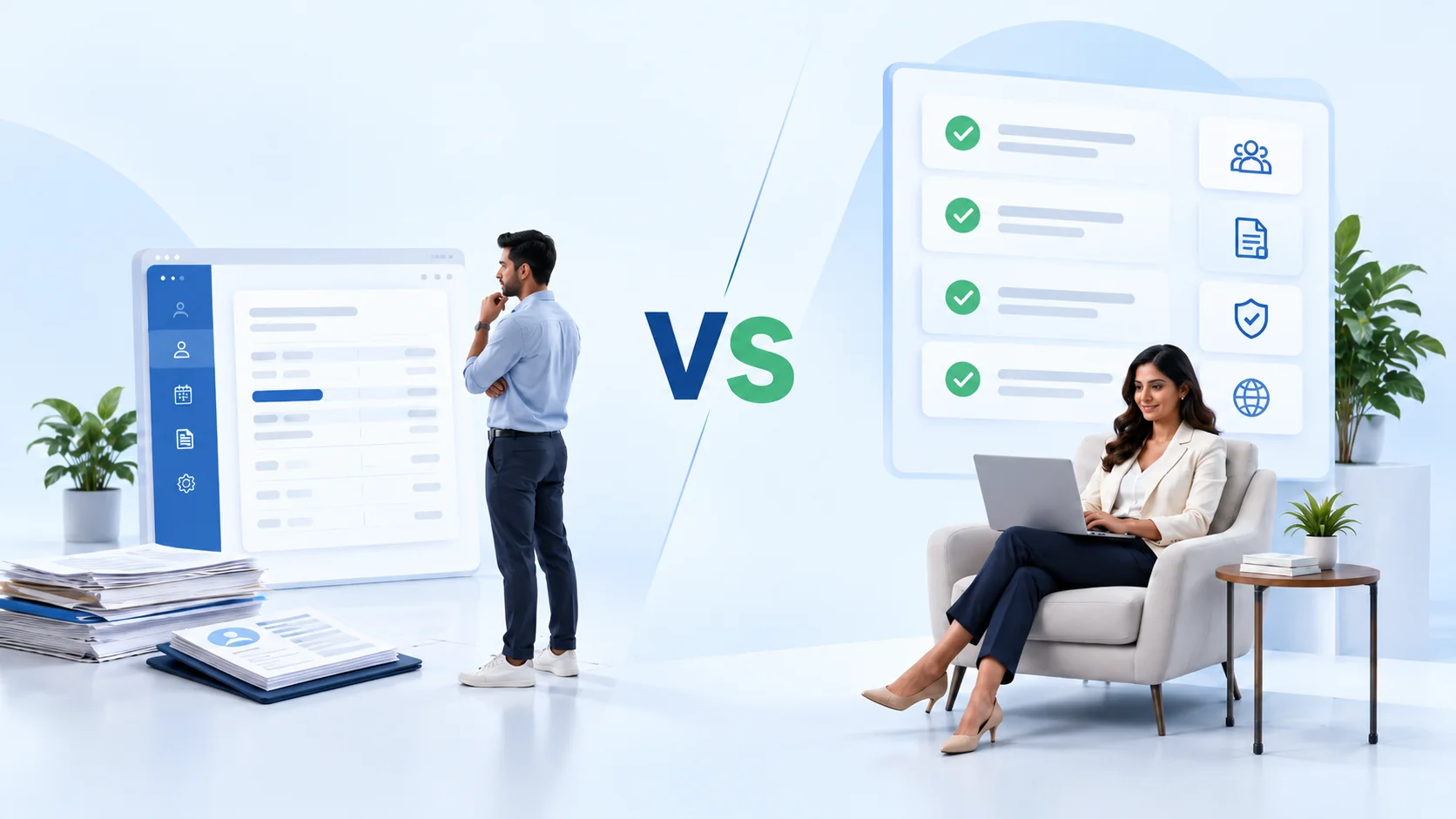
Real-Time Payroll vs. Year-End Accounting: What Each Needs
| Real-Time Payroll Processing | Year-End Accounting | |
|---|---|---|
| Governs | When employees can access earned wages | How accrued obligations are reported as of a date |
| Frequency | Continuous, sometimes same-day | Fixed reporting periods |
| Main risk | Errors accumulating between review points | Missed accruals or unreconciled payroll data |
| What keeps them aligned | Ongoing, disciplined reconciliation | A clean audit trail feeding into the close |
Audit Trails Matter More in a Real-Time Environment
A higher volume of payroll transactions naturally creates a larger surface area for something to go unnoticed, which is exactly why a clean, well-documented audit trail matters more once a business moves to real-time payroll rather than less. Every disbursement, whether it happens on a fixed biweekly schedule or the moment an employee requests early access to earned wages, needs to be traceable back to the hours, leave, or salary calculation that justified it. Without that traceability, both internal reviews and external audits become significantly harder to complete with confidence.
What a Strong Audit Trail Looks Like in Practice
A strong payroll audit trail links each disbursement to its underlying calculation, records any manual adjustments with a clear reason attached, and preserves a history of changes to employee pay rates, tax elections, or statutory deduction settings. In a real-time environment, where payments happen continuously rather than at a handful of predictable checkpoints, this documentation needs to be captured as transactions occur rather than reconstructed after the fact. Businesses that treat audit trail quality as a byproduct of good reconciliation practice, rather than a separate compliance exercise, tend to move through year-end audit preparation with far fewer surprises.
How This Connects to Broader Accounting System Reviews
Payroll doesn't exist in isolation from the rest of a business's accounting infrastructure, and a periodic accounting system review is a useful way to confirm that payroll data is actually flowing into the general ledger the way it should be, particularly after adopting new real-time payroll technology. These reviews can catch integration gaps, such as a payroll platform that updates in real time but only syncs with core accounting software on a delayed batch schedule, which can itself become a quiet source of reconciliation problems if left unchecked for too long.
Choosing Real-Time Payroll Technology Without Losing Oversight
Not all real-time payroll platforms are built the same way, and the choice of technology has a direct bearing on how much reconciliation friction a business will face down the line. Some platforms are designed with strong, exportable audit trails and clear integration paths into standard accounting systems; others prioritize payment speed and employee-facing convenience without giving as much thought to how finance teams will actually reconcile the resulting transaction volume. Businesses evaluating these platforms benefit from asking pointed questions about reporting granularity, data export options, and how the platform handles corrections or reversed payments before committing to a long-term vendor relationship.
Questions Worth Asking Before Adopting a Platform
Useful questions include how frequently the platform's records sync with core accounting software, whether historical payroll data remains accessible and exportable in a usable format after a contract ends, and how the platform documents manual overrides or exception handling. A platform that makes these processes transparent and easy to audit will generally cause far fewer headaches at year-end than one that treats reconciliation as an afterthought, regardless of how appealing its employee-facing features might be.
Balancing Speed With Governance
The businesses that get the most value out of real-time payroll technology are usually the ones that pair it with clear internal governance: defined approval workflows for exceptions, a designated owner for reconciliation who reviews activity on a regular cadence, and periodic checks that payroll data reaching the accounting system matches what was actually disbursed. None of this requires abandoning the speed and flexibility that make real-time payroll appealing in the first place, it simply means treating oversight as a parallel priority rather than something to revisit only once problems surface.
Multi-Region Businesses Face an Extra Layer of Complexity
Businesses operating in more than one country add another dimension to the relationship between real-time payroll and year-end accounting, since payroll rules, statutory filing calendars, and even the definition of a pay period can differ meaningfully by jurisdiction. A business running real-time payroll for staff in one country while relying on a standard monthly cycle elsewhere needs its reconciliation process to accommodate both patterns without letting either one fall behind on the consistency that accurate consolidated reporting requires.
Consolidation Across Different Payroll Cadences
Consolidation of accounts across regions already requires careful alignment of reporting periods and currency treatment, and mixing real-time and traditional payroll cadences within the same consolidated group adds a further reconciliation variable. Financial teams need to confirm that payroll figures from a real-time jurisdiction are captured on an accrual basis consistent with how traditional-cycle jurisdictions report their own payroll expense, so the consolidated picture isn't distorted simply because two entities pay their people on different schedules.
Why Local Expertise Still Matters
Real-time payroll technology can be deployed in most jurisdictions, but the statutory obligations layered on top of it, withholding calculations, social security contributions, and filing deadlines, remain locally specific and don't simplify just because payments happen faster. This is exactly the kind of area where a payroll partner with region-specific expertise, rather than a single global software platform applied uniformly, tends to catch the local nuances that a purely technology-driven approach can miss.

Training and Internal Process Changes Shouldn't Be Skipped
Adopting real-time payroll processing is as much an internal process change as it is a technology decision, and businesses that skip the training and workflow-adjustment step often see the reconciliation problems described earlier emerge faster than expected. Staff who are used to reviewing payroll once per cycle need to adjust to a more continuous rhythm of review, and finance teams need clarity on who owns catching errors before they accumulate into a year-end problem.
Setting Clear Ownership for Ongoing Reconciliation
A common failure mode is assuming that because payroll now happens more frequently, someone is automatically reviewing it more frequently too. In practice, without an explicit owner and a defined review cadence, the opposite often happens: the sheer frequency of transactions makes it easier for no single review to feel like "the" checkpoint, and oversight quietly lapses. Assigning clear ownership for ongoing reconciliation, whether internally or through a payroll and accounting partner, closes this gap before it becomes visible at year-end.
Five essential checks are worth running before or after adopting real-time payroll processing:
- Is payroll reconciled on an ongoing, ideally weekly, cadence rather than only once per traditional pay cycle?
- Does the platform's audit trail link every disbursement back to its underlying hours, leave, or salary calculation?
- Are statutory filing deadlines tracked separately from payment timing, since the two do not move together?
- Is there a named owner for reconciliation, distinct from whoever approves hours or processes payments?
- Do the payroll platform and the general ledger sync often enough that accrued wage liability is always visible?
A Practical Path to Making Both Work Together
For a business considering or already using real-time payroll processing, the practical path to avoiding conflict with year-end accounting is straightforward in principle, even if it takes discipline to execute consistently: treat every payroll transaction, regardless of frequency, as an input that needs to flow accurately into the business's broader accounting records, reconcile that data on an ongoing basis rather than waiting for a single annual review, and maintain clear, accurate accrual records throughout the year so that year-end close is a matter of confirmation rather than a scramble to untangle a year's worth of unreconciled transactions.
Reference points like the IFRS Foundation and the AICPA & CIMA offer useful general guidance on accrual accounting principles relevant to how wage liabilities should be treated on financial statements.
Setting Expectations With Employees and Managers
Part of making real-time payroll and disciplined accounting work together smoothly involves setting clear expectations with the employees and managers who interact with the system day to day, not just the finance team maintaining it behind the scenes. Employees using real-time payment features benefit from understanding exactly how and when funds become available, while managers approving hours or leave requests need to understand that their timeliness directly affects the accuracy of both the payment employees receive and the records the business relies on for reporting.
Reducing Downstream Corrections Through Better Input Discipline
A meaningful share of payroll reconciliation problems trace back not to the payroll system itself but to late, inconsistent, or inaccurate data entering it, whether that's a manager approving hours after payment has already gone out or an employee correction submitted well after the fact. Businesses that invest a modest amount of effort in setting clear submission deadlines and approval expectations upstream often find they spend considerably less time on corrections and reconciliation downstream, which benefits both the real-time payment experience and the accuracy of year-end financial statements.
Conclusion
Real-time payroll processing and year-end accounting do not have to conflict, and for most businesses they don't, provided the underlying discipline of ongoing payroll reconciliation and accurate accrual tracking is maintained consistently throughout the year rather than left until a year-end deadline forces the issue. The technology enabling faster, more flexible pay is a genuine benefit to employees and can offer employers better real-time visibility into labor costs, but it shifts more of the reconciliation burden onto ongoing processes rather than a single annual review, which is exactly where a disciplined payroll and accounting partner earns its value.
If your business is weighing real-time payroll processing or already using it and wants confidence that your year-end numbers will hold up, Livida's team can review your current reconciliation process and help make sure the two stay well aligned.
In our experience, the most common delay at year-end is waiting for payroll data to be matched to the ledger because the sync ran in batches rather than as payments were made. We recommend checking that sync early in the year, not in the final week.
Related reading: Mobile Payslip Apps vs. Fully Compliant Payroll Reporting and Multi-Country Payroll Platforms vs. Local Payroll Expertise. Employers with India-based statutory obligations can also review Livida's PF Return Filing service.
Talk to Livida
If you want a second opinion on how payroll data reaches your books, our team is glad to help. Visit our contact page, email info@livida.in or call +91 94860 33194. You can also read about our payroll service and bookkeeping service, or compare earned wage access with traditional payroll.
This article is general information, not professional advice. Payroll, tax and accounting rules change, so confirm the current position for your jurisdiction before acting.
References
- Code on Wages, 2019 (Ministry of Labour and Employment, India), the official text on when and how wages must be paid.
- EPFO: Online ECR and challan submission, the official page for employers filing the monthly provident fund return and payment.