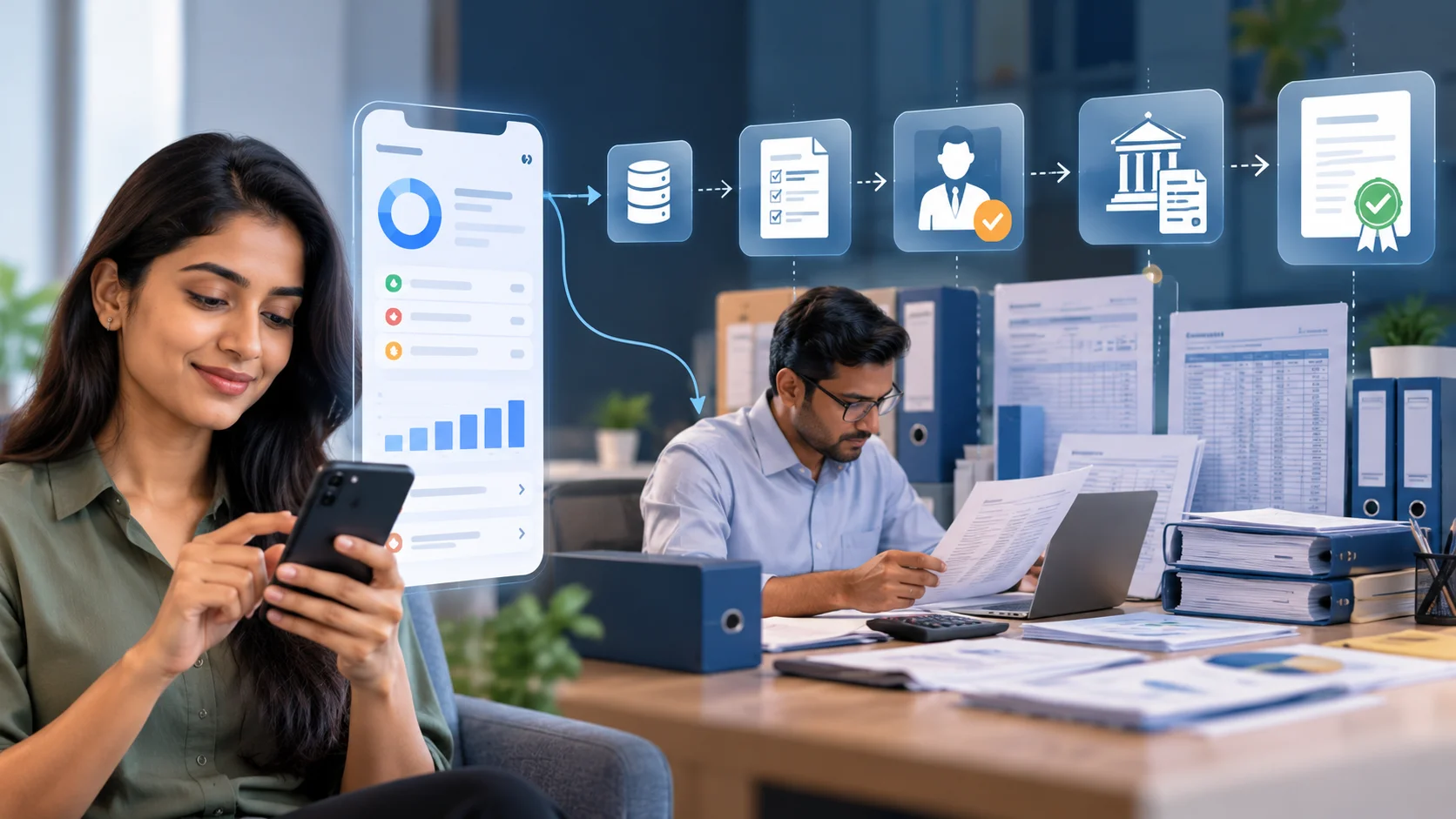
A self-service payroll app has become the default starting point for many small and growing businesses, offering employees direct access to their payslips, tax documents, and personal details without needing to go through HR for every routine request. The convenience is real, and for a stable, straightforward workforce, these apps can run a payroll cycle competently for a long stretch of time. The question worth asking honestly is where a self-service model stops being sufficient and where full-service payroll support becomes the more responsible choice, particularly as a business grows past the simplest case these apps were originally designed around.
This piece walks through what a self-service payroll app genuinely handles well, the specific ways it tends to strain as a business grows more complex, and how full-service payroll support closes those gaps without forcing employees to give up the convenience of self-service access to their own pay information.

Key Takeaways
- A self-service payroll app suits a stable workforce on standard pay in one jurisdiction.
- Configuration drift is the quiet risk. Rates and rules change, and the app only knows what it was told.
- Exceptions such as corrections, disputes and final settlements are where full-service payroll earns its cost.
- Compare total cost, including staff time spent fixing errors, not only the per-employee price.
- A hybrid model keeps the employee portal and adds human oversight behind it.
This article is general information, not professional advice. Statutory rates and payroll rules change, so confirm current requirements with the official source or a qualified adviser.
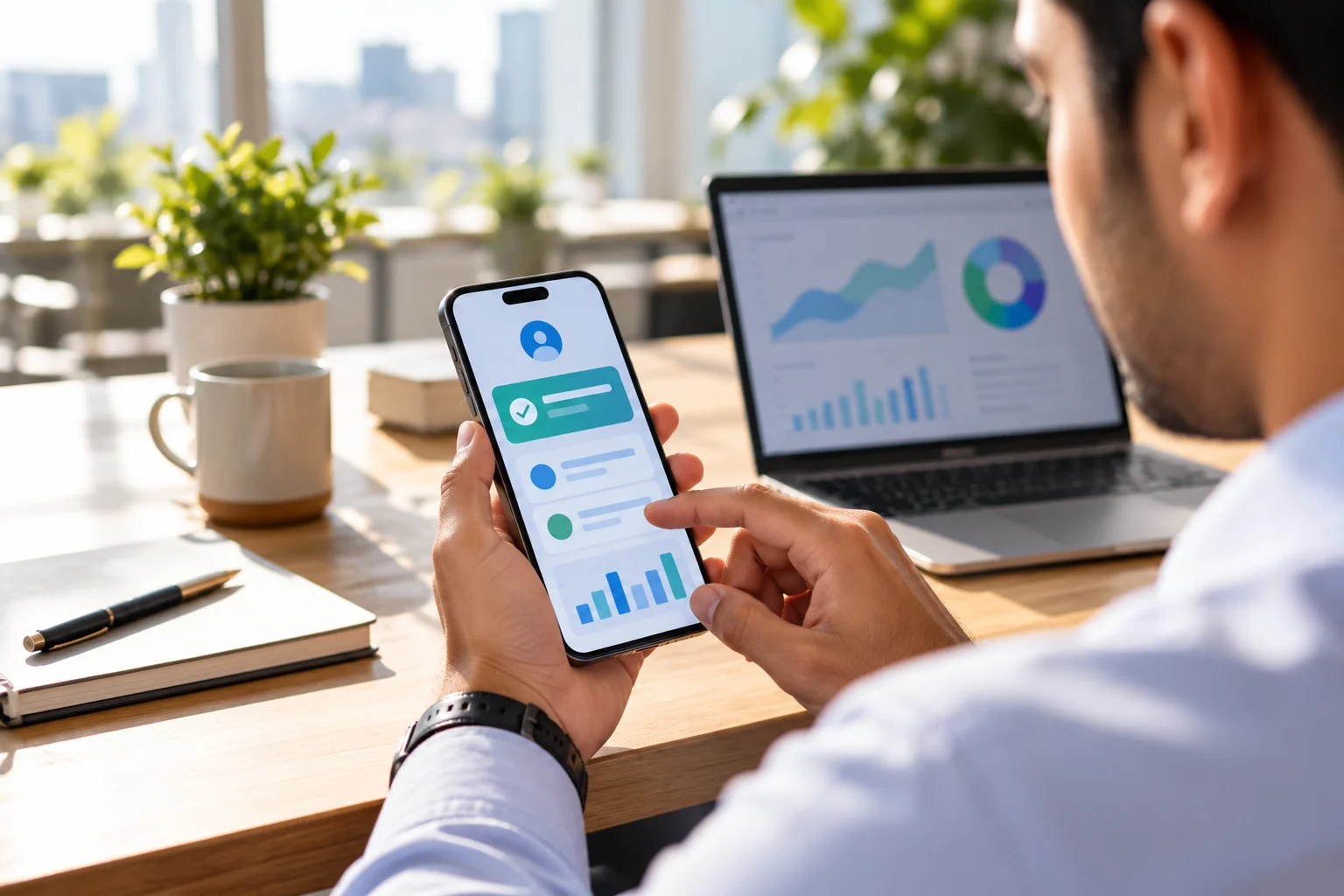
What a Self-Service Payroll App Is Actually Built For
Self-service payroll apps are designed around a fairly narrow set of assumptions: a relatively stable workforce, standard compensation structures, and a single or limited number of jurisdictions with well-understood statutory rules. Within that scope, they perform well, automating the routine calculation of gross pay, standard deductions, and payslip generation, while giving employees a self-service portal to view their own pay history, download tax documents, and update basic personal information without needing to email HR every time. For a small business with a handful of employees on straightforward salaries, this can genuinely be all the payroll infrastructure needed for quite a while.
Employee Self-Service Payroll Reduces Routine Friction
One of the clearest benefits of employee self-service payroll is the reduction in routine back-and-forth between staff and HR. Questions about a specific deduction, a request for a past payslip, or an address update no longer require a person on the HR side to manually retrieve or process the request. This frees up HR time for higher-value work and gives employees a sense of transparency and control over their own payroll information, which tends to be well received across most workforces regardless of size or industry.
Onboarding Configuration Sets the Tone
The quality of a self-service payroll app's output over time is heavily influenced by how carefully it was configured during initial onboarding. Businesses that rush this setup, entering standard defaults without carefully mapping their specific compensation structures, leave policies, and statutory obligations, often carry that initial shortcut forward for years without realizing it, since the app will keep calculating consistently against whatever configuration it was given, correct or not. A careful, deliberate onboarding process, ideally reviewed by someone with payroll expertise rather than left entirely to whoever happened to set up the account, meaningfully reduces the odds of this kind of foundational error persisting silently.
Where Self-Service Apps Start to Strain
The strain typically begins when a business's workforce stops being uniform. A self-service payroll app configured well for a stable group of full-time employees on standard salaries can struggle when a business introduces variable pay components, hires across state or country lines, or scales quickly enough that configuration updates, new tax rates, new statutory thresholds, new compensation rules, stop keeping pace with actual changes in the regulatory environment or the workforce itself. The app doesn't necessarily break in an obvious way; it keeps producing outputs, but the confidence those outputs deserve quietly erodes as the gap between configuration and reality widens.
Payroll Processing Accuracy Depends on Active Maintenance
Payroll processing accuracy is not a one-time achievement from correctly setting up a system; it requires ongoing maintenance as tax rules change, as employees move between roles or locations, and as compensation structures evolve. A self-service app places the responsibility for this maintenance squarely on the employer, and in smaller businesses without a dedicated payroll specialist, that responsibility often falls to whoever has the most spare time rather than whoever has the most relevant expertise. This is less a criticism of the software than an observation about how these tools are typically deployed in practice.
Growth Changes the Risk Profile Quickly
A business that doubles its headcount within a year, opens a second location, or begins hiring across state or national borders changes its payroll risk profile far faster than most self-service platforms are set up to adapt to automatically. Each new jurisdiction potentially introduces new statutory rules, new tax tables, and new eligibility thresholds that need to be configured correctly from day one, not discovered as a problem months later during a routine payslip review. Growth is exactly the moment when the gap between a self-service app's default assumptions and a business's actual, more complicated reality tends to widen fastest, which is precisely when active oversight becomes most valuable and, not coincidentally, often least present.
What Full-Service Payroll Adds
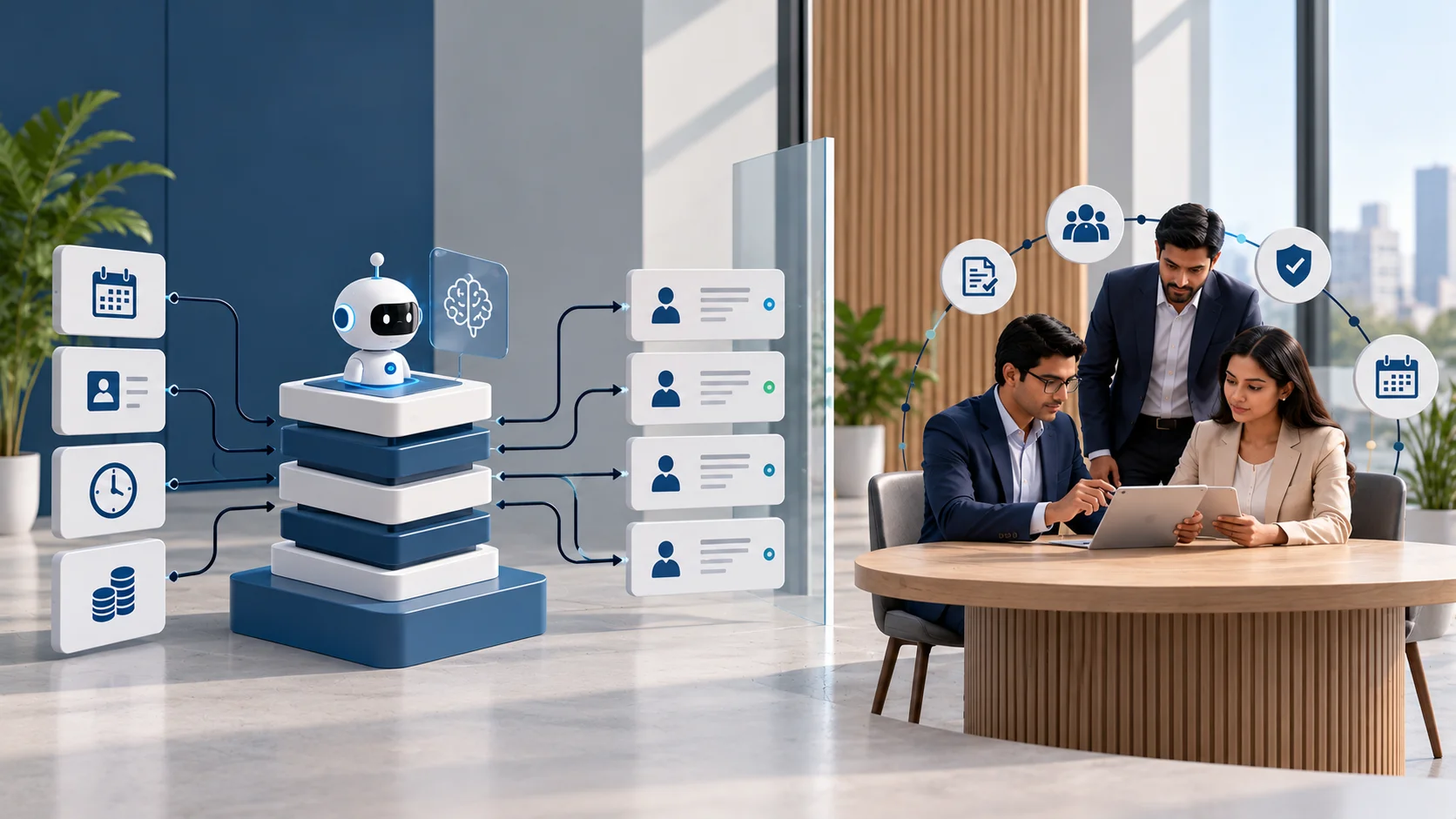
Full-service payroll support wraps the same underlying calculations and payslip generation in a layer of active human oversight: someone confirming that statutory configurations remain current, reviewing outputs for anomalies before they reach employees, and managing the exceptions, a retroactive correction, a complex final settlement, a multi-jurisdiction compliance question, that a self-service app was never built to handle gracefully on its own.
Livida's payroll processing and salary disbursement service, along with statutory compliance, payslip generation, full and final settlement, payroll tax filing, and leave and attendance reconciliation, is built around this kind of active oversight rather than a fixed, unsupervised configuration running month after month. In India, that statutory layer includes filings such as PF return filing and ESI return filing, which a self-service app can calculate but does not file or defend on its own.
Handling Exceptions Is Where Full Service Earns Its Cost
Every payroll operation eventually encounters an exception: an employee who needs a mid-cycle salary adjustment, a departure requiring a full and final settlement calculated correctly against statutory obligations, or a dispute over a specific deduction that needs investigation rather than a standard formula applied blindly. Self-service apps generally handle the standard case well and the exception poorly, either requiring manual workarounds outside the system or producing an output that looks plausible but doesn't actually reflect the specific circumstances correctly. Full-service payroll support exists precisely to catch and correctly resolve these exceptions before they become employee complaints or compliance problems.
Employee Trust and the Human Point of Contact
Employees generally appreciate the convenience of a self-service portal for routine tasks, but many still want a human they can reach when something unusual comes up: a payslip that doesn't look right, a question about a deduction they don't understand, or a concern about a final settlement calculation.
A self-service app without any accessible human backstop can leave employees feeling like their concern has nowhere to go beyond a generic support ticket, which erodes trust in the payroll process over time even if the underlying calculations are largely correct. Full-service payroll support typically includes this human point of contact as a standard part of the offering, which matters more to employee satisfaction than it might initially appear on a feature comparison chart.
Payroll Compliance Support Requires More Than Configuration
Payroll compliance support is often assumed to be a matter of correct initial configuration, set the tax tables, set the statutory rates, and the system will handle the rest indefinitely. In reality, statutory rules change, sometimes multiple times within a single year, and a configuration that was accurate at setup can drift out of compliance silently if no one is responsible for checking it periodically against current regulations. This drift is one of the more common and avoidable sources of payroll errors across businesses relying entirely on self-service tools without a compliance review layered on top.
The Cost of Discovering Drift Late
Discovering a compliance drift after it has already affected several pay cycles is considerably more expensive to correct than catching it early. Retroactive corrections across multiple pay periods, communicating changes to affected employees, and in some cases dealing with a regulatory notice all take more time and cause more disruption than a periodic review would have. Businesses relying solely on a self-service payroll app without any scheduled compliance check are, in effect, betting that nothing will change in the regulatory environment for as long as they use the tool unsupervised, which is rarely a safe assumption over any meaningful stretch of time.
Leave and Attendance Reconciliation as a Recurring Blind Spot
Self-service payroll apps typically rely on data fed in from a separate time and attendance system, and the accuracy of a payslip depends entirely on that upstream data being correct and current. When leave balances, overtime hours, or attendance records are reconciled infrequently, or when the two systems fall out of sync after an integration update, employees can end up with payslips that reflect an inaccurate picture of hours worked or leave taken. Leave and attendance reconciliation handled as a standing, recurring task by an accountable payroll team catches these mismatches before they reach a payslip, rather than leaving employees to notice and report the discrepancy themselves after the fact.
Comparing Total Cost Honestly
A self-service payroll app is typically priced lower per employee than a full-service arrangement, which makes it an attractive option on a straightforward cost comparison. That comparison is incomplete unless it also accounts for the internal staff time spent maintaining configuration, investigating anomalies, and correcting errors when they occur, time that is easy to underestimate because it is spread across many small tasks rather than showing up as a single line item. Businesses that track this hidden cost honestly often find the total cost gap between self-service and full-service payroll is narrower than the sticker price alone suggests, and in some cases the full-service option is genuinely more cost-effective once errors and staff time are properly weighed.
A Practical Threshold for Switching
There is no universal employee count at which a business must switch from self-service to full-service payroll, since the right threshold depends on workforce complexity as much as size. A useful practical signal is the frequency of exceptions: once a business is handling more than an occasional one-off adjustment, correction, or compliance question each pay cycle, the internal cost of managing those exceptions without dedicated payroll expertise usually starts to outweigh the savings of staying on a purely self-service platform.
Another useful signal is turnover: a business with frequent departures needs full and final settlement handled correctly and consistently far more often than a stable workforce does, and errors in that process compound quickly across a larger number of exiting employees.
Multi-Jurisdiction Employees Complicate Self-Service Further
Businesses hiring across state lines or internationally add a layer of complexity that most self-service payroll apps handle unevenly at best. Each jurisdiction can carry its own statutory withholding rules, contribution requirements, and reporting deadlines, and a self-service app configured primarily around one jurisdiction's rules often requires manual workarounds, supplementary tools, or entirely separate processes to handle employees elsewhere correctly. This is rarely obvious from a vendor's marketing materials, which tend to advertise broad jurisdictional coverage without clarifying how deep or reliable that coverage actually is once a business tests it against a specific, less common jurisdiction's requirements.
In the United States, for instance, federal withholding rules published by the Internal Revenue Service still need to be layered correctly on top of whatever state-level rules apply, a combination most self-service apps only partially automate.
For official employer guidance in India, see the EPFO and ESIC sites. Businesses comparing other payroll technology choices may also find our posts on AI payroll platforms versus managed payroll and mobile payslip apps versus compliant payroll reporting useful for thinking through where automation helps and where it still needs a person watching the details.
Data Security Considerations in Self-Service Models
Self-service payroll apps give employees direct access to sensitive personal and financial data, which raises its own set of considerations around access control, authentication, and data protection. A poorly configured self-service portal can inadvertently expose one employee's payroll data to another, or leave administrative access more open than intended, particularly if the business lacks the internal expertise to review permission settings carefully after initial setup. Full-service payroll providers typically bring established security practices and a dedicated point of accountability for data protection, which reduces the burden on an internal team that may not have deep expertise in access control configuration for a specialized payroll platform.
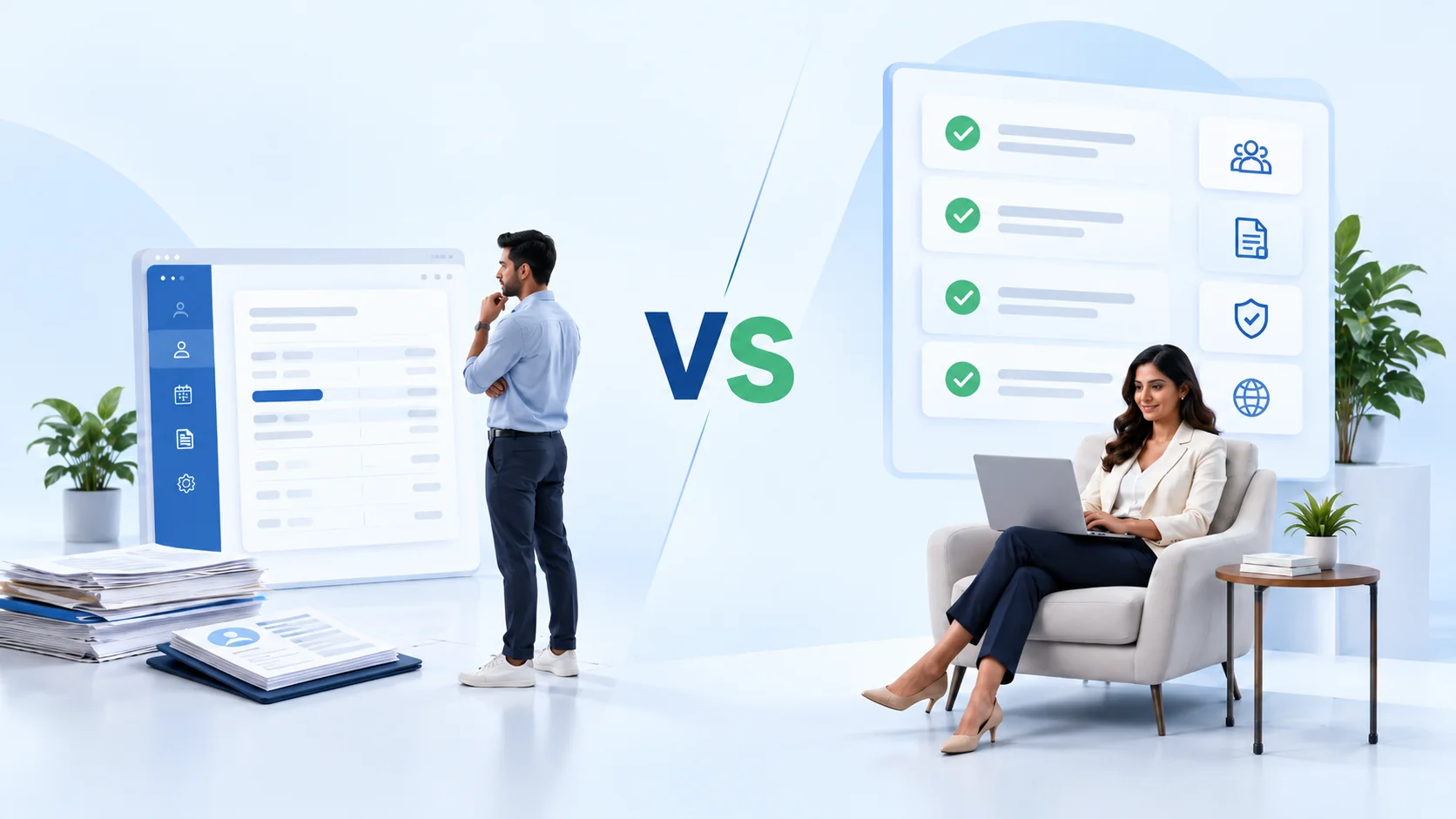
Self-Service Payroll App vs. Full-Service Payroll: A Quick Comparison
| Task | Self-Service Payroll App | Full-Service Payroll |
|---|---|---|
| Standard pay calculation and payslips | Handled well | Handled, with review |
| Statutory configuration kept current | Employer's responsibility | Actively monitored |
| Exceptions (settlements, disputes, corrections) | Manual workaround needed | Resolved by the provider |
| Human point of contact for employees | Usually a generic support ticket | Included as standard |
In our experience, the most common payroll problem is not a calculation error. It is a rate or rule that changed months ago and was never updated in the app. We recommend a scheduled review of statutory settings at least once a year, and again after any hiring or location change.
A few signals suggest a business has outgrown a purely self-service setup:
- Exceptions, corrections, or disputes come up most pay cycles rather than occasionally
- Employees are now spread across more than one state or country
- Nobody can say when statutory rates or thresholds were last reviewed against current rules
- A recent departure's full and final settlement took longer, or looked less confident, than it should have

Finding the Right Balance
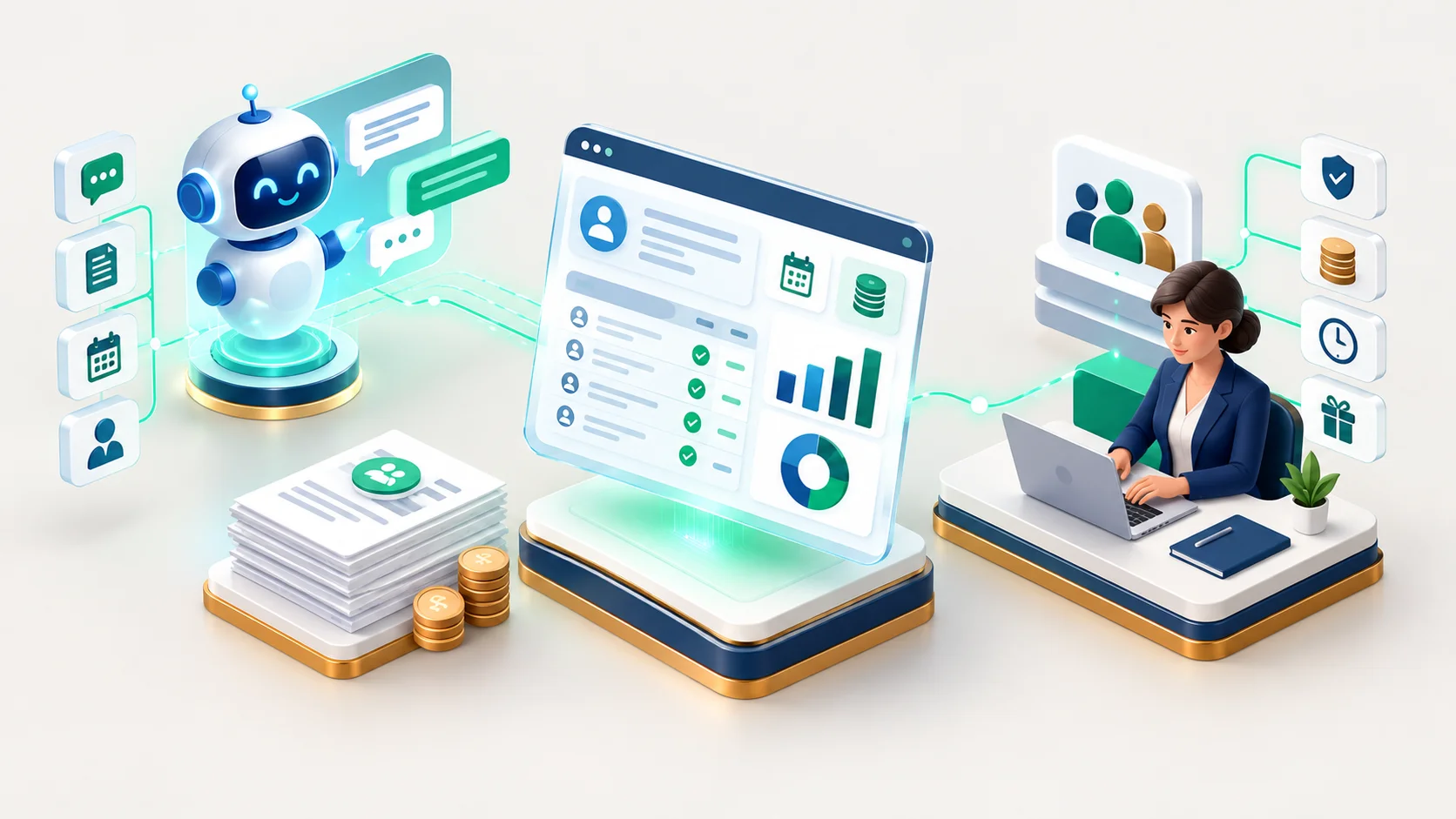
For many businesses, the answer isn't a binary choice between self-service and full-service payroll, but a hybrid approach: keeping the self-service portal employees value for accessing their own payslips and updating personal details, while ensuring the underlying calculations, statutory configurations, and exception handling are actively managed by people with payroll expertise. This preserves the convenience employees have come to expect while closing the gap that pure self-service, left unsupervised, tends to open over time.
Building an Escalation Path That Actually Works
Even businesses that lean heavily on self-service tools benefit from having a clear, well-communicated escalation path for when something goes wrong: a specific person or team an employee or manager can reach quickly, rather than a generic support queue with an uncertain response time. Defining this path in advance, and testing it occasionally with a real scenario rather than assuming it will work when needed, prevents a minor payroll question from turning into a prolonged frustration for an employee who simply wants a straightforward answer about their own pay. Full-service payroll arrangements typically build this escalation path in as a core part of the service rather than as an afterthought bolted on after a complaint.
Evaluating Your Current Setup
Businesses currently relying entirely on a self-service payroll app benefit from an honest internal audit: how long has it been since the statutory configuration was reviewed against current rules, how many exceptions has the payroll process encountered in the last year, and who, specifically, is responsible for catching a compliance drift if one occurs. If the honest answers to these questions reveal gaps, that is a useful and actionable signal well before those gaps turn into a costly correction or a regulatory notice.
What to Include in a Setup Review
An honest setup review should cover more than just tax tables. It should confirm that leave policies match what is actually configured, that overtime rules reflect current practice rather than an outdated policy document, that employee records are current after any recent transfers or role changes, and that the full and final settlement process has been tested against a recent real departure rather than assumed to work correctly. Businesses that carry out this kind of structured review annually, rather than only after a problem surfaces, tend to catch small configuration issues while they are still cheap and simple to fix.
Bringing It Together
A self-service payroll app remains a genuinely useful tool for the parts of payroll that are routine, stable, and well understood, and the convenience it offers employees is not something businesses should discard lightly. What it cannot reliably provide on its own is the ongoing compliance vigilance and exception handling that a growing, changing workforce inevitably requires. Businesses that pair the convenience of self-service tools with the accountability of full-service payroll support tend to get the best of both without exposing themselves to the quiet risks that come from leaving a payroll system to run entirely unsupervised.
Self-service technology will keep improving, and future versions of these apps will likely close some of today's gaps around exception handling and compliance monitoring. That progress is worth welcoming, but it does not change the underlying calculus for a business deciding today: match the level of oversight to the actual complexity of the workforce, not to how convenient the software's marketing makes it sound, and revisit that match periodically as the business grows rather than assuming the setup that worked at ten employees still fits at a hundred.
If you're weighing whether your current payroll setup has outgrown a purely self-service model, Livida's payroll team can review your situation and help you figure out where the right line actually sits for your business.
Conclusion
A self-service payroll app is a good tool for routine work. It is not a compliance function. Match the level of oversight to the real complexity of your workforce, and review that match as you grow.
References
- Employees' Provident Fund Organisation (EPFO), Government of India
- Employees' State Insurance Corporation (ESIC), Government of India
- IRS Publication 15, Employer's Tax Guide
Talk to Livida
Not sure where your payroll setup sits on this line? Our team can review it with you. Learn about our PF return filing, ESI return filing and professional tax registration services, or read our guide to earned wage access versus traditional payroll.
Reach us through the contact page, email info@livida.in or call +91 94860 33194.