An AI payroll platform promises something every finance leader wants: faster processing, fewer manual errors, and a system that seems to get smarter with every pay cycle it runs. Vendors in this space describe tools that can flag anomalies before a human even notices them, auto-populate calculations from attendance data, and reduce the hours a payroll team spends on repetitive tasks. Much of that promise is genuine.
But payroll is also one of the few business functions where a wrong output has immediate, visible consequences. Real people's paychecks are at stake. So is a company's standing with tax and labor authorities. That is why the conversation about AI in payroll processing needs a clear-eyed look at what these systems do well and what they still cannot be trusted to do alone.

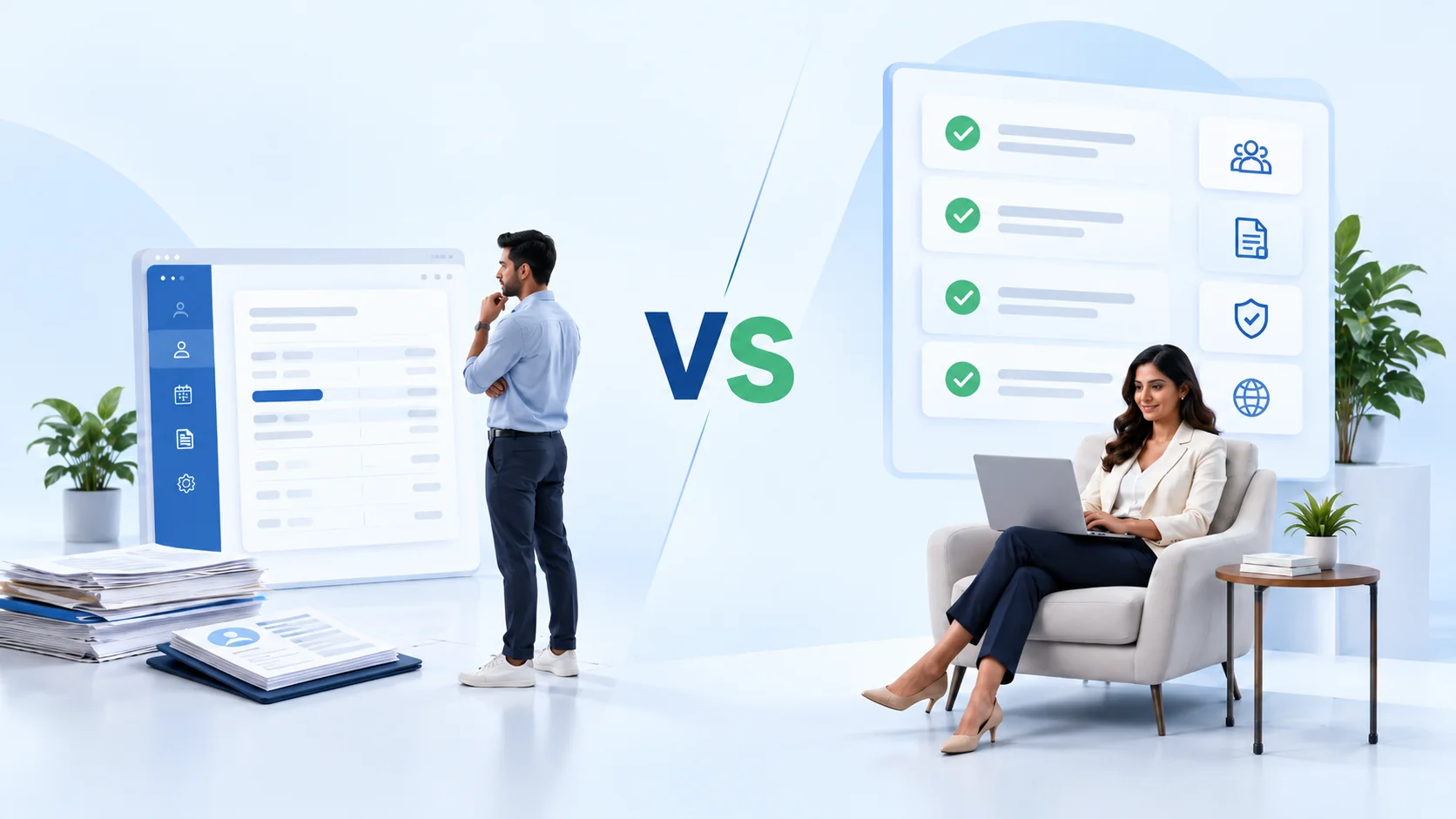
| Dimension | AI payroll platform | Managed payroll services |
|---|---|---|
| Repetitive calculations | Fast and consistent at scale | Faster with software, reviewed by a person |
| Statutory rule changes | Applied only after configuration is updated | Actively monitored and applied by the team |
| Exception handling | Flags anomalies, does not resolve them | A person investigates and resolves the issue |
| Accountability if an error reaches a payslip | Limited by vendor terms of service | The firm's reputation and relationship are on the line |
This piece looks closely at what an AI payroll platform actually does under the hood. It shows where payroll automation earns its keep. It also explains why managed payroll services, built around accountable people rather than software alone, remain the more dependable choice wherever a wrong answer has real statutory and financial consequences.
This article is general information, not professional advice, and payroll rules change, so check current requirements before you act.
Key Takeaways
- An AI payroll platform is strong at repetitive calculations. It is weaker at statutory judgment.
- Managed payroll services add an accountable team that reviews outputs and owns filings.
- Payroll accuracy depends on configuration, and most platform errors start at rollout.
- Combining automation with a named human reviewer gives speed without the blind spots.
- Ask who reviews the output before payslips go out. If the answer is "no one", fix that first.

How an AI Payroll Platform Actually Works
Most AI payroll platforms are built around machine learning models trained to recognize patterns across large volumes of payroll data: normal ranges for overtime, expected variance between pay periods, typical deduction combinations, and common data-entry mistakes. When a new payroll run deviates from those learned patterns, the system flags it for review rather than processing it silently. Some platforms extend this further into predictive territory, forecasting cash flow needs for upcoming payroll or suggesting adjustments based on historical seasonal patterns in a workforce.
Underneath the marketing language, though, these systems are still fundamentally rules-based calculators with a pattern-recognition layer on top. They compute gross pay, apply configured tax tables and statutory deduction rules, and generate payslips and reports. The "AI" component mostly improves how errors and anomalies are surfaced, not the fundamental correctness of the underlying calculation logic, which still depends entirely on how well the system was configured for a specific jurisdiction's rules.
Where Payroll Automation Genuinely Saves Time
Payroll automation delivers its clearest value in the repetitive, high-volume parts of a payroll cycle: importing timesheet data, calculating standard deductions across hundreds of employees at once, generating payslips in bulk, and producing standard reports for management review. For a business running the same payroll structure month after month with few exceptions, automation can cut processing time dramatically and reduce the kind of manual transcription errors that crop up when someone is retyping numbers from one system into another under time pressure.
Training Data Determines Platform Quality
The quality of any AI payroll platform is bounded by the quality and breadth of the data it was trained and configured on. A platform built primarily around one country's tax and labor rules will often need substantial reconfiguration, not just a settings toggle, to handle another jurisdiction's statutory framework correctly. Vendors rarely advertise this limitation prominently, since it undercuts the pitch of a single unified platform handling payroll everywhere a business operates. In practice, businesses running payroll across more than one jurisdiction frequently discover that the platform's confidence in a calculation does not track cleanly with how well that jurisdiction's specific rules were actually modeled into the system.
Why Businesses Are Drawn to AI-Driven Payroll Tools
The appeal isn't just speed. Businesses scaling headcount quickly often find that manual payroll processes, even well-run ones, don't scale linearly with employee count. An AI payroll platform that can absorb a growing number of pay runs without a proportional increase in staff time looks attractive on a cost basis, particularly for finance teams under pressure to keep overhead lean while the business grows. Some platforms also offer employee-facing dashboards that reduce the volume of routine payroll questions reaching HR, since employees can self-serve answers about deductions, leave balances, or past payslips.
The Limits of Pattern Recognition
The trouble is that pattern recognition is only as good as the patterns it has seen before. A genuinely new scenario, a first-time maternity leave calculation under a locally specific statutory formula, a retroactive salary correction spanning two tax years, or a one-off settlement involving unusual components, is exactly the kind of case where an AI system's confidence in its own output can be misleading. The system may still produce a number, formatted cleanly and looking entirely plausible, without any signal to the user that the underlying logic wasn't really built to handle that specific combination of circumstances.
Employee Trust in Automated Systems
There is also a softer, less quantifiable factor worth considering: how employees feel about a fully automated payroll process handling something as personal as their pay. Many employees are comfortable with a self-service dashboard for checking a payslip or leave balance. Far fewer are comfortable with the idea that no person reviews their pay before it is finalized, particularly around sensitive moments like a salary revision, a disciplinary deduction, or a final settlement.
Preserving a visible, reachable human point of contact within the payroll process, even one supported heavily by automation behind the scenes, tends to build more employee trust than a fully automated pipeline with no accessible person to ask when something looks off.
Where Managed Payroll Services Still Matter
This is the gap managed payroll services are built to close. A managed payroll service pairs whatever software tools make sense, sometimes including AI-assisted platforms, with an accountable team of people who understand both the technology and the statutory context it operates in. When an anomaly is flagged, a person investigates why, rather than the case simply being logged and left for someone to notice later. When a jurisdiction updates a tax table or a statutory contribution rate, a person confirms the system has been reconfigured correctly before the next payroll run, rather than trusting that an update happened automatically and correctly.
Livida's approach to payroll processing and salary disbursement reflects this pairing directly: statutory compliance, payslip generation, full and final settlement, payroll tax filing, and leave and attendance reconciliation are all treated as tasks with a named, accountable person behind them, not just outputs from a system running unsupervised. That distinction matters most in exactly the moments when it is hardest to notice a problem: a quiet payroll run that looks normal but is quietly wrong.
Accountability Is the Differentiator
Software cannot be held accountable in the way a person or a firm can. If an AI payroll platform miscalculates a statutory withholding and the error surfaces months later in an audit, the business bears the consequences regardless of what the vendor's terms of service say about liability limitations. A managed payroll service operates under a different model: the firm's reputation and client relationship depend on getting these things right, which creates a different, more durable kind of incentive to catch problems before they become compliance failures.
Payroll Compliance Accuracy Requires Judgment, Not Just Data
Payroll compliance accuracy is not purely a data problem. It requires interpreting how a specific statutory rule applies to a specific employee's circumstances, something that often involves judgment calls that a rules engine, however sophisticated, was not necessarily configured to make. Consider an employee who changes employment status mid-cycle, moves between departments with different pay structures, or has a retroactive salary revision that needs to be applied across several already-closed pay periods. Each of these scenarios has statutory implications that vary by jurisdiction, and getting them right consistently requires someone who tracks regulatory guidance as part of their job, not just software configured against last year's rule set.
When Regulatory Guidance Changes Mid-Year
Tax authorities and labor regulators regularly issue clarifications, circulars, and rule changes partway through a fiscal year, sometimes with retroactive effect. An AI payroll platform only reflects those changes once someone has updated its configuration, and there is often a lag between a regulatory change being announced and every affected payroll system being correctly reconfigured. A managed payroll provider whose team actively monitors regulatory updates closes that lag far more reliably than waiting for a software vendor's periodic update cycle, particularly for businesses operating across multiple jurisdictions with different filing calendars.
Integration Overhead Is Often Underestimated
Adopting an AI payroll platform is rarely as simple as switching on a new tool. Historical payroll data has to be migrated, existing attendance and leave systems have to be integrated, and configuration has to be validated against a business's actual pay structures, allowances, and statutory obligations before the platform can be trusted to run live payroll.
This implementation phase is where many of the platform's eventual accuracy problems actually originate, not in the AI model itself but in configuration decisions made under time pressure during rollout. A managed payroll provider brought in during this phase, rather than after problems surface, can validate configuration against real statutory requirements before a single employee is paid incorrectly.
Vendor Lock-In Is a Real Consideration
Once a business has migrated years of payroll history into a particular AI platform and built internal processes around its specific reporting formats, switching providers becomes a genuinely difficult undertaking. This is worth weighing before committing fully to any single platform as the sole system of record for payroll, since a difficult vendor relationship or a platform that stops innovating can become expensive to unwind later. Businesses that maintain a parallel relationship with a managed payroll provider retain more flexibility to renegotiate, supplement, or eventually replace a software vendor without the payroll function itself grinding to a halt in the transition.
A Realistic Way to Combine Both
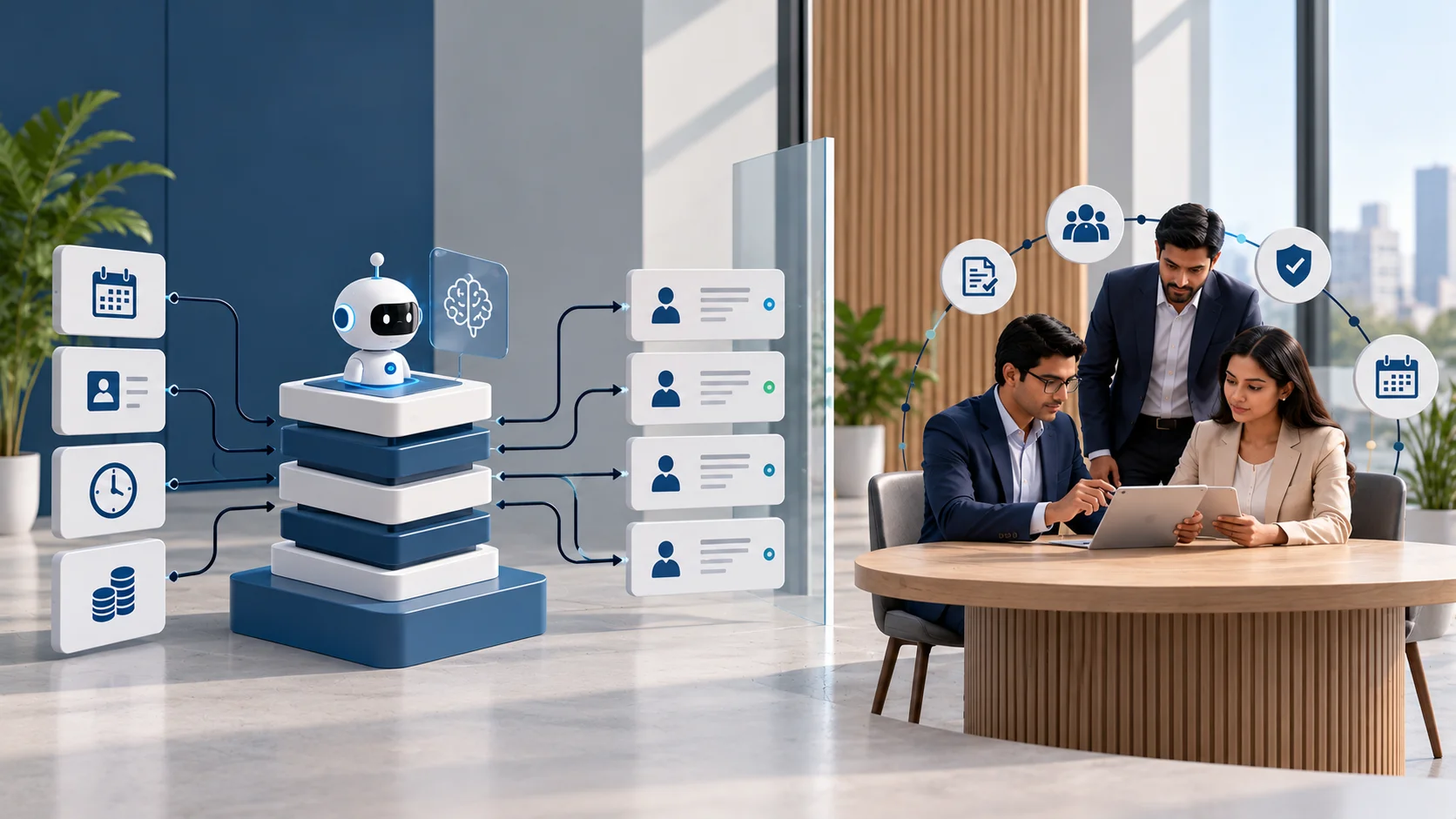
For most growing businesses, the more sensible path isn't choosing between an AI payroll platform and a managed payroll service as if they were mutually exclusive. It's recognizing that automation handles volume and repetition well, while a managed service provides the judgment, accountability, and exception-handling that automation alone cannot guarantee. A business that adopts payroll automation for its repetitive calculations while relying on an experienced payroll partner to review outputs, manage statutory filings, and handle the genuinely exceptional cases gets the speed benefits of the technology without inheriting its blind spots.
Building a Realistic Governance Model
A workable governance model for combining automation with managed payroll typically assigns clear ownership for each part of the process: who configures the platform, who reviews flagged anomalies, who signs off on statutory filings before submission, and who is accountable if an error reaches an employee's payslip.
Without this kind of explicit ownership, both a software vendor and an internal team can each assume the other is catching errors, leaving a gap that only becomes visible when something has already gone wrong. Formalizing this ownership early, ideally in a written service agreement with whichever managed payroll provider a business works with, removes the ambiguity before it turns into a real compliance incident.
What to Ask Before Committing Fully to Software Alone
Before a business decides to run payroll entirely through a self-managed AI platform without a supporting accountable team, it is worth asking pointed questions:
- Who reviews the platform's output before payslips are finalized?
- What happens when the platform flags an anomaly, and who investigates it, and how quickly?
- Who is responsible if a statutory filing deadline is missed because the platform's configuration lagged behind a regulatory change?
- How is attendance and leave data reconciled against the platform's payroll calculation each cycle?
If the honest answer to any of these is "no one, currently," that is a meaningful gap worth addressing before scaling the business further on top of it. This is closely related to the reconciliation gap discussed in our piece on biometric attendance technology and payroll accuracy, and to the statutory configuration risks covered in our comparison of API-based payroll software against EPF and ESI compliance management.
Guidance on professional accountability in financial and payroll reporting is published by bodies such as AICPA & CIMA.
Organizations that have gone through a costly correction after an AI-only payroll error, whether an under-withheld statutory contribution or a mishandled retroactive adjustment, often come away from the experience valuing the presence of an accountable human reviewer far more than they did beforehand. That lesson is avoidable rather than something every business needs to learn the hard way.
Security and Data Privacy Considerations
Payroll data is among the most sensitive information a business holds, covering salaries, bank details, tax identifiers, and in some cases health-related leave information. An AI payroll platform that pools data across many client organizations to train or refine its models raises legitimate questions about how that data is segmented, anonymized, and protected from cross-contamination between clients.
Businesses adopting these platforms should ask directly whether their payroll data is ever used to train models that serve other customers, and what contractual protections exist if a data incident occurs. A managed payroll provider handling data within a defined, auditable process, rather than feeding it into an opaque machine learning pipeline shared across many clients, offers a clearer chain of accountability if something goes wrong.
Auditability Matters as Much as Automation
When a tax authority or external auditor requests a full account of how a particular payslip or statutory filing was calculated, the ability to produce a clear, human-readable explanation matters as much as the speed with which the original calculation was made. Some AI systems, particularly those relying on more opaque modeling approaches, can struggle to produce a transparent audit trail explaining exactly why a given output was generated. A managed payroll service built around documented processes and reviewable calculations tends to hold up better under audit scrutiny than a system whose internal logic is difficult for even its own vendor to fully explain after the fact.
Looking at Total Cost, Not Just Sticker Price
AI payroll platforms are often priced attractively on a per-employee, per-month basis, which makes them look inexpensive compared to a full-service managed payroll arrangement. That comparison misses the cost of the internal time still required to review outputs, chase down anomalies, and correct errors after the fact, time that often falls to already-stretched finance staff who did not sign up to become part-time payroll auditors. When that hidden cost is factored in, the total cost difference between a pure-software approach and a properly managed payroll service narrows considerably, and in some cases reverses in favor of the managed option once error correction and staff time are accounted for honestly.

5 Mistakes to Avoid With an AI Payroll Platform
These are the patterns we see most often when automation is adopted without a clear review process:
- Treating the first output as correct. A clean payslip is not proof of a correct one.
- Skipping configuration checks at rollout. Most accuracy problems start there.
- Leaving statutory updates to the vendor. Someone must confirm each rule change was applied.
- Having no named owner for flagged anomalies. Alerts that nobody investigates are just noise.
- Ignoring data privacy terms. Ask whether your payroll data trains models used by other clients.
Bringing It Together
An AI payroll platform is a genuinely useful tool for the parts of payroll that are repetitive, high-volume, and well understood by the system's training data, a pattern consistent with the broader balance described in AI versus human judgment in accounting. It is not, on its own, a substitute for the judgment, accountability, and up-to-date regulatory awareness that statutory compliance actually demands. Businesses that treat automation as one part of a broader payroll process, rather than the whole process, tend to get the best of both: faster, cleaner data handling paired with a human safety net that catches the exceptions automation was never built to handle alone.
The pace of change in payroll automation is unlikely to slow down. Future versions of these platforms will almost certainly close some of today's gaps around auditability, jurisdiction-specific configuration, and exception handling. That evolution is worth watching.
It does not change the underlying principle for a business making decisions today. Adopt automation where it demonstrably reduces manual error and processing time. Pair it with accountable human oversight everywhere statutory compliance, exception handling, and final responsibility for accuracy still matter. Getting that balance right, rather than chasing whichever approach looks most modern, is what protects a business and its employees from payroll errors that are costly to unwind.
Conclusion
An AI payroll platform earns its place on routine, high-volume work. Managed payroll services earn theirs on judgment, accountability and statutory filings. In our experience, the businesses with the fewest payroll corrections are the ones that decided in advance who reviews each run. We recommend writing that ownership down before you scale headcount.
References
Official sources worth bookmarking when you review your payroll compliance:
- Employees' Provident Fund Organisation (EPFO), the official site for employer registration, UAN management and ECR filing
- Employees' State Insurance Corporation (ESIC), the official site for employer contributions, e-challan payment and circulars
- AICPA & CIMA, guidance on professional accountability in financial reporting
Talk to Livida
If you're weighing whether your current payroll setup, automated or otherwise, has the right level of human oversight, our team is happy to review your process and point out where the gaps, if any, actually are. In the filings we handle, the most common delay is a statutory configuration that was never updated after a rule change.
- Start with our contact page
- Email info@livida.in
- Call +91 94860 33194
- See our PF return filing and ESI return filing services
Related reading: self-service payroll apps vs full-service payroll and payroll chatbots vs HR advisory.