
A payroll chatbot promises to take the constant stream of "when do I get paid" and "why is my deduction different this month" messages off an HR team's plate, answering employees instantly through a chat window instead of a ticket queue. For businesses fielding dozens or hundreds of these routine questions every pay cycle, that promise is genuinely useful. But payroll touches people's income directly, and the moment a question moves past a simple lookup into something that requires judgment, the gap between what a chatbot can do and what a knowledgeable person can do becomes obvious.
This piece looks at where payroll chatbots earn their keep, where they run into trouble, and why human payroll advisory still has a clear role even in a business that has fully adopted conversational automation.

Key Takeaways
- A payroll chatbot is a lookup tool. It answers routine questions well and interpretive ones poorly.
- A wrong answer given confidently is worse than no answer, so escalation to a person must be real and monitored.
- Sensitive pay conversations belong with a human, not in a chat window.
- Check data sources, privacy practices and access controls before rollout, and review them regularly.
- Use the chatbot as a first layer, with an accountable human advisory team behind it.
This article is general information, not professional advice. Payroll rules and tools change, so confirm current requirements with the official source or a qualified adviser.
How a Payroll Chatbot Actually Works
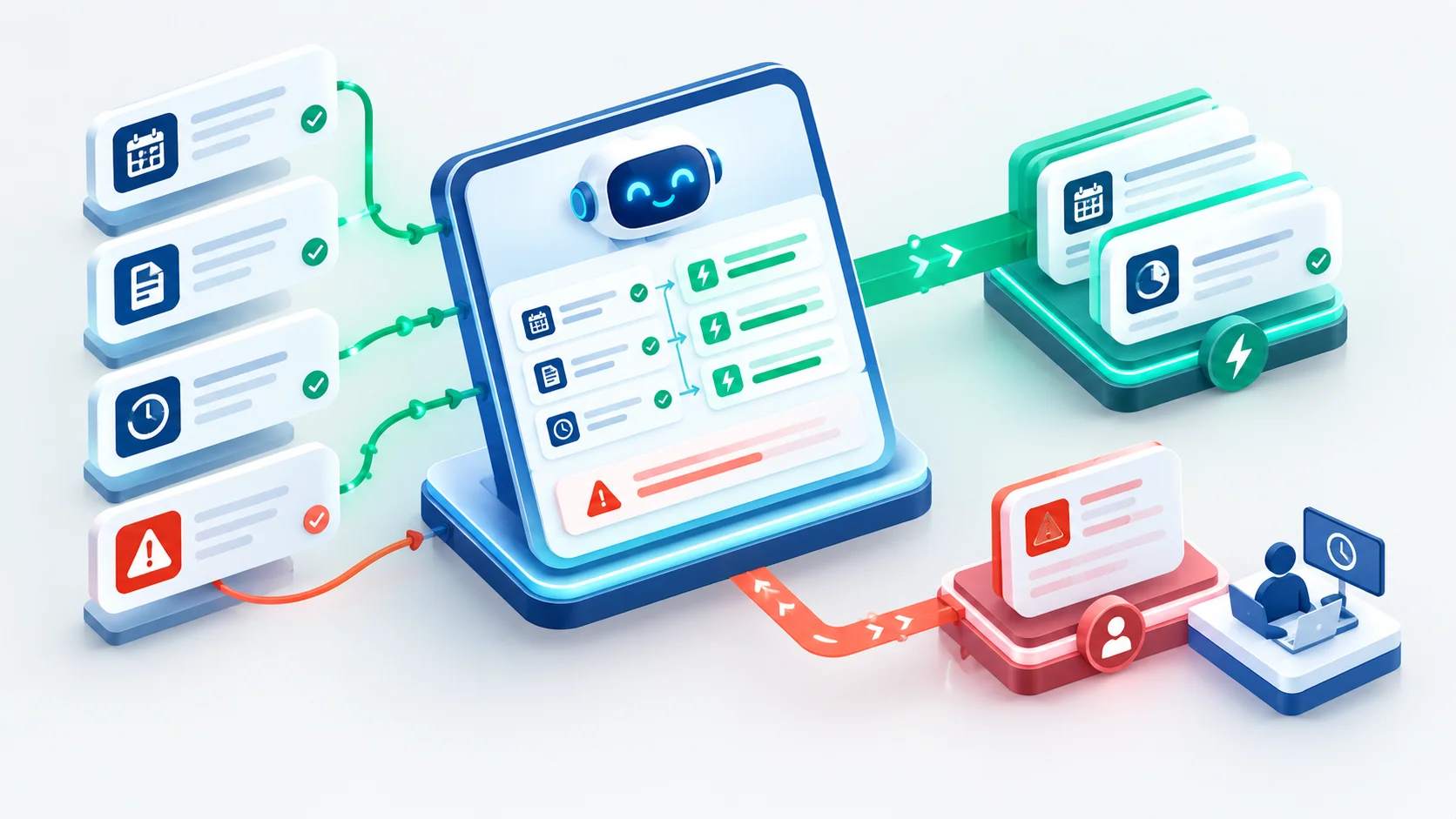
Most payroll chatbots are built on top of a structured data layer, pulling from the same payroll system that generates payslips, tracks leave balances, and records deduction history. When an employee asks a question, the chatbot matches the query to a known intent, retrieves the relevant record, and formats a response. Some newer tools layer a large language model on top of this retrieval step to make the phrasing feel more conversational, but the underlying mechanism is still fundamentally a lookup against a defined data source, not genuine reasoning about the employee's specific circumstances.
This matters because the chatbot's reliability depends entirely on how well its intent-matching covers the actual range of questions employees ask, and how current the underlying payroll data is at the moment of the query. A chatbot answering from a payroll database that hasn't yet reflected a mid-cycle correction will confidently give an employee an answer that is technically pulled from real data but is now wrong, without any signal to the employee that the information might be stale.
Where Employee Self-Service Payroll Tools Perform Well
Employee self-service payroll through a chatbot interface performs best on the questions that show up most often and require no interpretation: what is my current leave balance, when is the next pay date, can I download last month's payslip, what is my current tax regime setting. These are exactly the questions that used to generate the bulk of routine HR ticket volume, and automating them frees up a payroll team's time for genuinely complex work rather than repetitive lookups that don't need a person's judgment at all.
The Limits of Intent Matching
Where payroll chatbots consistently struggle is with questions that sound similar to a routine query but actually require understanding a specific, non-standard situation. "Why is my pay different this month" can be a simple answer if the cause is a known, universal change like a statutory rate update, but it can also require tracing through a specific employee's leave-without-pay days, a retroactive bonus adjustment, or an error from a prior cycle still being corrected. A chatbot built around intent matching often cannot distinguish between these cases well enough to give a reliably correct answer, and worse, it may give a plausible-sounding wrong answer rather than recognizing that the question needs escalation.
Why Businesses Are Adopting Payroll Query Automation
The volume argument is compelling. A finance or HR team supporting a workforce of any meaningful size can spend a disproportionate amount of time each pay cycle answering the same small set of questions repeatedly. Payroll query automation through a chatbot reduces that volume meaningfully, and for many businesses the return on investment shows up quickly in reduced ticket counts and faster response times for the routine cases that make up the bulk of incoming questions.
Cost Pressure Is a Real Driver
Beyond convenience, there is a straightforward cost argument. Every routine query answered by a chatbot instead of a person is time an HR or payroll team member can spend on higher-value work: reviewing statutory filings, handling genuine exceptions, or supporting a business through a period of organizational change. For finance leaders under pressure to keep administrative overhead lean while headcount grows, a payroll chatbot that visibly reduces routine ticket volume is an easy investment to justify internally, even before accounting for the harder-to-measure benefit of faster employee satisfaction on simple questions.
Around-the-Clock Availability Matters to Employees
A chatbot is also available outside normal HR office hours, which matters more than it might seem for a distributed or shift-based workforce. An employee checking a payslip late in the evening or over a weekend doesn't have to wait until the next business day for an answer to a simple question, which reduces a specific category of frustration that used to be common in purely human-staffed payroll support.
Where a Payroll Chatbot Falls Short
The trouble starts once a query requires anything beyond retrieving an existing data point. Explaining a statutory deduction change that affects only a subset of employees, walking someone through a full and final settlement calculation after resignation, or clarifying how a specific leave policy interacts with a particular employee's tenure are all questions that require interpreting a policy or regulation against an individual's specific circumstances. A chatbot without genuine reasoning capability, which describes essentially all of them today regardless of marketing language, cannot reliably do this kind of interpretation, and a wrong answer delivered confidently is often worse than no answer at all.
Sensitive Conversations Don't Belong in a Chat Window
Some payroll conversations are inherently sensitive: a disciplinary deduction, a dispute about incorrectly withheld pay, a question tied to a personal circumstance like medical leave or a family emergency affecting attendance. Employees are generally far more comfortable raising these with a person who can respond with appropriate context and empathy than typing them into an automated chat interface, even one designed to sound conversational. Businesses that route every payroll interaction, sensitive or not, through the same chatbot risk creating a genuinely poor employee experience precisely at the moments that matter most to how employees feel about their employer.
Escalation Paths Are Often an Afterthought
Many payroll chatbot deployments are designed around the routine-query use case and treat escalation to a human as a secondary feature rather than a core part of the design. In practice, this often means an employee whose question the chatbot cannot resolve is left with a generic "please contact HR" message and no clear next step, effectively pushing the unresolved query back into the same unstructured queue the chatbot was meant to reduce. A well-designed system needs a defined, monitored escalation path with a realistic response time commitment, not just a fallback message.
Why Human Payroll Advisory Still Matters
This is the space where human payroll advisory continues to add real value, and it is not a small space. Many businesses find that what they actually need alongside a chatbot is not a bigger automated feature set but genuine HR advisory services staffed by people who can interpret policy, handle exceptions, and take ownership of a problem until it is resolved.
Interpreting how a specific statutory rule applies to an individual employee's circumstances, handling a genuine exception like a retroactive correction spanning multiple pay periods, and having a sensitive conversation about pay with appropriate context all require the kind of judgment that current conversational automation, whatever its underlying technology, cannot reliably replicate. A person who understands both the payroll system and the regulatory context behind it can catch a problem a chatbot would simply answer past.
Accountability Is Different From Automation
A chatbot cannot be held accountable in any meaningful sense if it gives an employee incorrect information about their pay or entitlements. A person, or a firm employing that person, can be. Livida's payroll processing and statutory compliance work reflects this directly: payslip generation, full and final settlement, payroll tax filing, and leave and attendance reconciliation are each handled by an accountable team member, not resolved through an automated conversational loop with no clear owner if something goes wrong.
Conversational Payroll Support Works Best as a First Layer
The most sensible framing treats conversational payroll support as a first layer that filters and resolves the routine volume, with a clear, well-staffed path to human advisory for anything the automated layer cannot confidently handle. This is not a criticism of the technology itself, which genuinely does reduce routine workload when implemented well. It is a recognition that payroll questions exist on a spectrum from purely mechanical lookups to genuinely interpretive judgment calls, and only part of that spectrum is currently well served by automation.
Payroll Chatbot vs. Human Payroll Advisory: Quick Comparison
| Payroll Chatbot | Human Payroll Advisory | |
|---|---|---|
| Good at | Routine lookups: leave balance, pay date, past payslips | Policy interpretation, exceptions, sensitive conversations |
| Availability | Around the clock | Business hours, with a defined escalation commitment |
| Accountability | None if the answer is wrong | A named, accountable person or team |
| Best used as | A first-line filter for routine volume | The escalation layer for anything beyond a lookup |
Before deploying or expanding a payroll chatbot, it helps to confirm a few things directly:
- What data source the chatbot is actually connected to: live payroll data or a static export.
- How the chatbot escalates a query it cannot resolve, and whether that escalation has a defined response time.
- How conversation logs are stored and whether any data is used to train shared models.
- Who reviews access permissions when an employee's role changes.
Professional guidance from bodies such as the AICPA & CIMA is a useful reference point for the kind of accountability and review standard human payroll advisory is expected to meet. That holds regardless of how much of the routine volume a chatbot handles first.
In our experience, the questions that reach us after a chatbot has answered are rarely about leave balances. They are about a deduction that changed, a correction from an earlier cycle, or a final settlement. We recommend that every chatbot rollout starts by listing those questions and naming who answers them.
Building a Layered Query Process
A workable process starts by mapping which categories of payroll questions a business actually receives and how many fall into the routine, lookup-only category versus the interpretive category that needs a person. Most businesses find that a relatively small number of question types account for the bulk of routine volume, which is exactly what a payroll chatbot should be configured to resolve directly. Everything else should have a clearly defined, monitored escalation path to a specific person or team, with a realistic commitment on response time that is actually honored in practice, not just stated in a policy document.
Measuring What the Chatbot Is Actually Resolving
It is worth periodically auditing what percentage of chatbot conversations are genuinely resolved versus quietly abandoned by a frustrated employee who gave up and found another way to get an answer. A chatbot that reports a high resolution rate based only on conversations that reached a defined endpoint can mask a meaningful number of employees who simply stopped engaging without getting a useful answer. This distinction matters for accurately understanding whether the automation is actually reducing burden on the human team or just displacing frustration into a channel that is harder to measure.
Training the Chatbot on Real Query Patterns
The chatbot's usefulness improves considerably when it is trained and tuned against a business's actual historical query patterns rather than a generic template provided by the vendor. Reviewing a sample of past HR tickets to identify the specific phrasing and variations employees actually use, rather than assuming a generic intent list covers the real range of questions, meaningfully improves how often the chatbot resolves a query correctly on the first attempt rather than requiring a frustrated follow-up or an escalation that could have been avoided.
Data Privacy in Conversational Payroll Tools
Payroll chatbots handle sensitive personal and financial information by design, so businesses evaluating one should ask directly how conversation logs are stored, whether they are retained indefinitely or purged on a defined schedule, and whether any data from conversations is used to train models shared across other customers of the vendor. These are reasonable questions any vendor serious about handling payroll data responsibly should be able to answer clearly, and a vague or evasive answer is itself useful information when deciding whether to proceed.
Access Controls Need Regular Review
A payroll chatbot's access controls, which determine what data an employee can retrieve through the conversational interface, should be reviewed periodically rather than configured once at deployment and left unchecked. Role changes, departures, and organizational restructuring can all create situations where access permissions drift out of alignment with what an employee should actually be able to see, and a chatbot interface makes it easier for an employee to stumble into data they shouldn't have access to if permissions aren't kept current.
Measuring the Real Return on Payroll Query Automation
The headline cost of a payroll chatbot is usually a straightforward license fee, but the real return on payroll query automation depends on a few harder-to-measure factors: how much genuine staff time is freed up, how much employee satisfaction improves on routine questions, and how well the tool integrates with the existing payroll system without requiring constant manual upkeep. A business that only looks at ticket-volume reduction can overstate the benefit if a meaningful share of that reduced volume simply moved into an unmeasured channel, an employee messaging a colleague directly instead of using the chatbot, rather than being genuinely resolved.
Implementation Effort Is Usually Underestimated
Rolling out a payroll chatbot well takes more effort than switching on a vendor's default configuration. It requires mapping actual query patterns, training the tool against a business's specific policies and terminology, and testing it thoroughly before employees start relying on it for real answers about their pay. Businesses that skip this groundwork often end up with a chatbot that technically works but gives unhelpful or incomplete answers often enough that employees quickly lose trust in it and revert to emailing HR directly, which defeats the purpose of the investment in the first place.
Change Management Affects Adoption More Than Features
Even a well-built payroll chatbot only delivers value if employees actually use it instead of defaulting to old habits like emailing a known HR contact directly. Getting genuine adoption usually requires more than announcing the tool exists: a short explanation of what it can reliably answer, visible endorsement from managers, and an early period where the tool's accuracy is monitored closely so early mistakes get fixed before they damage employee trust in the system. Businesses that treat rollout as a one-time announcement rather than an ongoing adoption effort typically see usage taper off after an initial novelty period.

Comparing Vendors on the Right Criteria
When evaluating payroll chatbot vendors, it is easy to focus on how natural the conversation feels and overlook the criteria that matter more for a payroll-specific use case: how tightly the tool integrates with the actual payroll data source, how transparent its escalation logic is, and what its data handling and retention practices look like. A chatbot that sounds impressively conversational but pulls from a stale data export updated only weekly is less useful for payroll than a less polished tool connected directly to live payroll records, since payroll answers need to be current, not just well phrased.
Total Cost Includes Ongoing Maintenance
Beyond the initial license and implementation cost, a payroll chatbot needs ongoing maintenance as policies change, new employee scenarios emerge, and the underlying payroll system itself evolves. Budgeting only for the upfront rollout and treating the tool as a set-and-forget system tends to lead to gradually declining accuracy over time, as the chatbot's configuration drifts further from the business's actual current policies and payroll setup. Building a modest ongoing review cycle into the budget, even a quarterly check against real conversation logs, keeps the tool's usefulness from eroding quietly.
Bringing It Together
A payroll chatbot is a genuinely effective tool for the routine, high-volume questions that make up much of the traffic any payroll or HR team fields each cycle. It struggles, predictably, with anything that requires interpreting a policy against an individual's specific circumstances, handling a genuine exception, or navigating a sensitive conversation with appropriate care. Businesses that deploy conversational automation as a first-line filter, backed by a clearly staffed and accountable human advisory layer for everything beyond routine lookups, tend to get the efficiency benefits of automation without leaving employees stranded on the questions that matter most to them.
Conversational technology will keep improving, and the range of questions a payroll chatbot can resolve confidently and correctly will likely expand over time. That does not remove the underlying principle for a business deciding how to structure its payroll support today: automate the routine and predictable, and make sure a knowledgeable, accountable person is genuinely reachable for everything else. Getting that balance right protects both the efficiency gains businesses are chasing and the trust employees need to have in how their pay is handled.
If you would like a second opinion on whether your current payroll support setup gives employees a real path to a knowledgeable person when they need one, Livida's payroll team is happy to review your process.
For related comparisons, see Mobile Payslip Apps vs. Fully Compliant Payroll Reporting and Multi-Country Payroll Platforms vs. Local Payroll Expertise. Employers with India-based statutory obligations can also review Livida's PF Return Filing service.
Conclusion
Use a payroll chatbot for what it does well, and keep a knowledgeable person within reach for everything else. That balance protects both the efficiency gains and employee trust.
References
- Employees' Provident Fund Organisation (EPFO), Government of India
- Employees' State Insurance Corporation (ESIC), Government of India
Talk to Livida
If you want a second opinion on your payroll support setup, our team can help. See our ESI return filing and professional tax registration services, or read about API-based payroll versus EPF and ESI compliance.
Reach us through the contact page, email info@livida.in or call +91 94860 33194.