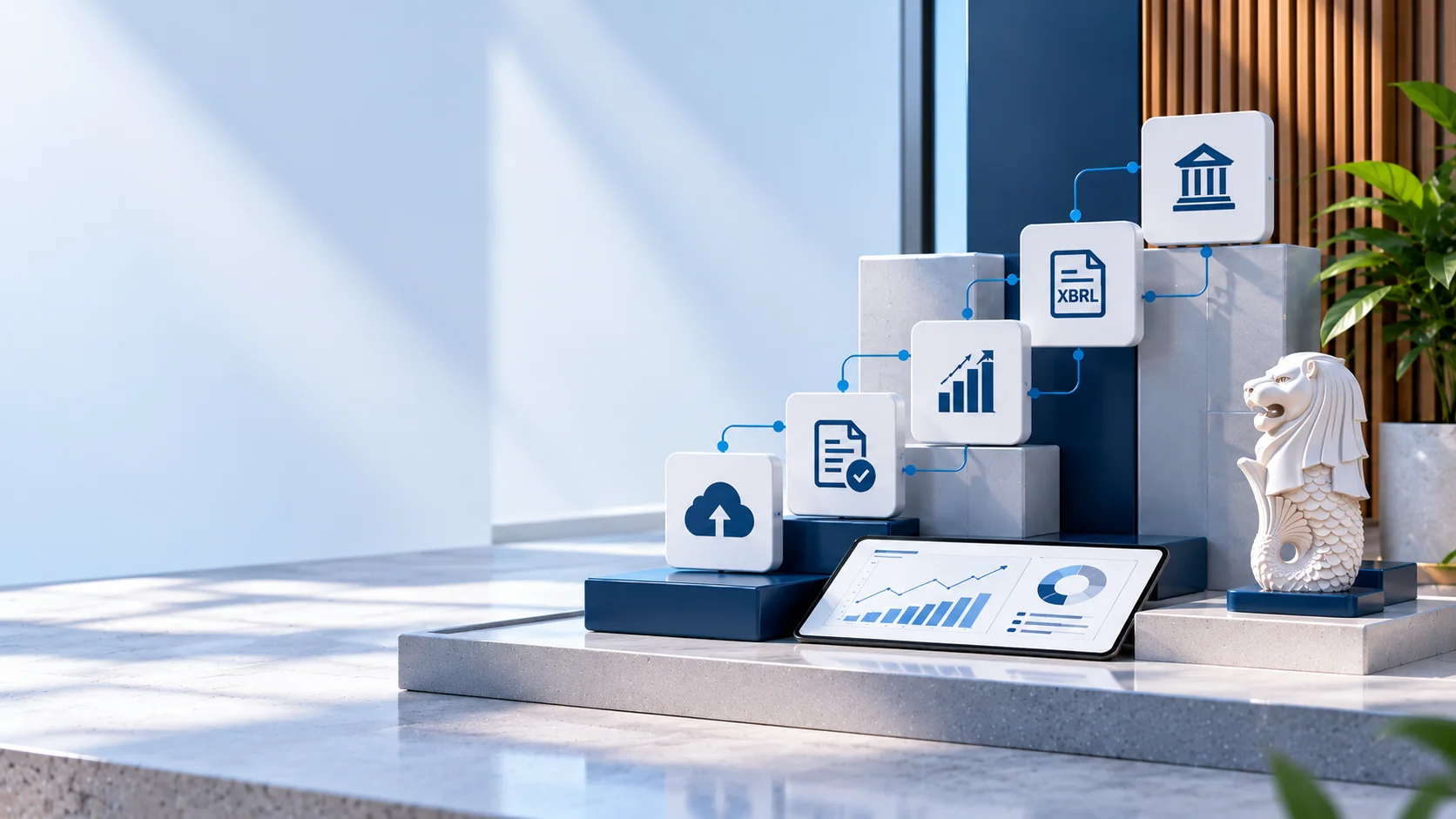
The future of bookkeeping is already visible in how businesses close their books today: fewer spreadsheets, faster bank reconciliations, and dashboards that show a cash position in real time rather than weeks after the fact. For business owners trying to plan ahead, whether that means hiring a bookkeeper, choosing new software, or simply understanding where the profession is headed, it helps to separate genuine shifts from short-lived trends. This piece looks at what is actually changing in day-to-day bookkeeping, what is likely to stay stubbornly human, and how businesses working across borders can prepare for both.
Talking about the future of bookkeeping does not mean predicting a world without bookkeepers. It means recognizing that the balance of the job is shifting: less time spent typing numbers into a ledger, more time spent making sure those numbers are accurate, current, and actually useful to the person running the business. That shift is already underway in businesses of every size, and understanding it now makes it easier to choose the right tools and the right bookkeeping partner going forward.

| Shift | What changes | What stays human |
|---|---|---|
| Bank feeds | Transactions arrive automatically | Reviewing exceptions and reconciling |
| Dashboards | Cash position visible on any day | Interpreting what the figures mean |
| Advisory work | More budgeting and cash flow conversations | Judgment about the specific business |
| Cloud collaboration | One live ledger across time zones | Local knowledge of each market's rules |
Key Takeaways
- The future of bookkeeping is less typing and more checking: feeds import the data and people review it.
- Reconciliation matters more, not less, once transactions arrive automatically.
- Real-time financial reporting only works when the bookkeeping behind it is kept current.
- Advisory conversations about budgeting and cash flow are becoming a normal part of the relationship.
- Statutory and compliance obligations do not simplify just because the software improves.

The Future of Bookkeeping Starts With Automated Bank Feeds
For most of bookkeeping's history, the core task was manual: someone opened a bank statement, matched each line to an invoice or receipt, and typed the result into a ledger. That process was slow, error-prone, and heavily dependent on how quickly paperwork reached the person doing the entry. Bookkeeping automation has changed the starting point of that workflow. Bank feeds now pull transactions directly into accounting software within a day or two of the transaction clearing, which removes the biggest bottleneck: waiting for someone to type in what already happened.
This does not eliminate the bookkeeper's role, it relocates it. Instead of spending hours keying in transactions, a bookkeeper reviews what the feed has already imported, catches miscategorized items, matches ambiguous transactions to the right invoice or vendor, and flags anything unusual. The work becomes less about data entry and more about quality control and judgment, which is a meaningful shift in what the job actually demands day to day.
Reconciliation Is Faster, Not Optional
A common misconception is that automated feeds remove the need for reconciliation altogether. In practice, reconciliation matters more, not less, once transactions arrive automatically. Software can match a bank line to a recorded invoice, but it cannot always tell that a recurring charge changed vendors, that a refund was applied to the wrong customer, or that a transaction was accidentally imported twice from two connected accounts. Skilled reconciliation now means reviewing exceptions quickly rather than processing every line manually, which is a faster process but still requires trained attention. The mechanics of the data feeds themselves are covered in open banking APIs vs. bank reconciliation.
AI-Assisted Categorization and Its Practical Limits
Many cloud accounting platforms now suggest a category for each incoming transaction based on patterns learned from past entries, and these suggestions are often correct for routine, repeated expenses like a monthly software subscription or a recurring utility bill. Where these tools struggle is with anything new or ambiguous: a first-time vendor, a split transaction that covers two different expense types, or a refund that needs to be matched to a specific earlier invoice rather than logged as new income.
This is exactly why experienced bookkeeping teams treat automated suggestions as a first pass rather than a final answer. Someone still needs to review the suggested categories, correct the ones that do not fit, and apply the judgment that comes from understanding how a specific business actually operates. The practical effect is that categorization work has become faster and less tedious, but the review step has not disappeared, it has simply moved from typing every entry to checking a shorter list of exceptions.
Real-Time Financial Reporting Replaces the Periodic Report
For decades, most businesses saw their financial position in retrospect: a profit and loss statement delivered monthly, or in smaller businesses, sometimes only at year-end. Real-time financial reporting is changing that expectation. When bank feeds and categorization happen continuously rather than in a monthly batch, a live dashboard can show current cash position, outstanding receivables, and spending against budget on any given day rather than after a reporting cycle closes.
This shift changes how business owners actually use their numbers. A monthly report is useful for understanding what already happened. A live dashboard is useful for deciding what to do next, whether that means delaying a purchase, following up on an overdue invoice, or adjusting hiring plans based on current cash flow. The value is not just faster information, it is information that arrives early enough to influence a decision rather than simply confirm one already made.
What Real-Time Reporting Actually Requires
Live dashboards only reflect reality if the bookkeeping behind them is kept current. A dashboard built on a ledger that is three weeks behind on categorization will show a distorted picture, regardless of how modern the software looks. Real-time financial reporting is therefore less a software feature and more a discipline, as we compare in real-time dashboards vs. cash management reporting: transactions need to be reviewed and categorized promptly, exceptions need to be resolved quickly, and someone needs to own that ongoing process. Businesses that adopt dashboard tools without this underlying discipline often end up with a dashboard that looks live but is quietly out of date.
Cash Management Reporting Becomes an Everyday Tool
Cash management reporting used to be something a business pulled together for a bank, an investor, or a board meeting. As bookkeeping data becomes current on an ongoing basis, cash management reporting is increasingly something a business owner checks regularly: a quick look at what is coming in, what is going out, and whether the timing lines up comfortably. This does not replace formal financial statements, but it gives an owner an early warning well before a cash shortfall becomes urgent.
The Future of Bookkeeping Is Advisory as Well as Automated
As automation absorbs more of the repetitive entry work, the future of bookkeeping looks more like advisory work, because the bookkeeping relationship itself is shifting toward advisory accounting services rather than pure record-keeping. This does not mean bookkeepers are becoming financial advisors in a formal licensing sense. It means the conversations between a business and its bookkeeping team increasingly cover cash flow planning, budgeting support, and interpreting what the numbers mean, alongside the traditional work of keeping accurate books.
Budgeting and Cash Flow Planning Become Core, Not Extra
Budgeting and cash flow planning used to be treated as a separate exercise, often done once a year and rarely revisited. With current, accurate books available on an ongoing basis, budgeting can become a living process instead: a business can compare actual spending to plan every month, adjust cash flow projections as receivables and payables shift, and catch a developing shortfall while there is still time to respond. This works only when the bookkeeping underneath is reliable enough to trust, which is precisely what better data feeds and disciplined reconciliation make possible.
Interpreting Numbers in Context
A report showing that expenses rose in a given month is a fact. Whether that increase is a warning sign or simply the result of a planned seasonal purchase is a judgment call, and judgment calls require someone who understands the specific business, not just its numbers. This is where advisory-oriented bookkeeping earns its value: connecting a figure on a report to the actual operational reason behind it, and helping an owner decide whether it needs attention or not.
Financial Analysis as a Standing Service, Not a One-Off
Financial analysis has traditionally been requested for a specific occasion: preparing for a loan application, getting ready for an audit, or responding to an investor question. As current, accurate books become easier to maintain, financial analysis can shift toward something a business revisits regularly rather than only when circumstances demand it. Reviewing margins, comparing performance across periods, and checking whether spending is tracking against a budget become routine questions a bookkeeping partner can help answer, rather than a special project that requires starting from scratch each time.
Cloud Collaboration in the Future of Bookkeeping
Cloud bookkeeping trends have made it far more practical for a business and its bookkeeping team to work together even when they are not in the same country, let alone the same office. A cloud-based ledger can be reviewed by a business owner in one time zone and updated by a bookkeeping team in another, with both sides looking at the same live data rather than exchanging outdated spreadsheets by email. For businesses that operate internationally or simply want a bookkeeping partner outside their home market, this has removed a barrier that used to make remote arrangements impractical.
This kind of cross-border collaboration also changes the rhythm of the working relationship, and it is a large part of the future of bookkeeping for international businesses. Instead of a single scheduled call each month, questions can be raised and answered asynchronously: a business owner flags an unusual transaction in the morning, and the bookkeeping team reviews and resolves it during their own working hours, with the update visible the next time the owner checks in. Document requests, approvals, and clarifications move the same way, which suits arrangements where working hours barely overlap.
Why This Matters for Multi-Country Operations
A business with operations or clients in more than one country often needs its bookkeeping handled with an understanding of more than one set of conventions and requirements, even when the underlying accounting principles are similar. Cloud platforms make it realistic for a single bookkeeping team to support entities across multiple countries from one location, provided that team understands the practical differences in how records, payroll, and reporting are typically handled in each market. This is part of why remote, cross-border bookkeeping arrangements have become common rather than unusual over the past several years.
Payroll and Statutory Compliance Across Different Markets
Cloud bookkeeping trends have also reached payroll, an area where cross-border businesses face real practical complexity. Payroll processing, salary disbursement, payslip generation, leave and attendance reconciliation, and full and final settlements each follow local conventions that differ from one country to the next, even when the software handling them is the same cloud platform. A bookkeeping team supporting clients across several regions needs to track these differences carefully so that payroll tax filing and statutory compliance stay accurate in each market. Cloud tools make the information flow easier, but the local knowledge behind it still has to be maintained by people.
Document Requests and Approvals Without the Back-and-Forth
One underrated benefit of cloud collaboration is how it changes the mechanics of requesting a missing receipt, approving a reclassified expense, or confirming a payroll change. Instead of a chain of emails that stretches across days because of time zone gaps, a shared cloud ledger lets a bookkeeping team flag exactly what is needed, where, and a business owner can respond whenever their day allows, without either side waiting idle for the other to be online. Over a year, this kind of asynchronous workflow removes a surprising amount of friction from a cross-border bookkeeping relationship.
Future of Bookkeeping: What Automation Handles Well and Poorly
It is worth being specific about where automation genuinely helps and where its limits show up, because overestimating either creates real problems. Automation is strong at repetitive, rules-based work: importing transactions, applying learned categorization patterns, flagging duplicate entries, and generating standard reports on a schedule. These are exactly the tasks that used to consume the bulk of a bookkeeper's time, and offloading them is a legitimate efficiency gain.
Where automation still falls short is anything requiring context that lives outside the transaction data itself. Software can suggest a category for a new vendor based on similar past transactions, but it cannot know that a one-time consulting fee should be treated differently because of how the business plans to use that expense for tax purposes. It cannot notice that a client relationship is strained and that an invoice dispute might be brewing behind a late payment. It cannot exercise the professional caution that comes from having prepared many audits or statutory accounts before and recognizing when something looks off before it becomes a bigger problem.
The Compliance Layer Rarely Simplifies
One area where expectations should stay grounded is statutory compliance. Payroll tax filing, statutory accounts, and other regulatory obligations are set by governments and regulatory bodies, and those requirements do not become simpler just because the software preparing the underlying records has improved. What changes is how efficiently a bookkeeping team can assemble accurate records to meet those requirements, not the requirements themselves. Anyone planning around the future of bookkeeping should note that reference material from bodies such as the IFRS Foundation illustrates how detailed and specific financial reporting standards remain even as the tools used to apply them modernize.
Audit Preparation Still Depends on People
Audit preparation is a good example of a task that automation can support but not carry on its own. Software can assemble transaction histories, generate standard reports, and flag records that look incomplete, but an auditor's questions frequently require context that only a person familiar with the business can provide: why a particular contract was structured a certain way, why an expense was classified under one heading rather than another, or why a balance moved unexpectedly in a given period. Preparing thoroughly for an audit still means a bookkeeping team reviewing records with the specific business in mind, not simply exporting a report and hoping it answers every question.
Consolidation of Accounts for Multi-Entity Businesses
Businesses that operate more than one entity, whether across different countries or simply different legal structures within one country, face an additional layer of complexity when it comes to consolidation of accounts. Combining financial statements from multiple entities into one accurate consolidated picture requires understanding how each entity's books were kept and applying consistent accounting treatment throughout. Cloud tools can make gathering the underlying data faster, but the consolidation work itself still calls for someone who understands how the pieces fit together. The same logic applies to the software choice covered in cloud ERP vs. professional bookkeeping.
Preparing for the Future of Bookkeeping in Your Business
Businesses that want to benefit from the future of bookkeeping do not need to overhaul everything at once. A practical starting point is making sure bank and credit card accounts are properly connected to whatever accounting platform is in use, so that automated feeds can actually do their job rather than sitting unused alongside manual entry. From there, it is worth asking a bookkeeping provider whether they offer any form of ongoing dashboard or reporting access, rather than only periodic statements delivered after the fact.
It is also worth having an honest conversation with a bookkeeping partner about cash flow planning and budgeting, even if those have historically felt like separate services from monthly bookkeeping. As record-keeping becomes faster and more current, there is less reason to treat budgeting as an annual afterthought rather than an ongoing part of the relationship. Businesses operating across multiple countries should also confirm that their bookkeeping arrangement is genuinely built for asynchronous, cross-border collaboration rather than assuming a cloud tool alone solves that problem.
Questions Worth Asking Before Switching Providers
Before changing bookkeeping providers or software, it helps to ask a few direct questions:
- How quickly are bank feeds reconciled once transactions arrive
- What reporting is available between formal statements, not just at month-end or year-end
- How an unusual or ambiguous transaction is typically handled and by whom
- Whether the provider is comfortable working inside the specific cloud platform the business already uses
The answers reveal whether a provider has actually adapted its workflow to modern tools or is simply using new software to run an old, batch-oriented process. Consistency in these answers, more than any single feature, tends to predict whether a bookkeeping relationship will hold up as a business grows.
Setting Realistic Expectations for the Transition
Businesses moving from a manual, periodic bookkeeping setup toward a more automated, dashboard-driven one should expect an adjustment period rather than an instant transformation. Historical data needs to be imported and checked, bank and credit card connections need to be set up correctly, and categorization rules need a few review cycles before they reflect how the business actually classifies its expenses. None of this is a reason to avoid making the change, but setting the expectation upfront prevents frustration when the first month or two involves more cleanup than the glossy dashboard demos suggest.
The Future of Bookkeeping as a Profession
Put together, these shifts sketch out the future of bookkeeping as a profession that looks different in its daily rhythm but not in its underlying purpose. Four shifts stand out:
- Automated bank feeds replace most manual data entry
- Real-time financial reporting replaces the once-a-month surprise
- Advisory conversations about cash flow and budgeting sit alongside the books
- Cloud collaboration lets a team in one country support a business in another
Automated bank feeds and real-time financial reporting handle more of the repetitive, time-consuming work than they used to, which frees up time for cash flow planning, budgeting conversations, and the kind of judgment that comes from understanding a specific business rather than just its transaction history. Cloud collaboration makes it practical to access that expertise from a bookkeeping team based elsewhere, which matters for any business operating across borders or simply looking for support outside its home market.
The future of bookkeeping, in other words, is not a story about software replacing people. It is a story about the balance of the work shifting toward the parts that genuinely need a person: reviewing what a machine got wrong, explaining what a number actually means, planning ahead rather than only reporting on what already happened, and staying reachable across time zones when a question comes up. The businesses that adapt earliest tend to be the ones that treat their bookkeeping as an ongoing conversation rather than a once-a-year task.
In the work we handle for clients, the most common delay is rarely the software. It is usually a missing document or an unanswered question about a transaction, which is why our team favors short, asynchronous check-ins over a single month-end scramble.
None of this changes the fact that accurate, well-organized books remain the foundation everything else depends on, from statutory accounts to audit preparation to a simple monthly cash flow review. Livida Accounting Services works with businesses across India, Singapore, the UAE, the USA, and Canada on exactly this combination: dependable bookkeeping and financial statement work, supported by cloud collaboration, with room for the budgeting and cash flow conversations that businesses increasingly want alongside their monthly numbers. If your business is thinking through how its bookkeeping should evolve, it is a conversation worth having sooner rather than later.

Conclusion
The future of bookkeeping rewards businesses that automate the routine, review the exceptions and keep talking about what the numbers mean. Where a business wants senior help with budgeting and planning on top of its books, Livida's virtual CFO advisory service is built for that. This article is general information, not professional advice, and accounting and tax rules change, so confirm the position for your own business before acting.
Talk to Livida
To discuss how your bookkeeping should evolve, use our contact page, email info@livida.in, or call +91 94860 33194.
References
- IFRS Foundation: the body that develops IFRS accounting standards
- IRS recordkeeping guidance for businesses: the IRS on choosing a recordkeeping system that clearly shows income and expenses
- Income Tax Department of India, maintenance of books of accounts: the Department's guidance on keeping books of account
Related Reading
Two related pieces look more closely at specific parts of the future of bookkeeping:
- AI Bookkeeping Software vs. Managed Bookkeeping, a closer look at what AI-assisted categorization tools can and can't do on their own
- Choosing Between Software and Managed Services, for businesses deciding how much of their bookkeeping to handle in-house versus through a managed provider