Sending money outside India, whether it's a payment to a foreign vendor, a consulting fee to an overseas professional, royalty payments, or funds transferred for any number of legitimate business or personal reasons, generally requires tax compliance documentation before a bank will process the transfer. Form 15CA, often paired with a chartered accountant's certificate in Form 15CB, is that documentation, and Livida's Form 15CA 15CB filing service prepares and files both for India-based clients making outward remittances.
Why Form 15CA 15CB Filing Is Required
The Income Tax Act requires confirmation that any applicable tax deduction at source has been properly considered before funds leave India, since once a remittance is made abroad, recovering any tax due on it becomes far more difficult. Form 15CA is the remitter's own declaration to the Income Tax Department about the nature and tax treatment of the payment. For remittances that don't fall under a specific exemption, this declaration needs to be backed by Form 15CB, a certificate from a chartered accountant confirming the payment's classification, the applicable tax rate under domestic law or a relevant Double Taxation Avoidance Agreement, and whether any TDS obligation has been met.
Not Every Remittance Needs the Same Treatment
The rules distinguish between different categories of remittance. Some payments are specifically exempted from this requirement. Others need only the self-declaration in Form 15CA without a CA certificate. The remainder, which covers most payments to foreign vendors, contractors, consultants, or licensors above the prescribed threshold, need both forms filed together. Getting this classification right at the outset avoids either an unnecessary filing or, worse, missing a filing that was actually required.
What Goes Into the Filing
Preparing an accurate Form 15CB certificate means reviewing the underlying invoice or agreement, confirming the nature of the payment, and working out its correct tax treatment, which can involve checking whether a DTAA between India and the recipient's country reduces the applicable withholding rate. Once that's settled, Form 15CA is filed online through the Income Tax Department's portal referencing the CA certificate, and the combination is what the remitting bank requires before releasing the payment.
Livida's Process
We start by reviewing the remittance details, the invoice or contract behind it, and the recipient's country to determine which forms apply and what tax treatment is correct. Once confirmed, we issue the Form 15CB certificate and file Form 15CA on your behalf, coordinating directly with your bank's documentation requirements so the payment isn't held up over an incomplete filing. For clients who regularly remit funds abroad, whether for recurring vendor payments, royalty arrangements, or ongoing consulting relationships, we can build this into a recurring part of your compliance workflow rather than handling each remittance as a separate, disconnected request.
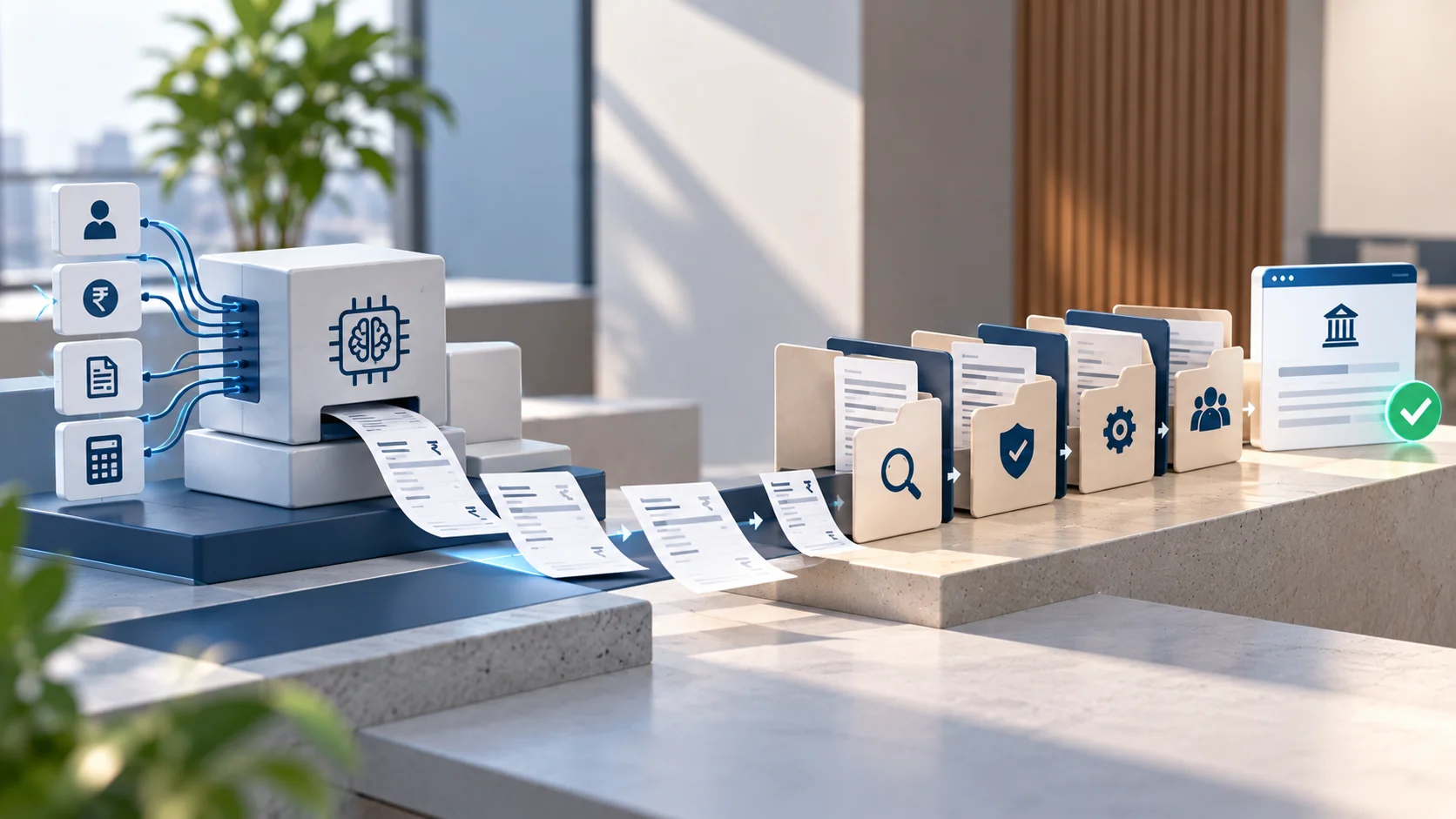
Our Form 15CA 15CB filing process runs in four steps:
- Review the invoice or agreement, the nature of the payment and the recipient's country.
- Work out which forms apply and the correct tax treatment, including any DTAA relief.
- Issue the Form 15CB certificate where one is required.
- File Form 15CA online and share the acknowledgement with you and your bank.
Why Getting This Right Matters
An incorrect or missing 15CA/15CB filing doesn't just delay a single payment, it can leave a business scrambling when a time-sensitive remittance, a vendor payment tied to a contractual deadline, or a payment a foreign partner is expecting, gets stuck at the bank over paperwork that should have been in place beforehand. Because the tax treatment behind these filings depends on details specific to each transaction, getting the classification right the first time avoids both delay and the risk of an incorrect TDS position. If you have an upcoming outward remittance or handle these regularly as part of your business, Livida's India team can take this on alongside your existing tax compliance.
Related Tax Compliance
Outward remittances rarely happen in isolation from a business's broader tax position. Livida also supports:
- Income Tax Return Filing, so remittance-related withholding is reflected consistently in the annual return
- TDS Return Filing, for the quarterly withholding tax returns that connect to many of the same remittance transactions
The Income Tax Department publishes the current rules and online filing process for Form 15CA at incometax.gov.in.
Form 15CA 15CB Filing at a Glance
| Item | Detail |
|---|---|
| Who it suits | Businesses and individuals sending money outside India |
| What we handle | Remittance review, Form 15CB certificate, Form 15CA filing |
| Typical documents | Invoice or agreement, recipient details, payment purpose, PAN and TAN |
| What happens next | We confirm which forms apply before we start |
Key Takeaways
- Form 15CA is the remitter's declaration, and Form 15CB is the chartered accountant's certificate where one is required.
- Some remittances are exempt, some need only Form 15CA, and the rest need both.
- Banks usually hold an outward remittance until the forms are in place.
- The tax treatment depends on the payment's nature and any applicable DTAA.
- Sorting the paperwork before the payment date avoids delays with foreign vendors.
What We See in Practice
In the remittances we handle, the most common delay is a missing or unsigned agreement behind the invoice, which leaves the nature of the payment unclear. Our team therefore asks for the contract and the recipient's details before anything else, and we recommend starting well before the payment date. For recurring payments, the withholding position also feeds into your TDS return filing and your income tax return filing. Businesses new to cross-border payments may also want to read about private limited company registration in India, since the entity you set up affects how payments are documented.
Conclusion
Good Form 15CA 15CB filing is about classifying the payment correctly before the bank asks. When the forms and the tax treatment are settled early, the remittance moves without a last-minute scramble. This page is general information, not professional advice, and the rules, thresholds and portal procedures change, so confirm the current position before you remit.
References
Talk to Livida
To discuss an upcoming remittance, use our India contact page, email info@livida.in or call +91 94860 33194.