AI budgeting tools have become a common feature inside modern accounting and financial planning software, promising to turn a business's historical transaction data into a forward-looking budget and cash flow projection with far less manual spreadsheet work than the traditional approach. For a growing business trying to plan hiring, spending, and growth with limited internal finance resources, the appeal is real. The harder question is whether AI budgeting tools alone produce a plan a business can actually act on, or whether they need a human layer of judgment sitting on top of the numbers before decisions get made based on them.

Key Takeaways
- AI budgeting tools are fast. They are not aware of decisions that have not yet shown up in your data.
- A forecast is a starting point. It becomes a plan once a person adds context.
- Variance needs interpretation. Software can flag a gap, but it cannot say why it happened.
- Budgeting data is sensitive, so ask vendors about access, retention and export.
- Most growing businesses do best with automation for speed and a person for judgment.
| Dimension | AI budgeting tools | Human-led budgeting and cash flow planning |
|---|---|---|
| Speed of generating a forecast | Fast, updates automatically | Slower, paced by review and context-gathering |
| Awareness of upcoming decisions | None, unless manually entered | Incorporates planned hires, purchases, and contracts |
| Interpreting variance | Flags a gap, cannot explain it | Distinguishes a timing blip from a real trend |
| Best fit | Stable, recurring revenue patterns | Growth, seasonality, or multiple major decisions at once |

What Are AI Budgeting Tools, Really?
At their core, AI budgeting tools analyze a business's historical income and expense data, identify recurring patterns, and project those patterns forward to generate a budget or cash flow forecast with minimal manual input. The software looks at seasonality, growth trends, and recurring fixed costs, then produces a projection that updates automatically as new transaction data comes in. This is a meaningful step up from a static annual budget built once in a spreadsheet and rarely revisited until the following year.
The more advanced platforms extend this further, offering scenario modeling that lets a user adjust an assumption, such as a change in headcount or a shift in payment terms, and see the projected impact on cash flow immediately. Some tools also flag when actual results are diverging from the forecast, prompting a review before the gap grows too large to correct easily. This is genuinely useful automation, and it has made budgeting and forecasting far more accessible to businesses that previously found the process too time-consuming to do well.
Common Features in Today's Platforms
Most financial planning software marketed around AI budgeting shares a similar feature set: automated data pulls from connected accounting systems, pattern-based projection of recurring revenue and expenses, scenario comparison tools, and dashboards that visualize projected cash position over coming weeks or months. Some platforms also offer alerts when a projected cash balance is likely to dip below a set threshold, giving a business advance warning to act before a shortfall actually occurs. These features are valuable precisely because they surface information early, when there is still time to respond.
It is worth noting that the underlying concept, projecting future results from historical patterns, is not new. What has changed is the speed and accessibility of the analysis, letting a business generate and adjust a forecast in minutes rather than the days it used to take to rebuild a spreadsheet model by hand. That is a real improvement, but it is an improvement in speed and accessibility rather than in the fundamental reliability of the projection itself.
How AI-Driven Cash Flow Forecasting Works in Practice
Pattern Projection, Not Business Understanding
AI-driven cash flow forecasting works by identifying statistical patterns in past data and extending them forward, which means the projections are only as good as the patterns available to learn from. A business with several years of steady, recurring transactions gives the software a strong pattern to work with. A business that is growing quickly, entering a new market, or changing its pricing model has much less relevant history for the software to draw on, and the resulting projection reflects that thinner foundation whether or not the output looks confident.
Where the Automation Genuinely Helps
Where AI budgeting tools add real value is in reducing the mechanical burden of building and maintaining a forecast. A business that previously updated its budget once a year, because the manual process was too time-consuming to repeat more often, can now refresh a projection monthly or even weekly with far less effort. That shift toward more frequent, lower-effort updates is the genuine productivity gain, and it is the main reason budgeting and forecasting software has become standard practice among growing businesses that want a current view of their financial position rather than a stale annual estimate.
Where AI Budgeting Tools Fall Short
The core limitation is that AI budgeting tools have no way of knowing about decisions that have not yet shown up in historical data. A planned hire, a new piece of equipment, a renegotiated contract with a major customer, or a one-time legal expense are all things a human knows about before they happen, and none of them exist in the transaction history the software is projecting from. Unless someone manually feeds these upcoming events into the model, the forecast simply will not account for them, and a business that treats the automated projection as complete can be caught off guard by a cash need the software never saw coming.
There is also a judgment gap around interpreting what a divergence from the forecast actually means. Software can flag that actual cash flow is running behind projection, but it cannot tell a business whether that gap reflects a temporary timing issue, such as a large customer paying a few days late, or an early sign of a deeper problem, such as a shift in customer payment behavior across the board. Distinguishing between a blip and a trend requires someone who understands the business's customer relationships and operating context, not just the numbers themselves.
Financial planning software also tends to underweight qualitative risk. A forecast built purely on historical patterns has no mechanism for factoring in a supplier relationship that is becoming unstable, a key customer showing early signs of financial trouble, or a competitive threat that has not yet affected revenue but is likely to soon. These are exactly the kinds of considerations that shape good cash flow planning, and they live entirely outside what any automated tool can see in the transaction data.
The Real Cost of Relying on Projections Alone
It is tempting to treat a software-generated forecast as a finished plan rather than a starting point, but that shortcut carries real risk. A business that hires ahead of a projected cash inflow that does not materialize on schedule can find itself short on payroll funding at an awkward moment. A business that commits to a lease or a major purchase based purely on an automated projection, without a person checking the underlying assumptions against what is actually happening in the business, can discover the gap only once the cash is already committed and difficult to unwind.
There is also a strategic cost to under-using the forecast. A cash flow projection is most valuable when it actively shapes decisions, prompting a conversation about whether to delay a hire, negotiate better payment terms with a supplier, or draw on a credit line proactively rather than reactively. A forecast that is generated automatically and glanced at occasionally, without someone actively interpreting what it means for upcoming decisions, delivers only a fraction of the value that same forecast could provide inside a properly managed budgeting and cash flow planning process.
What Human-Led Budgeting and Cash Flow Planning Adds
Incorporating What the Software Cannot See
A human-led budgeting and cash flow planning process starts from the same historical data an AI tool would use, but layers in everything the software has no way of knowing:
- Planned hires and headcount changes not yet reflected in payroll history
- Upcoming capital expenditure, such as new equipment or a lease
- Contract renegotiations with major customers or suppliers
- Management's own read on customer and supplier relationships
- One-time or seasonal events with no precedent in past transaction data
This is the step that turns a statistically reasonable projection into a plan that actually reflects where the business is headed, rather than just where it has been. This kind of ongoing, forward-looking review is also core to Livida's Virtual CFO Advisory service for businesses that want this incorporated into a broader financial planning relationship.
Interpreting Variance and Adjusting the Plan
When actual results diverge from a forecast, a managed process applies judgment to figure out why, distinguishing a one-off timing difference from an early warning sign that needs a response. Livida's approach to budgeting and cash flow planning is built around this ongoing interpretation, translating historical financial data and forward-looking input from the business into a plan that gets revisited and adjusted as circumstances change, not left untouched until the next scheduled review.
Connecting the Forecast to Real Decisions
A managed cash flow planning process also connects the forecast directly to the decisions it is meant to inform: whether the business can afford a hire this quarter, whether now is the right time to invest in equipment, or whether a supplier's payment terms need to be renegotiated given the current cash position. This connective step, tying the numbers to an actual decision a business owner needs to make, is where the real value of budgeting and forecasting shows up, and it depends on a person who understands both the numbers and the business context surrounding them.
Data Access, Assumptions, and Tool Continuity
A less discussed but genuinely practical concern with AI budgeting tools is how much visibility a business actually has into the assumptions the software is making behind the scenes. Many platforms present a polished projection without clearly explaining which historical period it drew from, how it weighted recent months against older ones, or how it handled an unusual one-off transaction that might have skewed the pattern. Without that visibility, it is easy to treat a forecast as more reliable than it actually is, simply because the output looks clean and confident.
There is also a practical continuity question. Financial planning software stores a business's assumptions, scenario models, and historical projections over time, and switching platforms later, whether because of pricing changes, a vendor shutting down a product line, or the business simply outgrowing the tool, can mean losing that accumulated context. A managed budgeting and cash flow planning process tends to be more resilient to this kind of disruption, because the institutional knowledge about why certain assumptions were made lives with the people managing the process, not solely inside a particular piece of software.
Access and governance matter here too. Cash flow and budgeting data is sensitive, often touching payroll plans, upcoming financing needs, and competitive information about pricing or customer relationships. A business should know who inside the software vendor's organization can see this data, how long it is retained, and how easily it can be exported if the relationship with that vendor ends. A managed process brings the same governance discipline applied to bookkeeping and financial reporting to the forecasting side of the business, rather than treating budgeting data as lower stakes simply because it is forward-looking rather than historical.
Planning for Growth Rather Than Today's Complexity
Businesses often adopt AI budgeting tools based on their current level of complexity, which makes sense at the time but can create friction as the business changes. A forecasting tool that works well for a single-location business with one revenue stream can start producing less useful output once the business adds a second location, a new product line, or a different customer segment with its own payment patterns, simply because the historical data feeding the model no longer represents a single coherent pattern. Recognizing this shift early, rather than continuing to trust a projection that has quietly become less representative, is one of the more overlooked disciplines in good budgeting and forecasting.
Working with a managed cash flow planning process from earlier on tends to make this transition smoother, since a team already familiar with the business can recognize when the underlying assumptions need to change well before the automated output starts drifting noticeably from reality. This is particularly relevant for businesses planning significant growth: a hiring wave, a new market entry, or a major financing round all change the shape of a business's cash flow in ways that take time for any automated tool to learn from historical data alone, if it ever fully catches up at all.
AI Budgeting Tools vs. Human-Led Planning: Finding the Right Mix
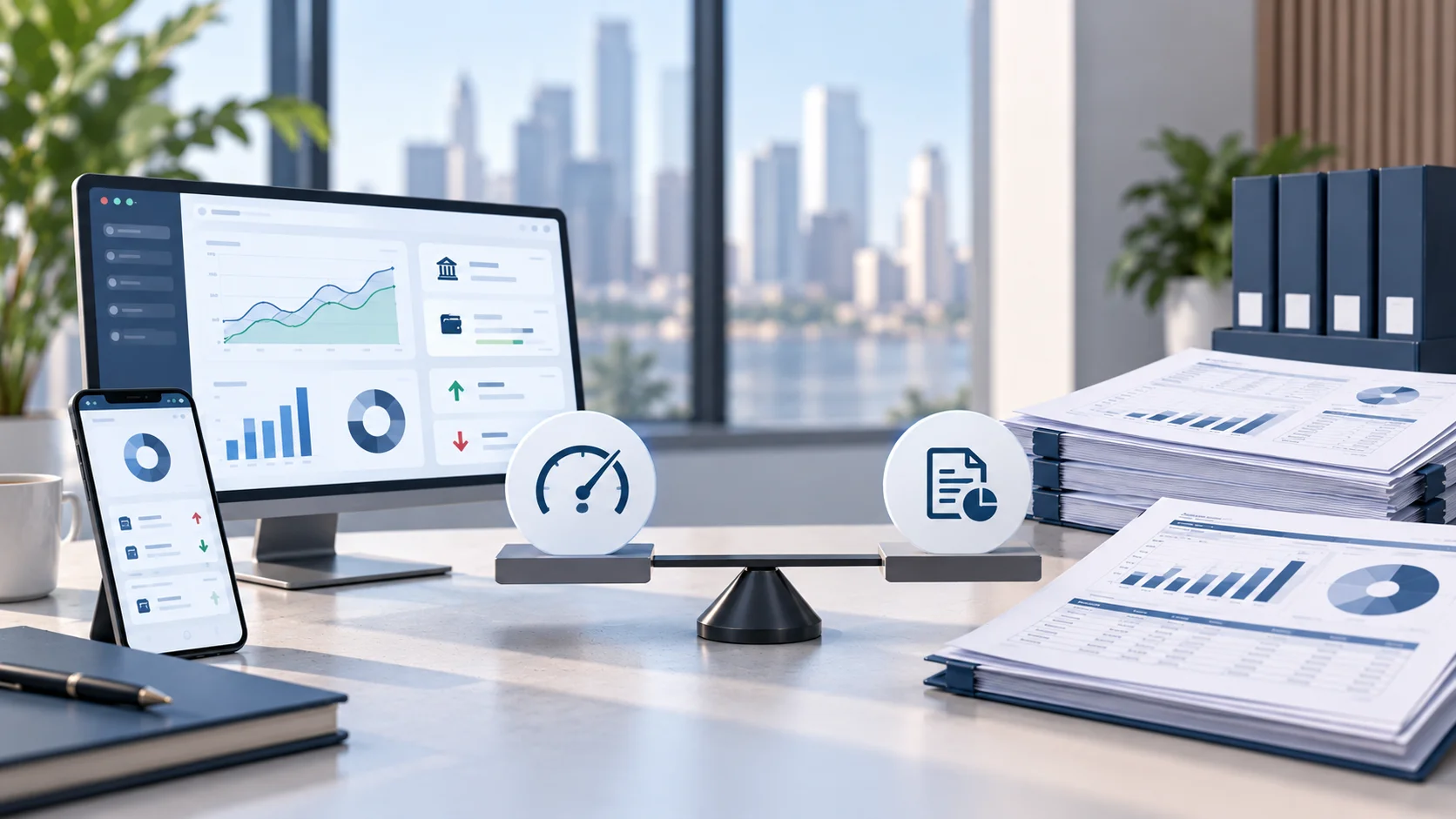
For most growing businesses, the realistic answer is not choosing software or people but combining them deliberately, much as our big data financial analysis versus traditional methods comparison concludes for financial analysis more broadly. AI budgeting tools handle the mechanical work of pulling data, identifying patterns, and generating a baseline projection quickly and with far less manual effort than building a forecast from scratch. A human-led process then adds the context the software cannot access: planned decisions not yet reflected in the data, judgment about what a variance actually means, and the connection between the forecast and the choices a business needs to make.
This combination tends to outperform either extreme. Software alone produces forecasts that look precise but miss known upcoming changes and cannot interpret why a variance is happening. A fully manual process without any automation is slower to update and more likely to fall out of date between reviews, precisely when a business needs current information the most. The middle path, automation for speed with a person applying context and judgment on top, produces cash flow forecasting that is both current and genuinely useful for decision-making.
What This Looks Like Month to Month
In practice, a well-run setup has financial planning software pulling current transaction data and generating an updated baseline projection automatically. A person then reviews that baseline each month, adjusts it for known upcoming changes, checks any flagged variance against what is actually happening in the business, and translates the result into a clear view of what the business can and cannot afford to do in the coming months. This is the same principle behind good budgeting and cash flow planning generally: the tool handles the numbers, and a person makes sure the numbers still mean something once real-world context is applied.
How This Plays Out Across Different Business Types
The balance between automated forecasting and human-led planning shifts depending on a business's structure and how predictable its cash flow naturally is. A business with steady, recurring revenue and modest seasonal variation can lean more heavily on automated projections, since the underlying patterns are relatively stable and easier for software to model reliably. A business with irregular project-based revenue, significant seasonality, or rapid growth needs more active human interpretation, since exactly the situations where historical patterns are least reliable are the situations where good judgment matters most.
Growing businesses juggling multiple priorities, hiring plans, and financing decisions at once tend to get the most value from a properly managed budgeting and cash flow planning process, since the stakes of an inaccurate forecast rise along with the number of significant decisions riding on it. A business making a single, low-stakes decision might get by with a quick look at an automated projection. A business planning several major moves at once benefits from a person actively working through what the numbers mean for each of those decisions individually.

Choosing the Right Approach for Your Business
The right mix depends on how much of your business's near-term future is already visible in historical data versus how much depends on decisions and events that have not happened yet. A stable, low-growth business with predictable revenue may get useful results from automated forecasting with only light human review. A business planning to hire, expand, or take on financing benefits considerably from a managed process where someone actively incorporates those plans into the forecast rather than waiting for them to show up in the historical data after the fact.
Guidance published by standards bodies such as the AICPA & CIMA continues to emphasize the role of professional judgment in financial planning and reporting, a principle that applies just as much to forward-looking budgeting and cash flow planning as it does to historical accounting. Software helps a business generate a forecast quickly. A managed process is what makes sure that forecast still reflects reality once genuine business context is factored in.
Five Essential Checks Before You Rely on an AI Forecast
Our team suggests running through this short list each time a new forecast is generated:
- Confirm which historical period the tool learned from, and whether a one-off item skewed it.
- Enter planned hires, purchases and contract changes that are not in the data yet.
- Compare the forecast with actual cash each month and note any gap.
- Ask what the variance means before changing any decision.
- Check who can see the data and how you would export it.
Related reading on forward-looking numbers: predictive analytics versus cash flow planning. Our business plan support service is another place where projections and decisions meet.
Bringing the Two Together
AI budgeting tools are not a passing trend, and the speed they bring to generating and updating a forecast is a real and lasting improvement over the old spreadsheet-based approach, a pattern also visible in the wider shift toward API-connected accounting stacks. What they have not changed is the need for a person who understands the business to add the context the software cannot see, interpret what a variance actually means, and connect the numbers to the decisions a business owner is actually trying to make.
Livida's budgeting and cash flow planning services are built around that combination, using modern tools to speed up the mechanics while keeping a qualified person responsible for making sure the resulting plan reflects where the business is actually headed. If your business is relying purely on an automated forecast right now, it is worth asking how much known context about upcoming decisions that forecast is actually capturing before the next planning cycle begins.
In our experience, the most common problem is not the software. It is a forecast that nobody has updated with news the team already knows. That is why we recommend a short monthly review. Bookkeeping that is up to date, clean tax and GST records, and a clear view of payroll commitments all make the forecast better. Compliance dates belong in the plan too.
Conclusion
AI budgeting tools save time on the mechanics of forecasting. A person still decides what the numbers mean. Use both, and review often.
This article is general information, not professional advice, and rules and software features change. Check current guidance for your own situation.
References
- NIST AI Risk Management Framework, a voluntary framework for managing the risks of AI systems
- ICAI, the Institute of Chartered Accountants of India, for professional accounting guidance in India
Talk to Livida
To talk through your own forecast, visit our India contact page, email info@livida.in, or call +91 94860 33194.