
Machine learning fraud detection accounting tools have moved from experimental pilots into everyday use at a growing number of finance teams, scanning transaction data around the clock for the kind of pattern that a human reviewer might miss during a busy month. That progress raises a fair question for any business gearing up for its next external audit: can machine learning fraud detection accounting systems do the heavy lifting on their own, or does audit preparation still depend on a professional connecting the dots the software cannot see? The honest answer sits in between, and understanding where the line falls matters for any business that wants a clean audit rather than a stressful one.

Key Takeaways
- Machine learning fraud detection accounting tools score transactions and flag anomalies. A person still decides what each flag means.
- They work best on repetitive, pattern-based schemes such as duplicate payments, split invoices and similar vendor records.
- They are weakest on management override and collusion, where transactions look statistically normal.
- Audit preparation is broader than detection: reconciliations, schedules, documentation and answers to the auditor's request list.
- The strongest setup layers sound internal controls, machine learning fraud detection accounting monitoring and human-led preparation, with a named owner for the alerts.
How Machine Learning Fraud Detection Accounting Tools Work
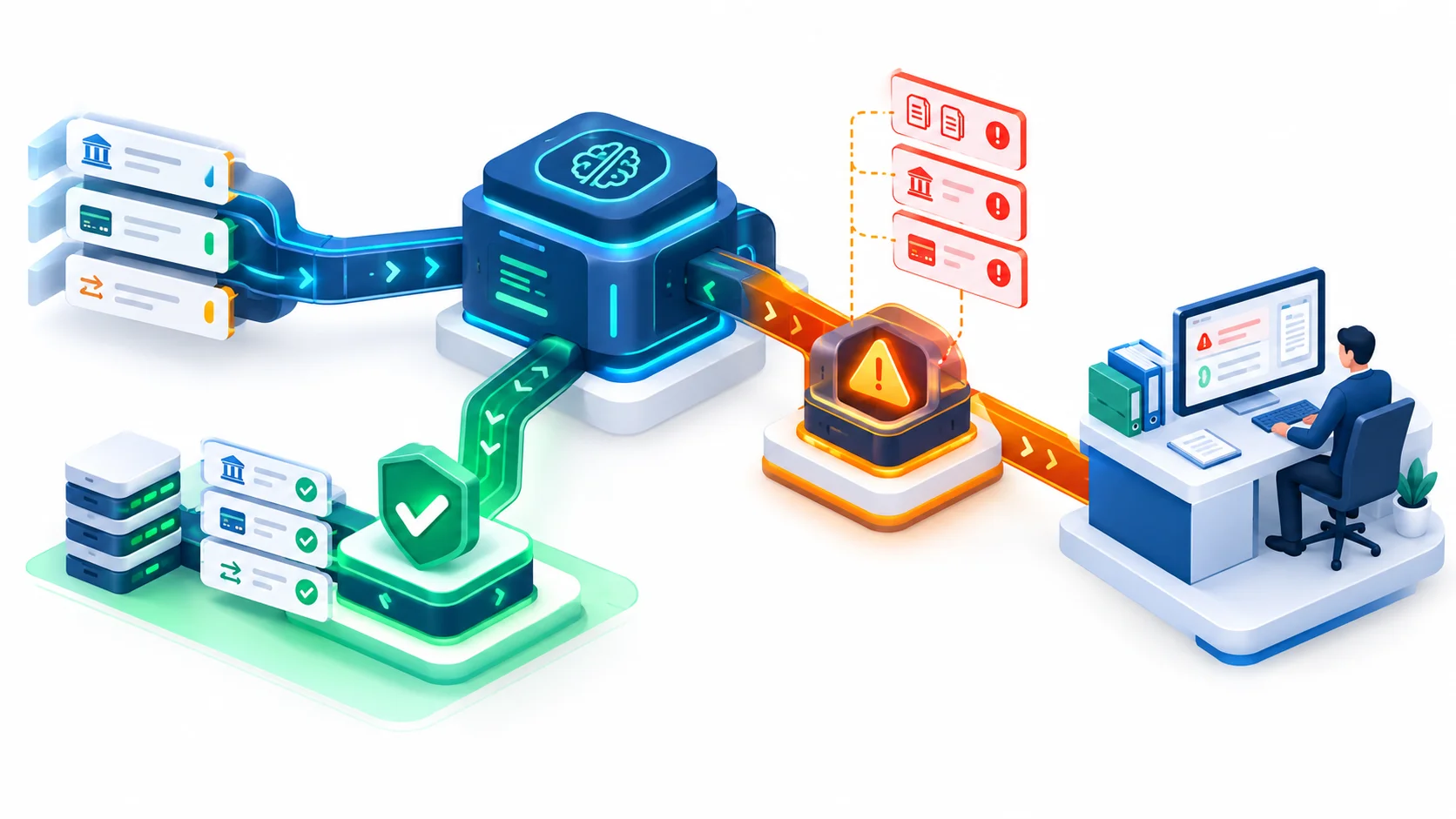
At a technical level, most fraud detection software relies on a combination of supervised and unsupervised models. Supervised models are trained on historical data where past transactions have already been labeled as legitimate or fraudulent, and the model learns the statistical fingerprint of the fraudulent examples. Unsupervised models take a different approach, clustering transactions by similarity and flagging anything that falls outside the normal cluster, even if nothing quite like it has been seen before. Both approaches are useful, and many platforms run them side by side to cover different failure modes. In practice, that is what makes machine learning fraud detection accounting software more flexible than a fixed rulebook.
The output of either approach is usually a risk score rather than a verdict. A transaction might be scored as ninety percent likely to be anomalous based on its size, timing, vendor history, or similarity to known fraud patterns, but the software itself does not decide whether that anomaly is actually fraudulent, a data entry error, or a perfectly legitimate one-off event. That distinction has to be made by a person, which is the single most important thing to understand about how this category of anomaly detection accounting software actually functions in practice.
Real-Time Transaction Monitoring
The more advanced platforms score transactions as they happen rather than in a nightly batch, which allows a suspicious payment to be held for secondary approval before it settles rather than being flagged after the money has already moved. This is a meaningful improvement over older rules-based systems, which could only catch fraud that matched a pattern someone had already anticipated and coded into the system. Machine learning models can, in principle, adapt to new patterns as they emerge, though that adaptability depends heavily on the quality and volume of data the model has been trained on.
What This Technology Actually Catches Well
Machine learning fraud detection accounting software genuinely excels at certain categories of irregularity. Duplicate payments to the same vendor within a short window, invoices split into smaller amounts specifically to fall under an approval threshold, and vendors with suspiciously similar names or banking details to existing ones are all patterns that pattern-matching algorithms are well suited to catch, often faster and more consistently than a manual review would. Unusual timing, such as payments processed late at night or on weekends when nobody is normally working, and velocity anomalies, such as the same payment card being used in two distant locations within minutes, also tend to surface reliably.
These are not trivial wins. Duplicate payments alone can represent a meaningful drain on a business's cash if left uncaught, and a tool that flags them automatically, before they compound over a full year, has clear practical value. The strength of this software lies specifically in repetitive, high-volume, pattern-based anomalies, which is exactly the category of problem that is tedious and error-prone for a person to catch manually across thousands of transactions.
Where the Pattern-Matching Approach Breaks Down
The same strength becomes a weakness once fraud stops following a repeatable pattern. Fraud involving management override, where someone with legitimate authority to approve unusual transactions uses that authority improperly, often looks statistically normal precisely because the person committing it controls how the transaction is recorded. A single, well-documented, appropriately authorized fraudulent transaction can pass through a machine learning system without triggering a single flag, because nothing about its shape resembles the training data the model learned from.
Why Human-Led Audit Preparation Still Matters
Audit preparation is a broader task than fraud detection, and it is worth being precise about what it actually involves. It means reconciling every account before the external auditor arrives, organizing supporting schedules for fixed assets, accruals, and related-party transactions, responding to the auditor's prepared-by-client request list, and being ready to explain the reasoning behind judgment calls that appear in the financial statements. None of that is something a fraud detection algorithm is built to do, because none of it is really about detecting anomalies. It is about building a complete, defensible, well-documented picture of the year's financial activity.
Livida's audit preparation services are built around exactly this work: getting the books, schedules, and supporting documentation into the state an external auditor expects to see, so the audit itself proceeds smoothly rather than turning into a scramble for missing records. This sits alongside the accounting system reviews that examine how transactions are approved, recorded, and reconciled in the first place, since a well-controlled process going in produces far fewer surprises coming out.
Investigating What the Software Flags
When a fraud detection tool raises a flag, that flag is the beginning of a task, not the end of one. Someone still has to pull the underlying documentation, compare it against the transaction, reach out to the relevant vendor or department if needed, and reach a conclusion about whether the anomaly is a genuine concern or an innocent explanation the software had no way to know about. A seasonal spike in expenses, a legitimate one-time capital purchase, or a new vendor relationship can all trigger a high risk score without representing any wrongdoing at all, and treating every flag as confirmed fraud would create far more noise than signal.
Professional Skepticism and Judgment
Auditing standards place real weight on the concept of professional skepticism: an auditor's obligation to question and corroborate evidence rather than accept it at face value. That mindset is baked into how a properly trained accounting professional approaches audit preparation, and it extends well past whatever a fraud detection dashboard happens to surface. Standards bodies such as the AICPA & CIMA publish detailed guidance on how this skepticism should be applied throughout an engagement, and staying aligned with that guidance depends on people who understand it, not software scoring transactions against historical patterns.
The Case for Combining Both Approaches
The most effective setup is not a choice between machine learning fraud detection accounting tools and human-led audit preparation, it is a layered process where each does what it is actually good at. The software absorbs the repetitive, high-volume monitoring work that would exhaust a human reviewer if done manually across thousands of transactions a month, triaging that volume down to a manageable list of exceptions. A trained professional then investigates that shortlist, applies judgment to ambiguous cases, and folds the results into a properly organized audit preparation package.
This division of labor plays to genuine strengths on both sides. Fraud detection software never gets tired, never skips a transaction because it is running short on time before a deadline, and can process a volume of data that would be impractical for a person to review line by line. Human reviewers bring context, skepticism, and accountability that the software cannot replicate, and they are the ones who ultimately stand behind the numbers when an external auditor, a lender, or a regulator asks a follow-up question.
Building Internal Controls Around the Technology
Fraud detection software works best when it sits inside a business that already has reasonably sound internal controls, rather than being deployed as a substitute for them. A periodic internal controls review, examining who can approve payments, who can add vendors, and how those permissions are checked, is one of the more valuable exercises a growing business can commission alongside any investment in detection software.
Segregation of duties, meaning that the person who approves a payment is not also the person who records it and reconciles the account, remains one of the most effective fraud deterrents available, and no amount of algorithmic monitoring replaces it. An accounting system review typically examines exactly this kind of structural control, looking at approval workflows, access permissions, and reconciliation practices to identify where the process itself creates opportunity for error or misuse.
Businesses that invest in both layers, meaning reasonable internal controls plus some form of automated anomaly detection, tend to catch problems earlier and with less disruption than businesses relying on either one alone. The controls reduce how much fraud can occur in the first place, and the monitoring layer catches what slips through despite those controls, and audit preparation then documents that the whole system functioned as intended over the period being reviewed.
What Audit Preparation Looks Like Across Different Regions
The mechanics of audit preparation shift depending on where a business operates, even though the underlying discipline stays the same. In India, audit preparation typically ties closely to the accuracy of GST filing and TDS filing records, since discrepancies between what has been reported to tax authorities and what appears in the books are exactly the kind of thing an external auditor, and increasingly automated cross-checks run by the tax department itself, will surface quickly. Businesses registered under India's company law framework also need to keep statutory records aligned with guidance from bodies such as the Institute of Chartered Accountants of India, which audit preparation work needs to account for directly.
In Singapore, audit compilation and the consolidation of accounts for group structures add another layer of complexity, particularly for companies that also need to prepare XBRL filings alongside their annual financial report. In the UAE, where Livida's services are focused specifically on bookkeeping, accurate books remain the foundation that any external audit ultimately depends on, even though the audit itself and any fraud-specific investigation sit with other specialists. In the United States and Canada, audit preparation intersects closely with payroll tax filings, sales tax records, and, in Canada's case, the documentation that supports a notice to reader engagement or a compilation of audit, all of which need to reconcile cleanly before an external reviewer gets involved.
Signs a Business Needs Stronger Audit Preparation
A few recognizable signals suggest a business has outgrown an informal, last-minute approach to getting ready for an audit. The first is simply the auditor's request list growing longer and more detailed each year without the business having a standing process to gather that information in advance. The second is any history of last-minute scrambling, where documentation gets assembled in the days immediately before fieldwork begins rather than throughout the year as transactions occur. The third is any prior audit that surfaced findings related to internal controls, since those findings tend to recur if the underlying process is not addressed.
A fourth signal, more specific to the fraud detection conversation, is a business that has adopted anomaly detection software but has no consistent process for reviewing what it flags. A tool generating alerts that nobody investigates provides a false sense of security rather than genuine protection, and closing that gap is often one of the more valuable things an accounting system review can identify.
Five practical checks are worth running before relying on either layer:
- Are duplicate payments and split invoices actually being flagged, or has nobody looked at the exception queue recently?
- Is there a named owner for reviewing what the fraud detection software surfaces each month?
- Are new vendors added with an independent verification step before their first payment?
- Has the vendor master file been reviewed for duplicate or suspiciously similar records in the past year?
- Is there a documented escalation path when a flagged anomaly turns out to be a genuine concern?
Questions Worth Asking Before the Next Audit Cycle
Businesses preparing for an upcoming audit can usefully ask themselves a short set of questions ahead of time. Is there a clear, documented process for reconciling every account before fieldwork begins, or does that happen informally each year? If fraud detection software is in place, who is responsible for reviewing its flags, and how quickly does that review happen? Are supporting schedules for significant judgment areas, such as accruals or related-party transactions, maintained throughout the year or assembled only when the auditor asks for them? Honest answers to these questions tend to reveal exactly where audit preparation needs the most attention.
Common Fraud Schemes and How Each Approach Handles Them
It helps to look at a few specific fraud patterns side by side. The split between what software catches and what still needs a person becomes clearer with concrete examples.
Vendor fraud, where a fictitious or duplicate vendor is added to the master file and paid over time, is a case where machine learning fraud detection accounting tools genuinely shine, since they can compare new vendor bank details against existing ones and flag close matches or unusual similarities that a busy accounts payable clerk might miss. Expense reimbursement fraud, involving inflated or fabricated claims, is another area where anomaly scoring against historical spending patterns for a given employee or department tends to work reasonably well.
Payroll fraud, such as a ghost employee remaining on the payroll after departure, is a mixed case. Software can flag a payment pattern that looks unusual, such as a salary with no corresponding attendance or leave activity, but confirming whether the employee actually exists and is still working requires a human to check against HR records and, ideally, a physical or video verification process. Management override fraud, where someone with legitimate approval authority misuses it, remains the category where software adds the least value, since the transaction is often recorded exactly as a legitimate one would be, by someone with every appearance of authority to approve it.
A quick way to summarize how machine learning fraud detection accounting tools and audit preparation divide the work:
| Fraud Type | Machine Learning Fraud Detection | Human-Led Audit Preparation |
|---|---|---|
| Duplicate payments, split invoices | Strong: catches repeatable patterns fast | Confirms and documents flagged cases |
| Vendor master data anomalies | Strong: compares bank details and names | Verifies legitimacy with the vendor |
| Ghost employees | Partial: flags unusual pay patterns | Required: verifies against HR records |
| Management override | Weak: looks statistically normal | Required: judgment and skepticism |
Related reading on where automation helps and where it does not: Low-Code ERP Integrations vs. Professional Accounting System Reviews, OCR Receipt-Scanning Apps vs. Human-Reviewed Bookkeeping Accuracy and AI vs. Human Judgment in Accounting all look at similar tradeoffs between software and professional judgment. Businesses wanting a structural review of their controls before their next audit can also look at Livida's Statutory Audit Readiness Review service.
In our experience with machine learning fraud detection accounting alerts, the flags that matter most are rarely the dramatic ones. They are usually a duplicated vendor record or a bank detail that changed without a documented approval. Our team treats those as the first items to clear before any audit fieldwork starts.
Why Vendor Master Data Deserves Extra Scrutiny
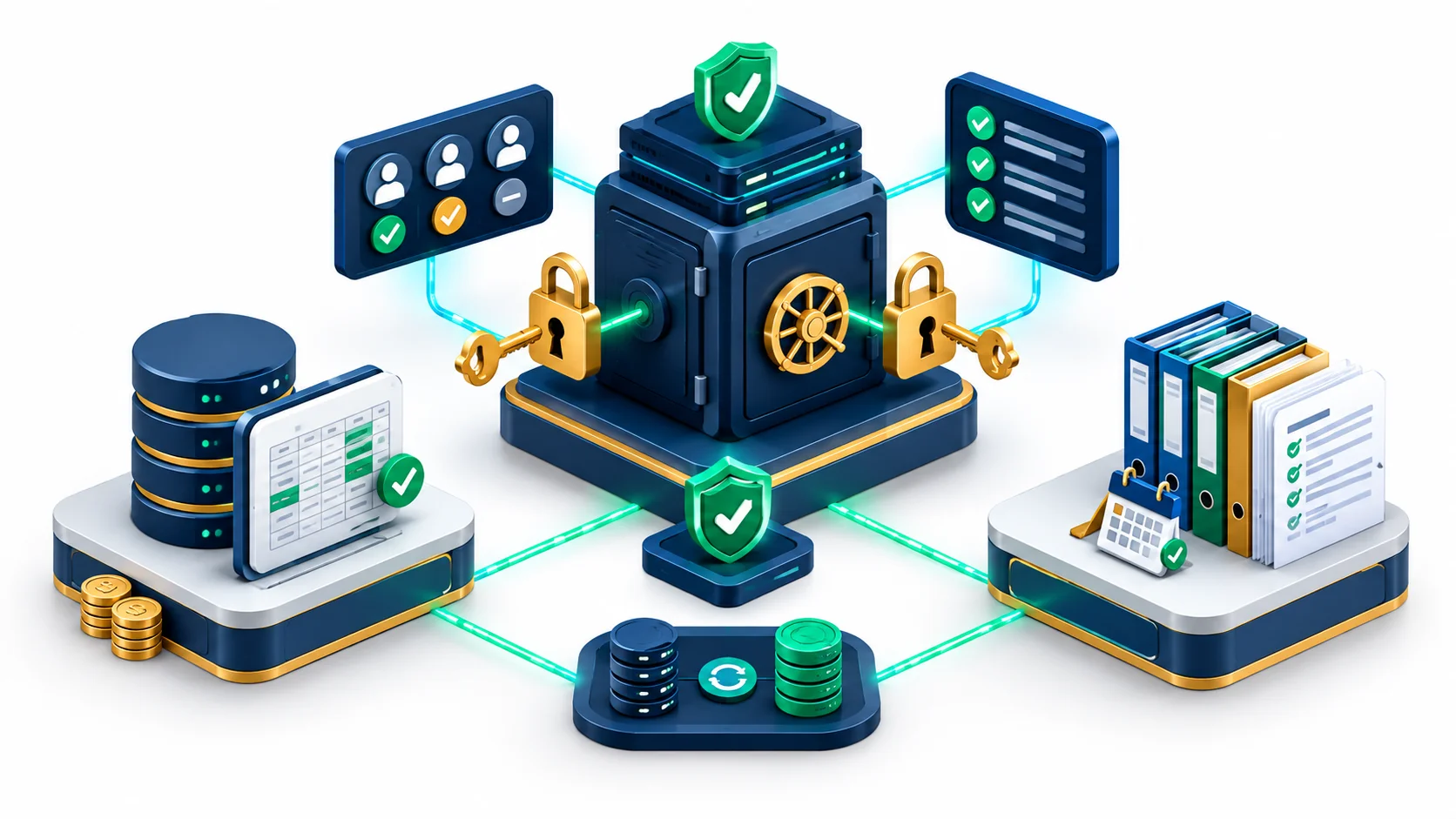
Because so many fraud schemes route through the vendor master file, keeping that file clean is one of the highest-leverage things a business can do regardless of what detection software is in place. Duplicate vendor records, outdated banking details, and vendors added without a documented approval step are all common entry points for both accidental error and deliberate fraud. An accounting system review typically checks how new vendors are added, who approves the addition, and whether banking detail changes require independent verification before a payment goes out, which closes off a meaningful share of the schemes that pattern-matching software is otherwise left to catch after the fact.
The Cost of a Missed Signal
It is worth being direct about what happens when neither the software nor the review process catches a problem in time. A fraud scheme that goes undetected for even a few months can compound quickly, particularly with vendor fraud, where a fictitious vendor paid monthly accumulates losses steadily until someone notices. Beyond the direct financial loss, an undetected fraud discovered during an external audit rather than internally tends to raise far more serious questions from auditors, lenders, and other stakeholders about the strength of the business's overall control environment, which can have consequences well beyond the dollar amount involved.
This is part of why the combination of automated monitoring and human-led audit preparation matters so much in practice. Catching an issue internally, documenting it, and addressing it before an external party discovers it independently is a materially better outcome in almost every respect, from cost to reputation to the tone of the resulting audit conversation. Audit preparation done well is not just about having clean documentation ready, it is about the business having already found and dealt with its own problems rather than waiting for someone else to find them first.
Choosing Fraud Detection Tools That Fit the Business
Not every business needs the same level of automated fraud monitoring, and choosing a tool disproportionate to actual transaction volume and risk can create more overhead than value. A business processing a modest, fairly predictable set of vendor payments each month may get more practical benefit from strong manual controls and a periodic accounting system review than from a sophisticated machine learning platform generating alerts nobody has the bandwidth to chase down properly. A business processing a high volume of transactions across many vendors, employees, or locations is a much better candidate for machine learning fraud detection accounting tools, simply because the volume makes manual review of everything impractical.
Whatever the scale, the tool is only as useful as the process wrapped around it. We recommend choosing the process first and the software second. A fraud detection platform without a defined owner for reviewing its output, a documented escalation path for confirmed issues, and a connection back into the audit preparation process is generating data without generating protection. The technology decision and the process decision need to be made together, not treated as separate steps where the software is switched on and the process gets figured out later.
Conclusion
Machine learning fraud detection accounting software is a genuine improvement over manual, spot-check reviews of transaction data, and it is not going away as a feature of modern finance operations. It catches repetitive, pattern-based anomalies with a speed and consistency that no manual process can match at scale, and businesses that ignore it are leaving a useful layer of protection on the table. What it does not do, and was never designed to do, is replace the judgment, documentation, and accountability that audit preparation requires.
Livida's audit preparation services are built around that reality: helping businesses reconcile their accounts, organize supporting documentation, and walk into an external audit with a defensible, well-documented set of books, whatever monitoring tools sit upstream of that process. The technology can absorb the volume. The judgment, the investigation, and the accountability still need a professional standing behind them, and that is the layer that ultimately determines whether an audit goes smoothly or turns into weeks of unplanned cleanup work.
If you are adding machine learning fraud detection accounting tools ahead of an audit, a statutory audit readiness review is a sensible place to start. For a wider look at where automation sits in the books, see RPA Accounts Payable vs. Managed Accounts Payable.
References
- PCAOB: AS 2401, Consideration of Fraud in a Financial Statement Audit, the US auditing standard on how auditors consider fraud, including management override.
- NIST AI Risk Management Framework, voluntary guidance on managing risks when using AI systems.
- Institute of Chartered Accountants of India, the statutory body for the accounting profession in India.
Talk to Livida
If you are preparing for an audit and want to know where machine learning fraud detection accounting tools fit alongside your controls, our team can help. Use the contact page, email info@livida.in or call +91 94860 33194.
This article is general information, not professional advice. Auditing standards and regulations change, so confirm current requirements with a qualified professional before you act.